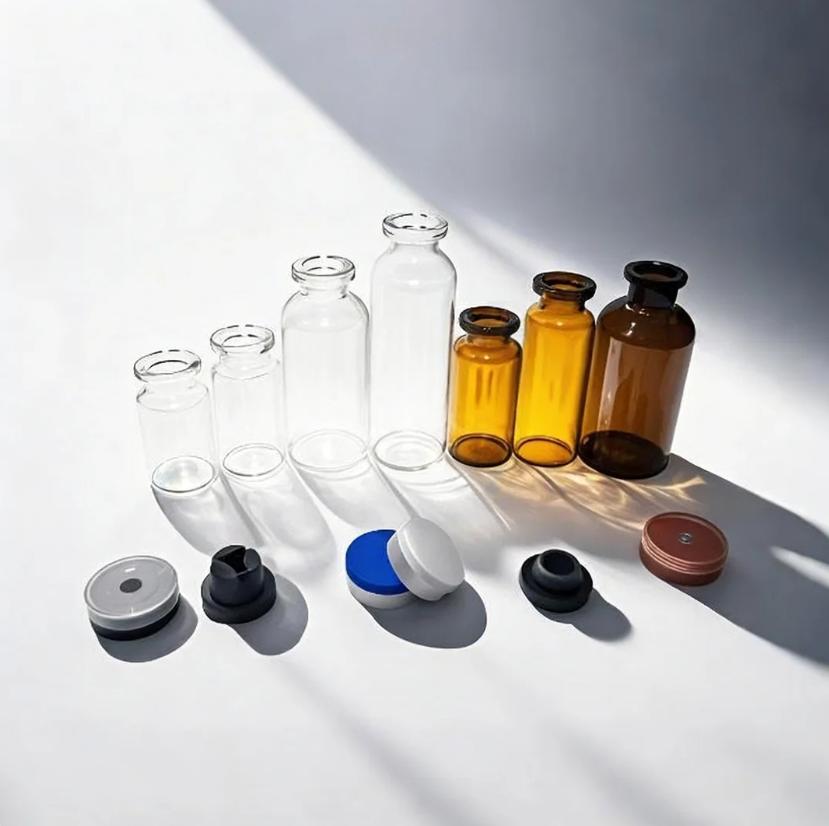
In the realm of sterile pharmaceutical manufacturing, the choice between an injectable vial (commonly known as a Vial or Screw-neck bottle) and an Ampoule represents a fundamental decision point. While both serve as containers for parenteral preparations, their structural design, material science, and clinical utility differ vastly. For pharmaceutical manufacturers, selecting the correct format is essential for ensuring drug stability, regulatory compliance, and patient safety. At Zhengzhou PharGlass, we specialize in providing advanced primary packaging solutions, including high-quality sterile glass vials, Ready-to-Use (RTU) rubber stoppers, and pre-sterilized aluminum plastic caps. This technical guide offers a comprehensive comparison to help you select the ideal packaging system for your specific formulation.
Understanding the Core Difference: Sealing Mechanism
The most defining characteristic separating these two formats is how they achieve a hermetic seal.
1. The Ampoule: Fusion Sealing
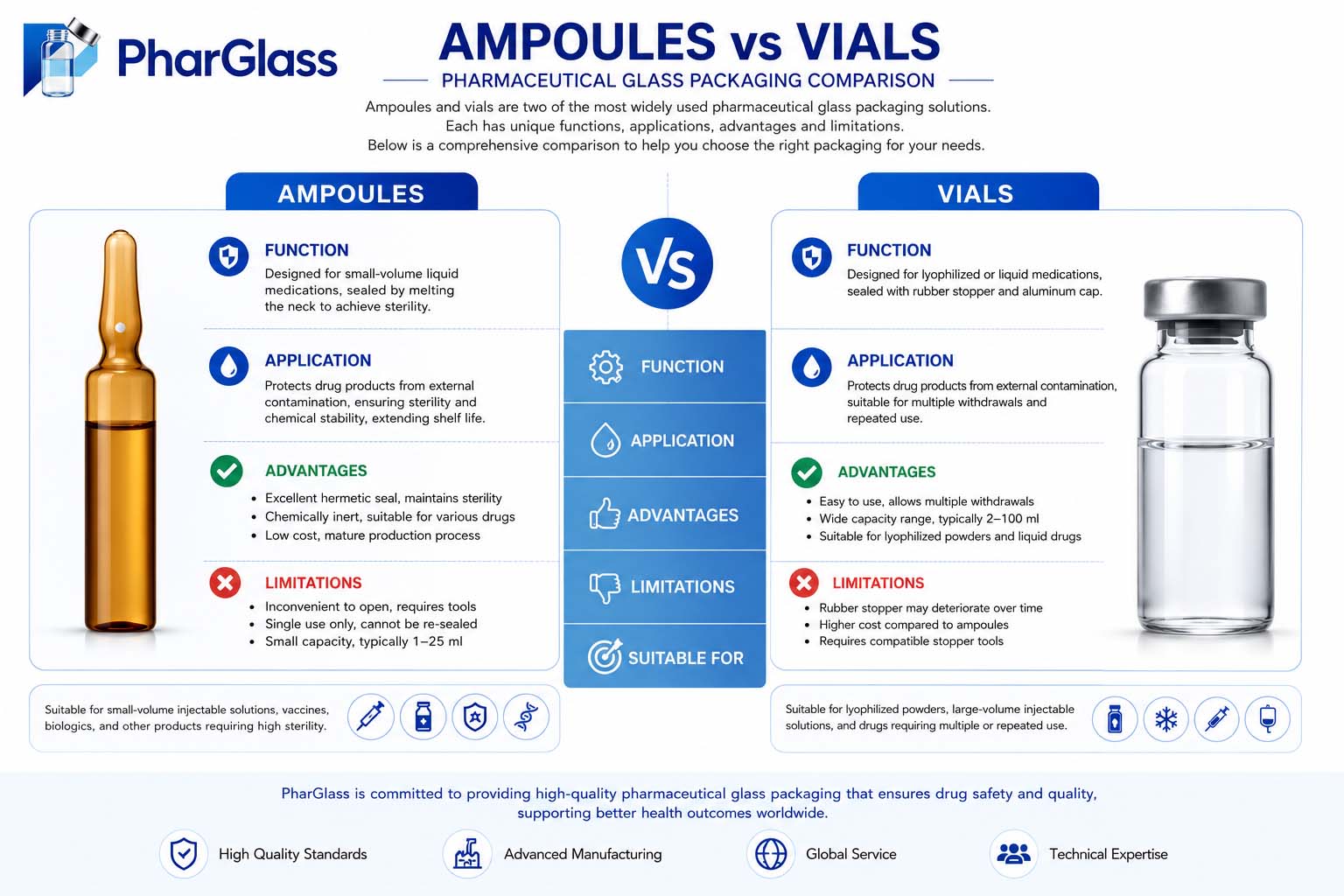
An ampoule is a small sealed glass vessel. It is typically made from thin-walled tubular glass and is sealed by melting the glass neck (flame fusion) after filling.
- Advantages: This creates a hermetically sealed, airtight environment. There are no rubber stoppers or aluminum caps involved, meaning zero risk of extractables or leachables from elastomeric components. The internal atmosphere can be precisely controlled, allowing for extremely low residual oxygen levels.
- Disadvantages: Once opened, the ampoule cannot be resealed. It is strictly a single-dose container.
2. The Vial (Injection Bottle): Closure Sealing
A vial relies on a multi-component closure system. After filling, a rubber stopper is inserted into the opening, and an aluminum plastic cap is crimped over the neck to secure the stopper in place.
- Advantages: The rubber stopper allows for multiple entries with a hypodermic needle. This makes vials ideal for multi-dose formulations or drugs requiring reconstitution. They are safer and easier to handle in clinical settings.
- Disadvantages: The presence of a rubber stopper introduces potential interactions. While modern stoppers are highly inert, they may contain trace vulcanizing agents or additives. Additionally, the seal is not entirely impermeable to gases over very long periods.
Material Science: Wall Thickness and Glass Type
The physical construction of these containers dictates their application in various drug manufacturing processes.
| Feature | Ampoules | Vials (Injection Bottles) |
|---|---|---|
| Glass Type | Predominantly Type I (Neutral Borosilicate) | Type I (Neutral Borosilicate) or Type II (Low Borosilicate) |
| Wall Thickness | Thin-walled (Lightweight, fragile) | Thick-walled (Durable, robust) |
| Manufacturing | Tubular glass (Drawn) | Tubular or Molded (for larger sizes) |
| Thermal Tolerance | High (Withstands flame sealing heat) | Excellent (Specifically designed for lyophilization) |
Zhengzhou PharGlass supplies both formats using premium glass. For sensitive biologics, we strongly recommend Type I Neutral Borosilicate for both ampoules and vials due to its superior chemical resistance. For standard antibiotics or oral liquids in vials, our Type II Low Borosilicate options provide excellent cost-efficiency.
Clinical Handling and Safety
The method of accessing the drug product is a critical factor for healthcare professionals.
- Ampoule Opening: Ampoules feature a pre-scored neck (often with a colored dot or ring). The user must snap the neck off manually. This action generates glass micro-particles that can fall into the solution and poses a laceration risk to healthcare workers. Used ampoules are classified as sharp medical waste.
- Vial Access: Vials are accessed by piercing the rubber stopper with a sterile needle. There is no breaking of glass, no generation of glass shards, and significantly less risk of injury. For drugs requiring full removal of the cap, the aluminum seal is simply pried off. This ease of use makes vials the preferred choice in fast-paced clinical environments.
Formulation Compatibility: Liquid vs. Lyophilized Powder
The physical properties of the drug product largely determine the packaging choice.
Ampoules: Exclusively for Liquid Injections
Ampoules are designed solely for liquid aqueous injections. Common sizes include 1ml, 2ml, 5ml, and 10ml.
- Best For: Water-soluble vitamins, traditional chemotherapy agents, and highly oxidation-sensitive drugs. Amber (brown) ampoules are used for light-sensitive formulations.
- Limitations: Ampoules cannot be used for lyophilization (freeze-drying) or for storing powders. The thin glass cannot withstand the extreme pressure differentials of the freeze-drying process.
Vials: The Versatile Standard
Vials are the universal workhorse of the pharmaceutical industry, capable of holding liquids, powders, and lyophilized cakes.
- Best For: Freeze-dried powders (Lyophilizates), vaccines, monoclonal antibodies (mAbs), and penicillin/cephalosporin powders.
- Process Tolerance: Vials, especially those supplied by Zhengzhou PharGlass, are engineered to withstand the extreme temperature fluctuations of lyophilization (-40°C to +60°C). They are also used for large volume parenterals (LVPs) and even oral liquid suspensions.
Economic and Production Considerations
From a manufacturing perspective, the choice impacts production line design and cost-per-unit.
- Ampoules: Require specialized sealing equipment and high energy consumption for the flame fusion process. While the glass itself is lighter, the overall unit cost can be higher due to the complexity of the sealing process.
- Vials: Utilize mature stoppering and capping technology. Zhengzhou PharGlass offers a wide range of vials with high domestic production capacity, ensuring competitive pricing and fast delivery. Molded vials, in particular, represent the most economical choice for large-volume products.
Summary of Advantages and Disadvantages
✅ Ampoules
Pros:
- Ultimate Seal Integrity: Zero permeation of air or moisture. Ideal for drugs prone to oxidation.
- No Elastomer Interaction: Eliminates the risk of rubber stopper leachables contaminating the drug.
- Regulatory Preference: Often preferred for certain export markets and sensitive liquid injectables.
Cons:
- Single-dose only; difficult to open safely; generates glass particles; cannot be used for freeze-dried products.
✅ Vials (Injection Bottles)
Pros:
- Multi-Dose Capability: Allows for multiple withdrawals, reducing waste.
- Lyophilization Ready: The only choice for freeze-dried vaccines and biologics.
- Clinical Safety: No risk of glass cuts or particulate contamination during opening.
- Versatility: Suitable for liquids, powders, and suspensions.
Cons:
- Potential for minimal gas transmission over time; requires compatible rubber stoppers and aluminum seals.
Selection Guide: Making the Right Choice with Zhengzhou PharGlass
To streamline your procurement and formulation strategy, consider the following guidelines:
- Choose Ampoules if: Your product is a single-dose liquid injection, highly sensitive to oxidation, or requires absolute exclusion of rubber contact. Zhengzhou PharGlass recommends Type I Borosilicate for all ampoule applications to ensure maximum chemical inertness.
- Choose Vials if: Your product is a vaccine, biologic, freeze-dried powder, or multi-dose formulation. Select Type I Borosilicate Vials for high-value biologics and export products, and Type II Low Borosilicate Vials for cost-effective generic antibiotics and oral liquids.
Integrated Packaging Solutions from Zhengzhou PharGlass
Selecting the container is just the beginning. Zhengzhou PharGlass provides a fully integrated packaging system designed for seamless aseptic processing. Our sterile glass vials are perfectly paired with our Ready-to-Use (RTU) rubber stoppers, which undergo rigorous washing and depyrogenation to minimize particulate matter. These are complemented by our pre-sterilized aluminum plastic caps, ensuring a secure, tamper-evident seal.
By choosing Zhengzhou PharGlass, you gain a partner with deep expertise in both glass chemistry and closure systems. We ensure that whether you choose an ampoule or a vial, your primary packaging meets the highest global standards for quality, safety, and performance. Contact our technical sales team today to discuss your project requirements.
 EN
EN  FR
FR  AR
AR  DE
DE  ES
ES  PT
PT  FA
FA  RU
RU