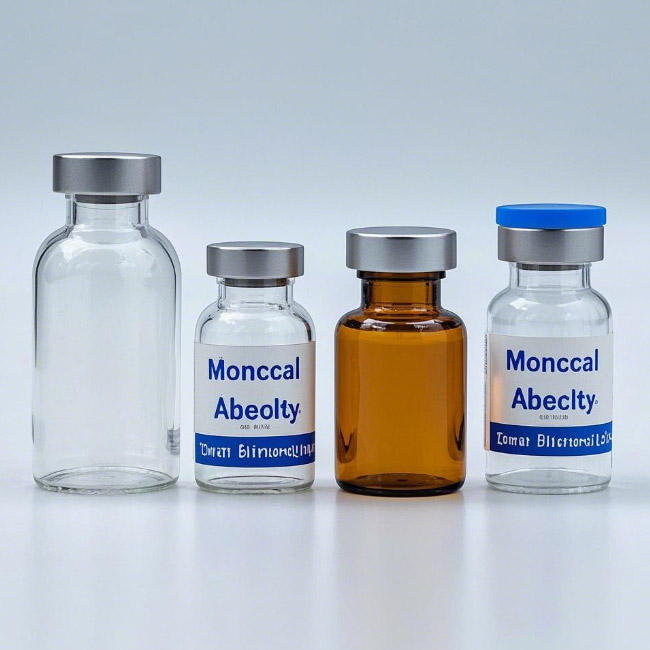
In the pharmaceutical industry, the margin for error is zero. أمبولات—the hermetically sealed glass vessels used for injectables, vaccines, and high-purity cosmetics—require exacting manufacturing standards to ensure patient safety and drug stability.
في فار جلاس, we don’t just manufacture glass; we engineer precision packaging. This technical guide details the critical specifications, material properties, and dimensional tolerances of our ampoule range, designed to meet الأيزو 9187-1 ISO 9187-1 و النوع الأول من USP المعايير.
🧪 Material Science: Low Borosilicate vs. Neutral Glass
Choosing the right glass matrix is the first step in ensuring compatibility between the packaging and the drug product. PharGlass offers two primary grades of glass, each engineered for specific chemical resistance needs.
1. Low Borosilicate Glass
- Characteristics: Known for its high hydrolytic resistance and thermal shock resistance.
- Technical Data:
- Coefficient of Thermal Expansion: Approx. 50–60 × 10⁻⁷ K⁻¹.
- Application: Ideal for general injectables and products requiring moderate chemical resistance.
2. Neutral Borosilicate Glass (Type I)
- Characteristics: Offers superior chemical durability and is virtually inert, making it suitable for sensitive biological products and acidic/alkaline solutions.
- Technical Data:
- مقاومة التحلل المائي: Class 1 (ISO 720).
- Coefficient of Thermal Expansion: Approx. 33 × 10⁻⁷ K⁻¹.
- Application: Recommended for vaccines, blood products, and lyophilized (freeze-dried) powders.
PharGlass Note: Our neutral glass ampoules are specifically formulated to minimize delamination risks, ensuring that no glass flakes detach into the solution during storage.
📏 Precision Dimensional Specifications
Consistency is key in automated filling lines. Variations in neck diameter or height can lead to sealing failures or machine jams. Below is the detailed specification sheet for our standard Easy-Open (OPC) Ampoules.
These dimensions are strictly controlled within a tolerance of ±0.1mm to ±0.3mm to ensure seamless integration with high-speed filling machinery.
| Capacity (ml) | Body Diameter (mm) | Total Height (mm) | Neck OD (mm) | Typical Fill Volume |
|---|---|---|---|---|
| 1 mL | 10.0 mm | 60.0 mm | 6.3 mm | 1.0 – 1.2 mL |
| 2 mL | 11.5 mm | 70.0 mm | 7.0 mm | 2.0 – 2.4 mL |
| 3 mL | 13.3 mm | 70.0 mm | 8.0 mm | 3.0 – 3.5 mL |
| 5 mL | 16.0 mm | 87.0 mm | 8.2 mm | 5.0 – 5.5 mL |
| 10 mL | 18.4 mm | 102.0 mm | 8.8 mm | 10.0 – 11.0 mL |
| 20 mL | 22.0 mm | 126.0 mm | 10.5 mm | 20.0 – 22.0 mL |
Key Design Features:
- Color: Available in Colorless Transparent (for visual inspection of contents) and Amber/Brown (for light-sensitive drugs requiring UV protection).
- The Break Point: Our ampoules feature a precision-scored constriction point (the “neck ring”). This allows for a clean, snap-open mechanism that minimizes the generation of glass particles or micro-shards during opening.
🛡️ Quality Control & Regulatory Compliance
To maintain our position as a trusted supplier in Zhengzhou and globally, PharGlass adheres to strict quality control protocols.
- Stress Testing: Every batch undergoes polarized light testing to ensure internal stress is below 40 nm/cm, preventing spontaneous breakage.
- Annealing: Controlled cooling processes eliminate permanent internal stresses, enhancing the mechanical strength of the glass.
- Sterilization Ready: Our ampoules are designed to withstand steam sterilization (autoclaving) at 121°C without deformation.
لماذا الشراكة مع فار جلاس؟
We understand that in pharmaceutical packaging, “close enough” is not good enough. Whether you need 1ml micro-ampoules for potent compounds or 20ml vials for larger infusions, our manufacturing process guarantees:
- Dimensional Accuracy: Reducing downtime on your filling lines.
- Material Purity: Ensuring zero interaction between the glass and your formula.
- التخصيص: Capabilities to produce custom colors and printing (frit printing) for brand identification.
Contact PharGlass today to request a technical datasheet or a sample kit for your next production run.

 AR
AR  EN
EN  FR
FR  DE
DE  ES
ES  PT
PT  FA
FA  RU
RU