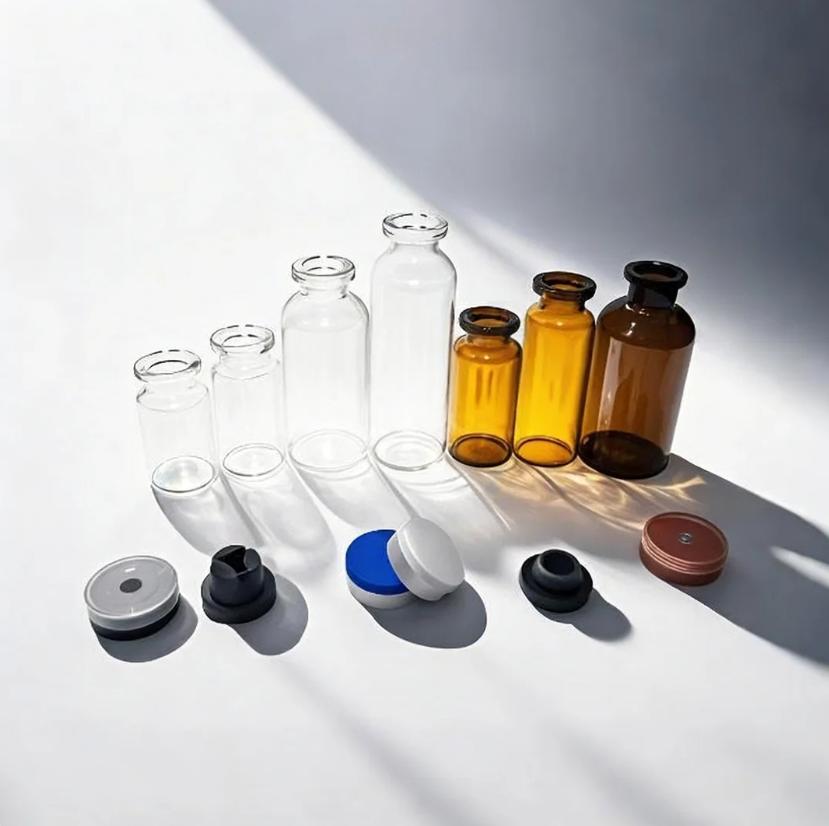
In the world of material science and packaging, few materials offer the versatility and resilience of High Borosilicate Glass. Often referred to as “hard glass” or “Borosilicate Glass 3.3” due to its specific thermal properties, this material has transitioned from laboratory exclusivity to a mainstream choice for pharmaceuticals, industrial storage, and high-end consumer goods.
Unter PharGlass, we recognize that the stability of the container is just as critical as the quality of the contents. This article explores the chemical and thermal superiority of high borosilicate glass, backed by technical data and practical application scenarios.
Unmatched Thermal Stability: The “3.3” Advantage
The defining characteristic of high borosilicate glass is its exceptionally low coefficient of thermal expansion (COE). While standard soda-lime glass might shatter under rapid temperature changes, high borosilicate glass is engineered to withstand extreme thermal shock.
- Die Wissenschaft: The material boasts a thermal expansion coefficient of (3.3 ± 0.1) × 10⁻⁶/K.
- Real-World Application: This low expansion rate means the glass can withstand a temperature difference of approximately 120°C to 130°C without fracturing.
- Practical Scenario: You can safely remove a high borosilicate vessel from a deep freezer (-20°C) and immediately introduce boiling water (+100°C) without fear of breakage. This makes it fully compatible with microwave ovens and direct open-flame heating (calcination) for up to 20 minutes, a necessity for many chemical processes.
Superior Chemical Resistance and Cleaning Efficiency
One of the most significant challenges in laboratory and industrial maintenance is removing stubborn residues—whether it’s scale, organic buildup, or chemical precipitates. High borosilicate glass offers a smooth, non-porous surface with high chemical durability.
Cleaning Protocols for Stubborn Residues: Because of its inert nature, high borosilicate glass can withstand aggressive cleaning agents that would degrade plastic or standard glass.
| Residue Type | Recommended Solvent/Cleaning Agent |
|---|---|
| Grease & Oil | Toluene, Xylene, or Gasoline (followed by detergent) |
| Polar Solvents | Ethanol, Diethyl Ether, or Acetone |
| Inorganic Scale | Dilute Hydrochloric Acid (HCl) or specialized descaling agents |
Procedure: For difficult cleaning tasks, immerse the instrument or vessel in the solvent until the residue softens. The high surface hardness allows for mechanical scrubbing with brushes without scratching the interior, ensuring no microscopic grooves remain where bacteria could harbor.
Diverse Applications: From Baby Bottles to Nuclear Waste
The unique combination of high light transmittance, high hardness, and low thermal expansion makes this material indispensable across various sectors:
- Pharmaceutical & Medical: Used for injectable vials and baby bottles due to its non-toxic, inert nature.
- Solar Energy: Essential for solar collector tubes due to its ability to withstand outdoor thermal cycling.
- Chemical Industry: The material of choice for reactors and distillation columns.
- Advanced Technology: Due to its minimal shape deviation under stress, it is used in telescope mirrors and even in the encapsulation of high-level radioactive nuclear waste.
Why Packaging Stability Matters
For pharmaceutical and chemical suppliers, the packaging is the first line of defense. High borosilicate glass provides:
- Mechanical Protection: High toughness and elasticity allow it to withstand vibration and impact during logistics.
- Barrier Properties: It offers an absolute barrier against moisture, gases, odors, and light, ensuring the active ingredients inside remain stable over long periods.
- Automation Compatibility: The dimensional stability of the glass makes it ideal for high-speed filling lines and automated printing processes.
Market Trends: The Shift Back to Glass
Despite the prevalence of plastics, there is a marked trend returning to glass packaging, particularly in coastal economic zones where quality standards are rising. While plastic offers low initial costs, the long-term stability and recyclability of high borosilicate glass make it the superior economic and environmental choice for high-value products.
PharGlass remains committed to producing high-grade borosilicate solutions that meet these evolving global standards, ensuring your products are housed in the most stable, protective environment possible.
 DE
DE  EN
EN  FR
FR  AR
AR  ES
ES  PT
PT  FA
FA  RU
RU