Einleitung
In modern pharmaceutical manufacturing, the steriles Fläschchen stands as a cornerstone of primary packaging for injectable drugs, biologics, vaccines, and freeze-dried powder formulations. These essential containers undergo stringent cleaning, sterilization, and aseptic packaging processes to ensure that drug products remain stable, safe, and effective throughout their shelf life. As the global demand for sterile injectable medications continues to surge—with the sterile injectable drugs market valued at approximately USD 592.97 billion in 2025 and projected to reach USD 1,006.93 billion by 2032—the importance of high-quality sterile vials has never been more critical.
The global sterile vial market was valued at US$ 2,837 million in 2025 and is anticipated to reach US$ 4,482 million by 2032, growing at a compound annual growth rate (CAGR) of 6.7%. This growth is driven primarily by the rapidly expanding demand for biopharmaceuticals, vaccines, and injectable therapies, alongside pharmaceutical companies’ increasing requirements for safety, stability, and contamination control.
Unter PharGlass, we understand the critical role that sterile vials play in drug delivery. As a professional supplier of high-quality pharmaceutical packaging materials—including glass bottles, rubber stoppers, and aluminum plastic caps—we serve global pharmaceutical manufacturers with OEM/ODM support, strict quality control, and reliable delivery. This article provides a comprehensive technical overview of sterile vials, covering manufacturing processes, closure integrity testing, regulatory frameworks, material innovations, and quality assurance protocols that define industry best practices today.
Manufacturing Processes for Sterile Vials
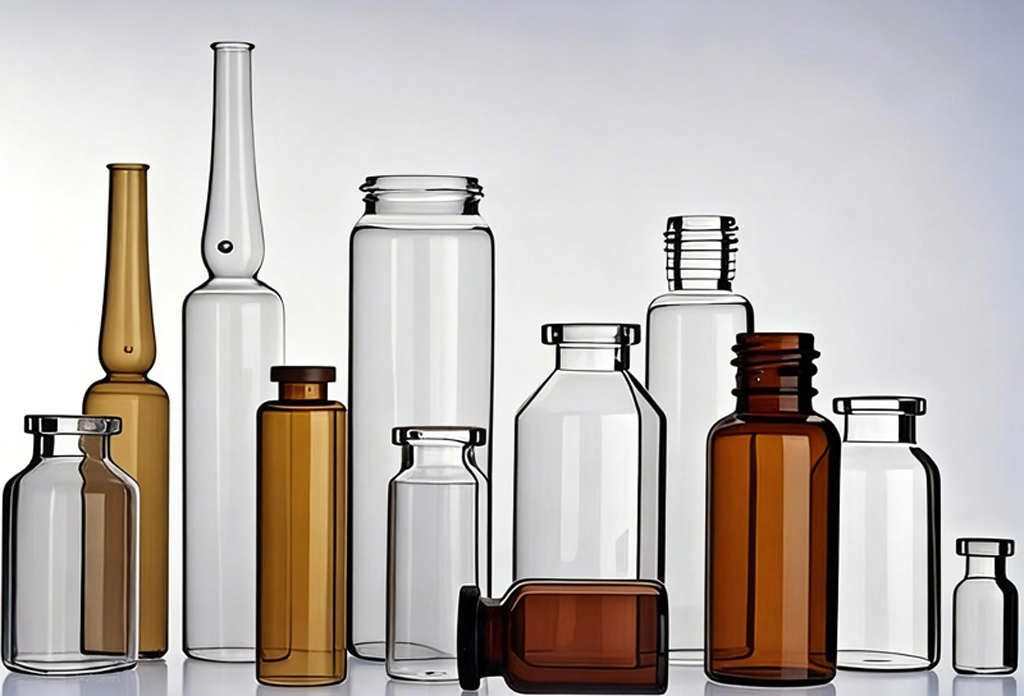
The production of sterile vials represents one of the most sophisticated manufacturing operations in pharmaceutical packaging. Sterile vials are typically made from pharmaceutical-grade glass materials, undergoing molding, cleaning, depyrogenation, and sterilization processes within clean production environments to ensure that the bottle body can be directly used for aseptic filling at the factory.
Modern aseptic vial filling equipment automates the precise dispensing of liquid medications into sterilized glass vials under strictly controlled conditions. These machines are typically housed in Class A environments, integrated with isolators or Restricted Access Barrier Systems (RABS) to eliminate contamination risks. The equipment supports seamless handling of sensitive formulations—such as monoclonal antibodies, insulin, and oncology drugs—where even minimal contamination can compromise product safety and efficacy.
Key features of advanced aseptic vial filling lines include servo-driven filling systems, in-line weight checkers, automatic stoppering mechanisms, and robotic precision that reduces human intervention while increasing batch consistency. Many systems now support both bulk vials and ready-to-use (RTU) formats, giving manufacturers greater flexibility in production planning. The industry is gradually shifting from traditional glass bottle supply to an integrated service model of “materials + sterile processing + filling solutions,” with RTU sterile vials and high-specification coated vials gaining significant traction due to their ability to reduce pollution risks and improve filling efficiency.
In 2025, global sterile vial production reached approximately 7,369 million units, with an average market price of around US$ 385 per thousand units, reflecting stable growth mainly driven by the expanding demand for biopharmaceuticals and vaccines.
Prüfung der Verschlussintegrität von Behältern (CCIT)
Container closure integrity is arguably the most critical quality attribute of any sterile vial packaging system. Container Closure Integrity Testing (CCIT) has evolved from traditional dye ingress methods to advanced deterministic techniques that provide greater sensitivity, reproducibility, and non-destructive testing capabilities.
The USP <1207> chapter provides a comprehensive framework for evaluating the integrity of container closure systems, offering guidance on testing methodologies, validation, and regulatory expectations. Deterministic non-destructive CCIT methods are increasingly preferred for pharmaceutical packaging because they preserve samples for continued stability testing and commercial use. Common non-invasive closure integrity methods include:
- Vacuum Decay: Measures pressure changes due to leakage in a vacuum chamber, ideal for lyophilized or empty containers
- Hochspannungs-Leckageortung (HVLD): Detects electrical current leakage in conductive liquids
- Laser-Based Headspace Analysis: Assesses gas composition changes in sealed containers and represents the most robust and flexible approach for performing CCIT throughout the product lifecycle
Headspace testing methods, recognized as deterministic techniques within USP <1207>, have been validated to detect gross leaks, submicron defects down to helium leak sensitivity, and even temporary leaks. They are now regularly implemented as the “golden tool” for CCIT of all types of sterile pharmaceutical products.
For manufacturers and packaging suppliers like PharGlass, validating CCIT methods requires attention to key performance parameters: specificity (differentiation between leaky and non-leaky samples), sensitivity (leak rate threshold), accuracy, precision, and robustness. Validation must include positive controls (known-leaky containers with micro-drilled holes of 2–10 µm) and negative controls (intact containers) to demonstrate method reliability.
Visible Particle Detection and Quality Control
Visible particles in injectable products represent a significant patient safety risk. The FDA has issued comprehensive guidance addressing the development and implementation of a holistic, risk-based approach to visible particle quality control, covering product development, production controls, visual inspection techniques, particle identification, and corrective actions.
Parenteral injections must meet stringent standards for subvisible particles (>100 μm) and must be completely free of visible particles (>1 μm–100 μm) as mandated by USP 788, 790, and 1046. The presence of visible particulates can lead to serious adverse outcomes ranging from capillary embolism to immune reactions.
Pharmaceutical manufacturers employ advanced inspection technologies to detect visible particles in filled sterile vials. These include automated visual inspection systems equipped with high-resolution cameras and image recognition algorithms, as well as manual inspection by trained operators conducted under controlled lighting conditions. The target for visible particles is “essentially free,” requiring scientifically based threshold monitoring to define detectable particle sizes that ensure appropriate visible particle control.
Quality control at PharGlass encompasses rigorous testing protocols across all packaging components. The 2025 edition of the Chinese Pharmacopoeia has comprehensively upgraded pharmaceutical packaging material standards, establishing a “1+4+58” system covering general requirements, material-specific guidelines, and 58 general test methods. For glass materials and containers (General Chapter 9622), key quality control requirements include linear thermal expansion coefficient, boron trioxide content, hydrolytic resistance at 121°C, inner surface hydrolytic resistance, specific element leachables, light-blocking properties, appearance, thermal shock resistance, internal pressure resistance, and internal stress.
Material Innovations and Design Considerations
The choice of glass material for sterile vials directly impacts drug stability and patient safety. Type I borosilicate glass remains the preferred substrate for formulations with demanding stability and compatibility requirements due to its chemical inertness, high barrier performance, and thermal stability. Recent advances in glass formulation and processing have increased the availability of higher-purity materials and improved surface treatments that mitigate delamination and reduce extractable profiles.
For light-sensitive drug products, sterile vials can be manufactured using amber glass or plastic materials with light-blocking additives. The 2025 edition of the Chinese Pharmacopoeia introduced a new test method for light-blocking property determination (Method 4023), establishing testing methods and limit requirements consistent with the European and US Pharmacopoeias—filling a long-standing gap in previous Chinese standards.
The sealing system—comprising rubber stoppers and aluminum crimp seals—is equally critical. For injectable drugs using glass vials as the primary container, achieving perfect container closure integrity hinges on the compatibility between the vial and its rubber stopper. Rubber stoppers must undergo rigorous chemical compatibility testing to ensure no harmful substances are released during contact with the drug product. The inherent flexibility and compressibility of rubber materials enable stoppers to conform perfectly to container openings, creating secure seals that prevent microbial ingress and maintain product sterility.
Regulatory Compliance and Emerging Standards
The regulatory landscape for sterile packaging continues to evolve, with several significant changes taking effect in 2025. Effective December 1, 2025, USP <382> replaced USP <381>, requiring system-level functional suitability testing of elastomeric components in vials, syringes, cartridges, and infusion systems. Key requirements include mandatory system-level functional testing and deterministic CCIT for sterility assurance and regulatory success.
Simultaneously, EU GMP Annex 1 mandates validated deterministic container closure integrity testing and specifies that visual inspection alone is not acceptable as a method of proving closure integrity. These converging standards create a unified compliance expectation, with deterministic CCIT methods aligned with USP <1207> serving as the benchmark for sterility assurance.
Pharmaceutical companies and packaging suppliers must demonstrate compliance through comprehensive validation studies, risk assessments, and documentation. At PharGlass, we maintain strict adherence to all applicable regulatory standards, ensuring our products meet the highest quality requirements for global pharmaceutical markets.
The Shift Toward Ready-to-Use Formats
The global ready-to-use pharmaceutical packaging market was valued at USD 9.03 billion in 2025 and is projected to reach USD 17.43 billion by 2033, growing at a CAGR of 8.7%. The demand for RTU sterile vials and high-specification coated vials is growing significantly as these products reduce contamination risks and improve filling efficiency.
RTU vials are pre-sterilized by the primary packaging material supplier, eliminating the need for pharmaceutical manufacturers to perform in-house washing, sterilization, and depyrogenation. This approach reduces time spent on preparation, streamlines production, and helps meet rising global demand more efficiently. RTU formats are particularly valuable for biologics, vaccines, and high-value drug products where contamination control and production speed are paramount.
The demand for RTU packaging is further driven by the growing need for faster drug delivery to market and the pharmaceutical industry’s increasing focus on operational efficiency.
Schlussfolgerung
Sterile vials represent a critical interface between pharmaceutical manufacturing and patient safety. As the sterile injectable drugs market continues its rapid expansion, the demand for high-quality, reliable sterile vials will only intensify. From advanced aseptic filling technologies to deterministic container closure integrity testing, from comprehensive visible particle detection to evolving regulatory frameworks like USP <382> and Annex 1—every aspect of sterile vial production and quality control directly impacts drug efficacy and patient outcomes.
Unter PharGlass, we are committed to delivering pharmaceutical packaging solutions that meet the highest standards of quality, sterility, and reliability. Our comprehensive portfolio includes glass vials, rubber stoppers, and aluminum plastic caps, manufactured under strict quality control protocols and supported by global OEM/ODM capabilities. As the industry continues to evolve toward integrated service models and ready-to-use formats, PharGlass remains at the forefront, providing the essential packaging components that enable safe and effective drug delivery worldwide.
For more information about our sterile vial solutions and pharmaceutical packaging products, please contact our team to discuss how PharGlass can support your manufacturing needs.

 DE
DE  EN
EN  FR
FR  AR
AR  ES
ES  PT
PT  FA
FA  RU
RU