A Comprehensive Guide to Pharmaceutical Glass Vials, Ampoules, Rubber Stoppers, and Aluminum Caps
The selection of pharmaceutical packaging plays a critical role in ensuring drug stability, sterility, safety, and regulatory compliance. Among the most widely used primary packaging systems for injectable medicines, ampoules und vials remain the two dominant formats. Although both are designed to store sterile pharmaceutical products, their structural designs, sealing mechanisms, usage scenarios, and safety characteristics differ significantly.
As biologics, vaccines, injectable therapeutics, and multi-dose formulations continue to expand globally, pharmaceutical glass vials have become increasingly preferred over traditional ampoules for many applications. Their unique combination of glass containers, rubber stoppers, and aluminum caps offers superior flexibility, safety, and container closure integrity.
Unter PharGlass, we provide high-quality pharmaceutical packaging solutions, including pharmaceutical glass vials, rubber stoppers, and aluminum-plastic caps. This article explores the key differences between ampoules and vials, explains why vials have become the preferred packaging choice for many injectable products, and examines the critical role of vial closure systems in modern pharmaceutical manufacturing.
What Is a Pharmaceutical Vial?
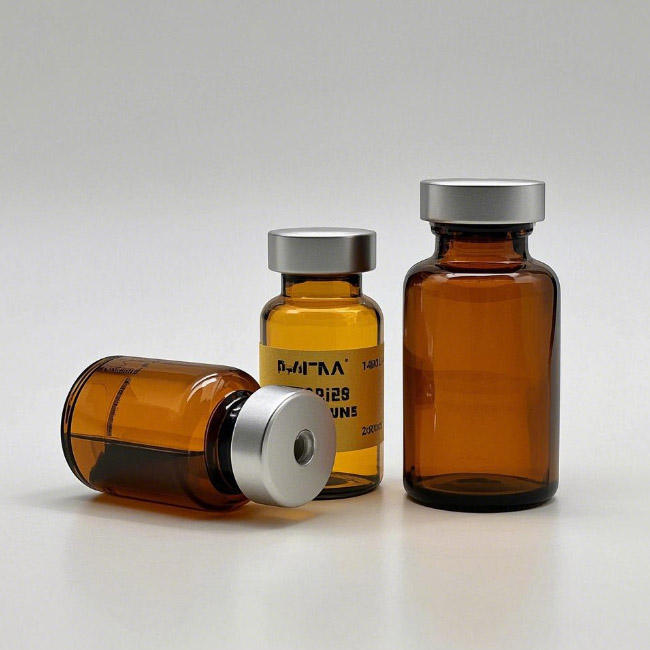
A vial is a small pharmaceutical container typically made of borosilicate glass and sealed using a combination of a pharmaceutical rubber stopper and an aluminum or aluminum-plastic cap.
Unlike ampoules, vials are designed to allow needle penetration through the stopper, enabling drug withdrawal without opening the entire container.
Pharmaceutical vials are widely used for:
- Impfstoffe
- Biologika
- Injectable solutions
- Lyophilized (freeze-dried) drugs
- Diagnostische Reagenzien
- Veterinary medicines
- Multi-dose pharmaceutical products
Today, borosilicate glass remains the preferred material for pharmaceutical vials because of its excellent chemical resistance, thermal stability, and compatibility with sensitive drug formulations.
What Is an Ampoule?
An ampoule is a hermetically sealed glass container designed to hold sterile pharmaceutical products.
Unlike a vial, an ampoule is sealed by melting the glass neck after filling. Before use, healthcare professionals must break the neck to access the medication.
Ampoules are commonly used for:
- Single-dose injectable drugs
- Notfallmedikamente
- Certain anesthetics
- Specialty pharmaceutical preparations
Because the container is permanently sealed with glass, ampoules provide excellent barrier protection but have several operational limitations compared with vials.
Structural Differences Between Vials and Ampoules
The most fundamental difference between the two packaging systems lies in their closure design.
Vial Structure
A pharmaceutical vial typically consists of:
- Borosilicate glass vial
- Pharmaceutical rubber stopper
- Aluminum cap or aluminum-plastic cap
This creates a flexible closure system capable of maintaining sterility while allowing repeated access through needle puncture.
Ampoule Structure
An ampoule consists of:
- Glass container body
- Melt-sealed glass neck
Once sealed, the ampoule becomes a completely enclosed unit.
To use the product, the glass neck must be snapped open.
This structural difference significantly affects safety, usability, and manufacturing flexibility.
Manufacturing Differences
How Vials Are Manufactured
Pharmaceutical vials are generally produced through molding or tubing conversion processes.
Two common categories include:
Molded Glass Vials
Manufactured by melting glass and forming containers using molds.
Characteristics:
- Thicker walls
- Greater mechanical strength
- Higher impact resistance
Tubular Glass Vials
Manufactured from borosilicate glass tubing using high-temperature forming equipment.
Characteristics:
- Superior transparency
- Excellent dimensional consistency
- Smooth appearance
- Widely used for injectable pharmaceuticals
Because of their precision and visual quality, tubular glass vials dominate many pharmaceutical applications today.
How Ampoules Are Manufactured
Ampoules are typically produced from glass tubing.
After filling, the neck is heated and fused shut using high-temperature flame sealing.
This creates a permanent glass-to-glass seal with extremely low gas permeability.
While effective for sterility protection, this design limits flexibility after filling.
Comparing Sealing Mechanisms
Ampoule Sealing System
Ampoules utilize:
Glass Fusion Sealing
Vorteile:
- Complete hermetic seal
- Excellent barrier properties
- No elastomer contact with product
Einschränkungen:
- Single-use only
- Requires neck breaking
- Risk of glass particle generation
Vial Sealing System
Vials utilize:
Rubber Stopper + Aluminum Cap Closure
Vorteile:
- Resealable after needle puncture
- Suitable for multiple withdrawals
- Supports freeze-dried products
- Excellent container closure integrity
- Compatible with automated filling systems
This design provides both flexibility and protection throughout the product lifecycle.
Why Vials Have Become the Preferred Choice for Modern Pharmaceuticals
1. Improved Safety
One of the biggest disadvantages of ampoules is the need to break the glass neck.
Potential risks include:
- Glass particle contamination
- Sharp-edge injuries
- Product loss during opening
These concerns have led many pharmaceutical companies to transition toward vial packaging whenever possible.
In contrast, vials allow medication withdrawal using a sterile needle without damaging the container.
This significantly reduces contamination and injury risks.
2. Multi-Dose Capability
Ampoules are generally designed for single-use applications.
Once opened:
- Sterility is lost
- Remaining product must be discarded
Vials, however, can support multiple withdrawals when formulation and regulatory requirements permit.
Beispiele hierfür sind:
- Vaccine packaging
- Insulin products
- Hospital-use injectables
- Veterinary medicines
The self-sealing characteristics of pharmaceutical rubber stoppers make this functionality possible.
3. Superior Compatibility with Lyophilized Products
Freeze-dried pharmaceuticals require specialized packaging.
During lyophilization:
- Water is removed under vacuum
- The stopper is partially inserted
- Final sealing occurs after drying
This process cannot be performed with traditional ampoules.
As a result, pharmaceutical vials have become the standard packaging solution for:
- Monoclonal antibodies
- Peptidwirkstoffe
- Impfstoffe
- High-value biologics
4. Greater Manufacturing Flexibility
Modern pharmaceutical production increasingly relies on automation.
Vials integrate easily with:
- Automated filling lines
- Stoppering systems
- Crimping equipment
- Container closure integrity testing (CCIT)
- Visual inspection systems
This compatibility improves manufacturing efficiency and product consistency.
The Importance of Rubber Stoppers in Vial Packaging
The pharmaceutical rubber stopper is one of the most critical components of a vial closure system.
Its functions include:
- Maintaining sterility
- Preventing moisture ingress
- Blocking oxygen penetration
- Supporting needle puncture
- Providing resealing capability
Modern stoppers are commonly manufactured from:
- Bromobutyl rubber
- Chlorobutyl rubber
- Pharmaceutical-grade elastomers
These materials offer excellent chemical compatibility with sensitive injectable formulations.
Why Aluminum Caps Are Essential
Although the rubber stopper provides the primary seal, the aluminum cap ensures long-term closure stability.
Key functions include:
- Mechanical retention
- Stopper compression
- Tamper evidence
- Transportation protection
- Product identification
Proper crimping force is critical for maintaining container closure integrity throughout storage and distribution.
Container Closure Integrity: A Key Advantage of Vials
Global regulatory authorities increasingly emphasize Prüfung der Verschlussintegrität von Behältern (CCIT).
Vials offer significant advantages because their closure systems can be evaluated using advanced deterministic methods such as:
- Prüfung des Vakuumabfalls
- Pressure Decay Testing
- Hochspannungs-Leckageortung (HVLD)
- Laser-Based Headspace Analysis
These technologies help manufacturers verify sterility assurance and detect microscopic leaks that visual inspection may miss.
For biologics and sterile injectables, robust CCIT programs are now considered an industry best practice.
Future Trends in Pharmaceutical Packaging
Several industry trends continue to accelerate the adoption of vial packaging:
Growth of Biologics
Biologics often require freeze-dried presentation and advanced closure systems.
Expansion of Vaccine Manufacturing
Global vaccination programs rely heavily on multi-dose vial formats.
Increased Focus on Patient Safety
Reducing glass-related injuries and contamination risks favors vial-based packaging.
Advanced Container Closure Integrity Testing
Regulators increasingly encourage deterministic CCIT methods for injectable products.
These developments reinforce the importance of high-quality pharmaceutical glass vials and closure components.
Schlussfolgerung
Although both ampoules and vials remain important pharmaceutical packaging formats, modern injectable drug development increasingly favors pharmaceutical glass vials because of their superior flexibility, safety, resealability, and compatibility with advanced manufacturing processes.
Ampoules provide excellent hermetic sealing for single-dose applications, but their one-time-use design and risk of glass particle generation limit their suitability for many contemporary pharmaceutical products.
By contrast, the combination of borosilicate glass vials, Pharmazeutische Gummistopfen, und aluminum caps delivers exceptional container closure integrity, supports lyophilization processes, enables multi-dose use, and aligns with evolving regulatory expectations.
As a trusted pharmaceutical packaging supplier, PharGlass provides premium-quality pharmaceutical glass vials, rubber stoppers, and aluminum-plastic caps designed to meet the demanding requirements of global pharmaceutical manufacturers and ensure the highest standards of drug safety and packaging performance.
Stichwörter: Pharmaceutical Glass Vials, Vial Packaging, Ampoules vs Vials, Borosilicate Glass Vials, Pharmaceutical Packaging, Rubber Stoppers, Aluminum Caps, Injectable Drug Packaging, Container Closure Integrity Testing, CCIT, Lyophilized Vials, Vaccine Packaging, Sterile Pharmaceutical Packaging, Pharmaceutical Primary Packaging, PharGlass.
 DE
DE  EN
EN  FR
FR  AR
AR  ES
ES  PT
PT  FA
FA  RU
RU