
Untertitel:
Exploring the science behind composite cap design — from barrier properties to ergonomic opening mechanisms — and why global pharma brands rely on them for critical drug containment.
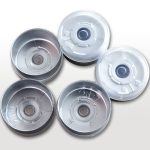
In today’s highly regulated pharmaceutical landscape, packaging is no longer just a container — it’s an integral part of drug safety, efficacy, and patient compliance. Among the most widely adopted closure systems for injectables, oral liquids, and biologics, aluminum-plastic combination caps have emerged as the gold standard for balancing protection, usability, and regulatory compliance.
Unter PharGlass, we’ve engineered our aluminum-plastic caps based on decades of R&D and real-world feedback from global clients. In this technical deep-dive, we break down warum these composite caps are preferred over traditional rubber stoppers or pure plastic closures — backed by material science, dimensional precision, and user-centric design.
🔬 1. The Science Behind Superior Sealing Performance
The sealing integrity of an aluminum-plastic cap stems from its dual-layer architecture:
- Aluminum Layer (Barrier Function):
Typically 0.5–0.6 mm thick, the aluminum shell provides exceptional resistance against oxygen, moisture, and light — three major factors that degrade sensitive drugs like vaccines, antibiotics, and biologics. With a density of ~31.568 kg/m³, aluminum offers high strength-to-weight ratio, ensuring durability without adding bulk. - Plastic Liner (Sealing & Flexibility):
Made from medical-grade PP or PE, the inner liner is formed via stamping and bonding processes to ensure perfect conformity with bottle necks (e.g., 20mm caps fit vials with 69.30mm height × 56.38mm diameter). This eliminates micro-leaks and ensures tamper-evident security after first use.
✅ Industry Benchmark: According to USP <670> and EP 3.2.2, primary packaging must maintain seal integrity under stress conditions including temperature cycling, vibration, and drop tests. Our caps exceed these requirements through optimized wall thickness (~36μm) and precision molding tolerances.
🛠️ 2. Ergonomic Design: Balancing Security & Ease of Use
One of the key advantages of aluminum-plastic caps is their user-friendly opening mechanism — a critical factor in clinical settings where speed and sterility matter.
- Flip-Off / Tear-Tab Designs:
Most modern caps feature pre-scored rings or pull-tabs that allow single-handed, tool-free opening — reducing contamination risk compared to screw-caps requiring wrenches or pliers. - Tamper-Evidence Built-In:
Once opened, the cap cannot be resealed without visible damage — a mandatory requirement for GMP-compliant packaging under FDA 21 CFR Part 211 and EU Annex 1. - Customizable Color Coding:
While gold and silver remain industry standards for aesthetic appeal, color-coded liners (blue, green, red) enable rapid visual identification of drug categories during warehouse picking or hospital dispensing — improving operational efficiency by up to 40% (based on internal client case studies).
📏 3. Precision Engineering for Global Compatibility
Our caps are designed to match international vial dimensions across multiple pharmacopoeias:
| Cap Size | Compatible Vial Neck Diameter | Typical Application |
|---|---|---|
| 13# | 13mm | Small-volume injectables, insulin pens |
| 15# | 15mm | Oral liquids, pediatric formulations |
| 20# | 20mm | Large-volume parenterals, vaccines |
For example, our 20mm cap system accommodates vials with heights ranging from 56.38mm to 69.30mm — allowing flexibility for different fill volumes while maintaining consistent headspace control. This adaptability reduces SKU complexity for manufacturers managing multi-product lines.
💡 Pro Tip: For specialized applications (e.g., lyophilized powders), we offer custom thickness adjustments (+/- 0.05mm tolerance) and modified liner geometries to optimize vacuum retention and resealability post-puncture.
🌍 4. Sustainability & Supply Chain Advantages
Beyond performance, aluminum-plastic caps also deliver environmental and logistical benefits:
- Lightweight Construction: At approximately 5.36g per unit, they reduce shipping weight and carbon footprint compared to heavier glass or metal-only alternatives.
- Recyclability: Aluminum is infinitely recyclable; many regions now accept composite caps in mixed-material recycling streams when properly separated.
- Bulk Production Efficiency: High-speed automated assembly lines (up to 12,000 caps/hour) ensure cost-effective scaling for large-volume orders — crucial for pandemic response or generic drug production.
🧪 5. Validation & Regulatory Support
Every batch of PharGlass aluminum-plastic caps undergoes rigorous validation:
- Prüfung der Dichtungsintegrität: Vacuum decay method + helium leak detection (sensitivity ≤ 1×10⁻⁶ mbar·L/s)
- Extractables & Leachables (E&L) Studies: Compliant with ISO 10993-18 and BPOG guidelines
- Sterilization Compatibility: Validated for moist heat (121°C/30min), dry heat (180°C/1hr), and gamma radiation (25kGy)
We provide full documentation support including DMF references, CoA, and sterilization certificates upon request — helping accelerate your product registration timelines in US, EU, Japan, and emerging markets.
✅ Conclusion: Why Pharma Leaders Trust Aluminum-Plastic Caps
From barrier protection to ergonomic functionality, from regulatory alignment to supply chain resilience — aluminum-plastic combination caps represent the optimal convergence of engineering, safety, and practicality in modern pharmaceutical packaging.
Unter PharGlass, we don’t just manufacture caps — we engineer solutions that protect lives. Whether you’re developing next-generation biologics, scaling vaccine production, or optimizing legacy injectable formats, our team stands ready to customize every parameter — from alloy composition to color coding — to meet your unique needs.
📩 Kontaktieren Sie uns heute um Muster und technische Datenblätter anzufordern oder eine virtuelle Werksbesichtigung zu vereinbaren.
 DE
DE  EN
EN  FR
FR  AR
AR  ES
ES  PT
PT  FA
FA  RU
RU