
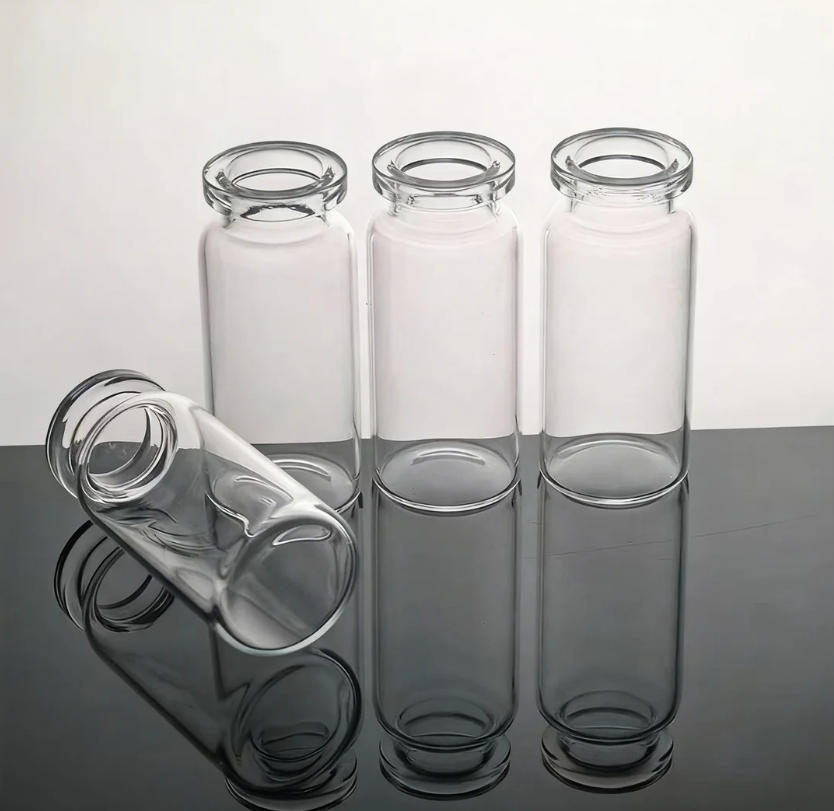
The rapid expansion of the global biologics and vaccine market has placed unprecedented demands on the pharmaceutical supply chain, particularly regarding Cold Chain Logistics. When life-saving medications must be transported and stored at sub-zero temperatures—ranging from -20°C to as low as -80°C—the physical integrity of the primary packaging becomes a critical safety factor.
Zhengzhou PharGlass provides advanced tubular glass solutions engineered to withstand the thermal stresses of the cold chain, ensuring that sensitive injectables remain secure from the manufacturing plant to the patient.
The Challenge: Thermal Shock and Glass Fragility
Glass, by its nature, is susceptible to thermal shock. In cold chain environments, the liquid medication inside the vial expands as it freezes, exerting internal pressure. Concurrently, the glass container undergoes rapid contraction during cooling and expansion during thawing. If the glass contains residual manufacturing stress, these temperature fluctuations can lead to micro-fractures or “spontaneous” shattering, compromising the sterile barrier.
To mitigate these risks, PharGlass focuses on two technical pillars: Material Selection and Stress Neutralization.
Material Excellence: USP Type I Neutral Borosilicate Glass
The foundation of a reliable cold chain vial is its coefficient of thermal expansion (COE). PharGlass utilizes USP Type I Neutral Borosilicate Glass, which features a low COE (typically $\leq 5 \times 10^{-6} K^{-1}$ between 20°C and 300°C).
This low expansion property allows the glass to absorb thermal energy more efficiently than standard soda-lime glass, significantly reducing the risk of cracking during rapid temperature transitions (e.g., when moving from cryogenic storage to room temperature). Furthermore, the high chemical resistance of PharGlass neutral glass ensures that no ions leach into the drug during long-term cold storage.
Parametric Reliability: The Science of Low-Stress Packaging
At Zhengzhou PharGlass, we employ precision annealing processes to ensure that every container meets the highest physical safety standards. Here are the key parameters that define our “Cold Chain Ready” packaging:
1. Internal Stress Control ($\leq 400nm/mm$)
Residual stress is the invisible enemy of glass durability. Through our advanced computer-controlled annealing lehrs, PharGlass ensures that internal stress is neutralized below 400nm/mm. By minimizing this latent tension, the vials gain the elasticity required to accommodate the expansion of frozen formulations without fracturing.
2. Vertical Axis Deviation ($< 1.2mm$)
Structural symmetry is vital for even pressure distribution. Our vials maintain a vertical axis deviation of less than 1.2mm. A perfectly symmetrical vial ensures that during the freezing process, the stresses exerted by the ice mass are distributed uniformly across the glass walls, preventing localized pressure points that lead to failure.
3. Precision Wall Thickness and Height ($\pm 0.4mm$)
Consistency in glass wall thickness and full height tolerance (within ±0.4mm) ensures uniform heat transfer. This uniformity allows the entire container to cool and warm at a consistent rate, preventing the “thermal lag” that often causes glass to crack at the base or shoulder.
Selection Guide for Cold Chain Injectables
When procuring packaging for temperature-sensitive medications, technical teams should follow this selection framework based on PharGlass standards:
- For Cryogenic Storage (-80°C): Neutral Borosilicate (USP Type I) vials are mandatory. The low-stress profile of PharGlass tubular vials is superior to molded glass in these extreme conditions.
- For Lyophilized (Freeze-Dried) Products: Precision height control is essential to ensure the vials sit perfectly flat on the freeze-dryer shelves, maximizing thermal contact and ensuring batch uniformity.
- For Light-Sensitive Biologics: PharGlass Amber Vials offer the dual benefit of thermal stability and high-level UV protection (compliant with USP light transmission standards).
Conclusion: Securing the Future of Biopharma
In the delicate ecosystem of the cold chain, the glass vial is the final line of defense. A failure in packaging integrity is not just a financial loss; it is a risk to public health. By adhering to rigorous manufacturing tolerances—such as 400nm/mm stress limits and ±0.4mm height precision—Zhengzhou PharGlass delivers the stability required for today’s most advanced medical therapies.
As global healthcare continues to shift toward sensitive biologics, PharGlass remains committed to providing the industry with the “Low-Stress” reliability needed to navigate the complexities of modern logistics.
 EN
EN  FR
FR  AR
AR  DE
DE  ES
ES  PT
PT  FA
FA  RU
RU