Introducción
In the world of modern packaging, few formats offer the combination of transparency, mechanical strength, and user convenience found in cartridge bottles (often simply called cartridges). Originally developed for precision drug delivery in pen injectors, cartridge bottles have transcended their pharmaceutical origins and found widespread adoption in the cosmetics, personal care, and even food industries. Their unique design—a cylindrical glass container open at both ends, sealed with elastomeric plungers and caps—provides exceptional protection against light, oxygen, and moisture, while enabling smooth, controlled dispensing of liquid or semi-solid products.
En Zhengzhou PharGlass, we specialize in high-quality glass cartridge bottles manufactured from Type I borosilicate glass, compliant with ISO 11040-4 and international pharmacopoeia standards. Our cartridges are used not only by pharmaceutical companies for biologics, insulin, and vaccines but also by cosmetics brands for premium skincare serums, lotions, and fragrances. This article provides a comprehensive, evidence-based exploration of the diverse applications of cartridge bottles, drawing on industry data, material science principles, and regulatory requirements. Whether you are a drug developer or a cosmetics formulator, understanding the capabilities of cartridge bottles will help you make informed packaging decisions.
Part 1: What Are Cartridge Bottles? A Technical Overview
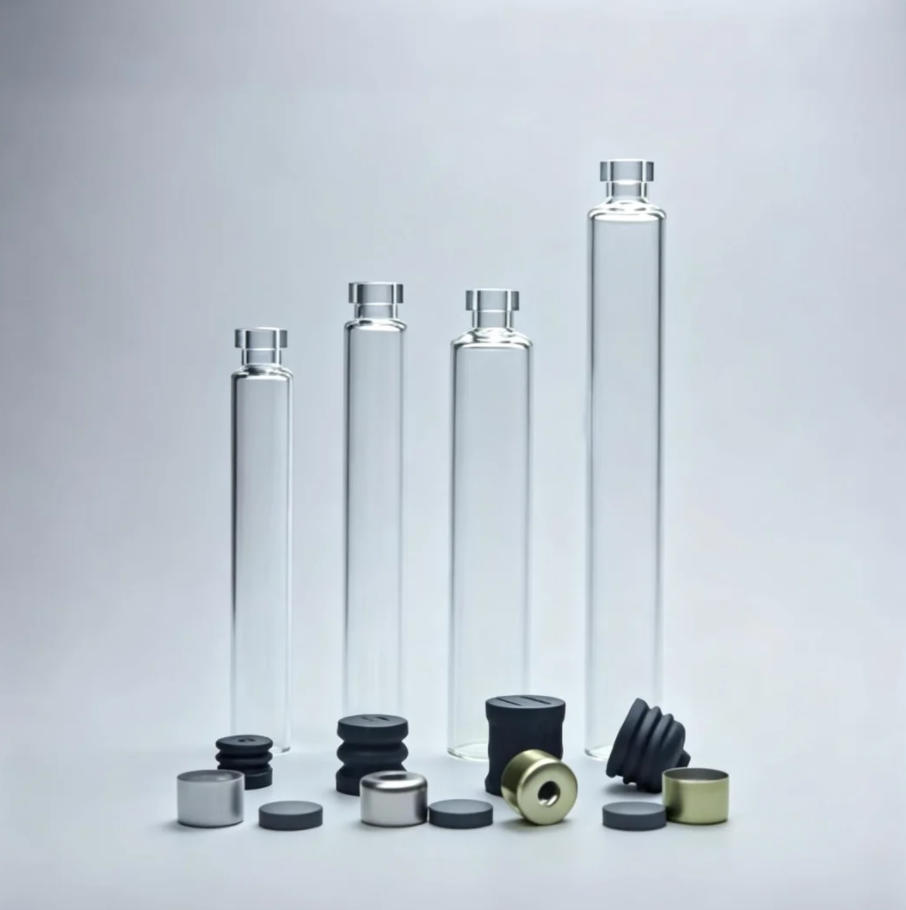
A cartridge bottle (or cartridge) is a cylindrical glass container with two open ends. One end is sealed with a movable rubber plunger (piston), and the other end is sealed with a rubber disc (septum) and an aluminum crimp cap. In use, the cartridge is inserted into a dispensing device—such as a pen injector for drugs or a airless dispenser for cosmetics—and the plunger is pushed forward by a mechanical drive, expelling the contents through a needle or nozzle.
Key technical characteristics of cartridge bottles include:
- Material: Predominantly Type I borosilicate glass (neutral glass) due to its superior chemical durability, low extractables, and dimensional precision. Some non-critical applications may use Type III soda-lime glass or even plastic, but glass remains the gold standard for sensitive formulations.
- Dimensiones: Standard capacities range from 1.5mL to 50mL, with outer diameters typically 11mm to 22mm. Tolerances on inner diameter (ID) are exceptionally tight (±0.01mm) to ensure smooth plunger movement and leak-free sealing.
- Closure system: A two-component system consisting of a plunger (bromobutyl or chlorobutyl rubber) at the bottom and a disc (septum) with an aluminum flip-off or snap-off cap at the top. Both components are sterilizable and biocompatible.
- Surface treatment: The inner glass surface is often siliconized (coated with a precise amount of silicone oil) to reduce friction between the plunger and the glass wall, ensuring consistent glide force.
Zhengzhou PharGlass offers ready-to-use (RTU) cartridge bottles in nested tubs, pre-sterilized by gamma irradiation or ethylene oxide, ready for aseptic filling. We also provide customized silicone levels—from standard (for general use) to ultra-low (for biologics sensitive to silicone).
Part 2: Cartridge Bottles in the Cosmetics Industry – Elegance Meets Protection
2.1 Aesthetic Appeal and Brand Differentiation
The cosmetics industry is driven by visual appeal, sensory experience, and brand image. Cartridge bottles, with their sleek, transparent cylindrical design, convey a sense of purity, precision, and luxury. Unlike traditional jars or tubes, a cartridge inside a clear or translucent dispenser allows the consumer to see the product inside—its color, texture, and remaining volume. This transparency builds trust: customers can verify that the cream, serum, or lotion has not changed color or separated.
Moreover, cartridge-based packaging can be incorporated into airless pump systems, which are highly valued in premium skincare. When a cartridge is placed inside an airless dispenser, the outer shell can be customized with brand colors, metallic finishes, or frosted effects, while the glass cartridge maintains the product’s integrity. This combination of aesthetics and functionality is why many high-end brands choose cartridge bottles for their flagship products.
Examples of cosmetic products commonly packaged in cartridge bottles:
- Facial serums: Often formulated with active ingredients (vitamin C, retinol, hyaluronic acid) that are sensitive to light and air. The amber glass cartridge provides UV protection, and the airless dispenser prevents oxidation.
- Moisturizing creams and lotions: Cartridges preserve the emulsion stability by minimizing air contact, reducing the risk of phase separation or microbial contamination.
- Sunscreens: UV filters, especially organic (chemical) filters, can degrade when exposed to oxygen and light. A glass cartridge with a high-barrier closure extends shelf life.
- Fragrances (perfumes): While traditional perfume bottles are often thick glass, cartridge-based atomizers are gaining popularity for travel-size, refillable, or sample formats. The cartridge can be replaced, reducing waste and allowing consumers to try multiple scents.
- Shampoos and conditioners (premium lines) : Salon-quality brands sometimes use cartridge-based dispensers for precise dosing and reduced contamination.
2.2 Superior Protection Against Light, Oxygen, and Moisture
Cosmetic formulations are complex mixtures of oils, water, emulsifiers, preservatives, and active ingredients. Many of these components are susceptible to degradation when exposed to:
- Light: Ultraviolet (UV) and visible light can cause photo-oxidation, leading to color fading, rancidity (for oils), and loss of active efficacy. Amber (brown) glass cartridges absorb most UV radiation (wavelengths below 450 nm), significantly slowing photodegradation. Clear flint glass cartridges, while not UV-blocking, are still superior to translucent plastics that may allow light piping.
- Oxygen: Oxidative rancidity is a major concern for products containing polyunsaturated oils (e.g., argan oil, rosehip oil) or antioxidants (e.g., vitamin C). Glass has an oxygen transmission rate (OTR) of essentially zero—unlike many plastics that allow gradual oxygen permeation through the walls. When combined with an airless dispenser that prevents air from entering the cartridge as the product is used, the oxygen exposure is minimized.
- Moisture: For anhydrous formulations (e.g., oil-based serums or balms), moisture ingress can cause turbidity or microbial growth. Glass provides an absolute moisture barrier.
Zhengzhou PharGlass cartridge bottles meet USP <660> Type I hydrolytic resistance, ensuring that no alkali ions leach into the product, which could alter pH or trigger emulsion instability. This is particularly important for cosmetic formulations with pH-sensitive ingredients (e.g., alpha-hydroxy acids, peptides).
2.3 Convenience, Hygiene, and Precision Dosing
Cartridge-based cosmetic dispensers are typically designed with a pump mechanism that delivers a metered dose (e.g., 0.2mL per pump). This precision dosing offers several benefits:
- Reduces waste: Consumers use exactly the amount needed, rather than squeezing out excess from a tube or dipping fingers into a jar.
- Enhances hygiene: The product never comes into contact with fingers or the external environment until dispensed. This is crucial for preservative-free or “clean beauty” formulations that lack strong antimicrobial preservatives. The closed system prevents bacterial contamination between uses.
- Improves user experience: A smooth, consistent dispenser with a glass cartridge feels premium and reliable. Many consumers associate glass with higher quality and are willing to pay a premium for glass-packaged cosmetics.
Furthermore, the lightweight nature of cartridge bottles (compared to traditional thick-walled glass jars) reduces shipping costs and environmental impact per unit. Some brands are also implementing refill programs where the outer dispenser is kept and only the glass cartridge is replaced, aligning with sustainability goals.
Part 3: Cartridge Bottles in the Pharmaceutical Industry – Precision, Safety, and Compliance
3.1 Critical Role in Drug Delivery Systems
The pharmaceutical industry relies on cartridge bottles primarily for parenteral (injectable) drugs that are self-administered by patients. Cartridges are the core component of inyectores de pluma y autoinyectores, which have revolutionized the treatment of chronic diseases such as diabetes, rheumatoid arthritis, multiple sclerosis, and growth hormone deficiencies.
Why are cartridges preferred for self-injection?
- Dosing accuracy: The fixed internal diameter of the cartridge, combined with a precision-machined plunger, ensures that the delivered volume is highly reproducible. Pen injectors allow patients to dial a specific dose (e.g., 10 units of insulin), and the mechanical drive advances the plunger by the exact distance corresponding to that dose.
- Convenience: Patients do not need to draw medication from a vial using a separate syringe—a process that requires manual dexterity, carries a risk of needle-stick injury, and increases the chance of contamination. With a cartridge-based pen, the user simply attaches a pen needle, dials the dose, and injects.
- Multi-dose capability: Cartridges are often designed for multi-dose use over several days or weeks. The rubber septum can be pierced multiple times (typically 10–30 punctures) with a fine pen needle and still maintain sterility and leak-tightness. A preservative (e.g., m-cresol, phenol) is usually added to multi-dose cartridges to inhibit microbial growth after the first puncture.
Zhengzhou PharGlass manufactures pharmaceutical-grade cartridge bottles in strict compliance with ISO 11040-4, USP <660>, EP 3.2.1, and ChP standards. We provide complete documentation including Drug Master File (DMF) support, extractables and leachables (E&L) data, and biocompatibility testing (ISO 10993).
3.2 Diverse Drug Formulations Compatible with Cartridges
The chemical inertness of Type I borosilicate glass makes cartridge bottles suitable for a wide range of drug products, including:
- Insulin and insulin analogs: The most traditional cartridge application. Insulin is sensitive to aggregation and oxidation; the stable glass surface minimizes protein adsorption and prevents fibrillation.
- Glucagon-like peptide-1 (GLP-1) agonists (e.g., liraglutide, semaglutide): These peptide drugs are highly potent and require precision dosing. Glass cartridges ensure stability over the 30-day in-use period.
- Monoclonal antibodies (mAbs) for subcutaneous injection: Many mAbs for autoimmune diseases (e.g., adalimumab, etanercept) are now supplied in pre-filled pens containing a glass cartridge. The low extractables profile of Type I glass is essential to avoid protein aggregation and immunogenicity risks.
- Growth hormone (somatropin) : Patients, often children, need daily injections. Cartridge-based pens simplify the process and improve compliance.
- Heparin and low-molecular-weight heparins: Anticoagulants are often supplied in multi-dose cartridges for hospital or home use.
- Medicamentos de urgencia (e.g., epinephrine auto-injectors for anaphylaxis): The cartridge ensures rapid, reliable delivery of a life-saving dose.
3.3 Manufacturing and Regulatory Advantages
For pharmaceutical manufacturers, cartridge bottles offer several practical benefits:
- Ready-to-use (RTU) formats reduce contamination risk: Zhengzhou PharGlass supplies cartridges pre-washed, siliconized, and sterilized (gamma or ETO) in nest and tub systems. These can be loaded directly into aseptic filling lines, eliminating the need for on-site washing and depyrogenation, which reduces capital equipment costs and validation burden.
- Material compatibility: Glass cartridges are compatible with all terminal sterilization methods (autoclaving, gamma irradiation, ETO) and aseptic processing. They withstand the extreme conditions of lyophilization (freeze-drying) when used in dual-chamber cartridges.
- Regulatory acceptance: Glass cartridges have a long history of safe use. Regulators are familiar with the material’s performance characteristics, expediting new drug applications (NDAs) and abbreviated new drug applications (ANDAs). Zhengzhou PharGlass provides comprehensive regulatory support, including DMF filings and technical dossiers.
3.4 Limitations and Considerations in Pharma
While cartridge bottles excel in many areas, they are not suitable for every drug product. Limitations include:
- Higher cost compared to vials: The precision manufacturing, silicone application, and dual closure system make cartridges more expensive.
- Narrow volume range: Typically 1.5mL–5mL for pen injectors, though up to 50mL available for specialized devices.
- Potential silicone interactions: Some protein drugs may aggregate or form particles in the presence of silicone oil used to lubricate the plunger. For such products, Zhengzhou PharGlass offers baked-on silicone (cross-linked) or silicone-free options with specialized coating technologies.
Part 4: Other Emerging Applications
Beyond cosmetics and pharmaceuticals, cartridge bottles are finding niche applications in:
- Veterinary medicine: For injectable drugs used in livestock or companion animals, often in multi-dose pens.
- Reactivos de diagnóstico: Cartridge bottles are used in point-of-care testing devices where precise dispensing of a reagent is required.
- Food and beverage: Premium liquid flavorings, sweeteners, or CBD oils are sometimes packaged in glass cartridges with pump dispensers to ensure controlled dosing and freshness.
- Industrial adhesives and lubricants: Precision dispensing of two-component adhesives or high-value lubricants.
Zhengzhou PharGlass is actively exploring these markets and can adapt our cartridge bottles to meet specific customer requirements, including alternative closures, custom dimensions, and printed scales.
Part 5: Why Choose Zhengzhou PharGlass for Cartridge Bottles?
En Zhengzhou PharGlass, we combine decades of experience in pharmaceutical glass manufacturing with a customer-centric approach. Our cartridge bottles are produced in ISO Class 8 cleanrooms, inspected by 100% automated optical systems, and tested for:
- Precisión dimensional: ID, OD, length, and wall thickness uniformity.
- Surface quality: Absence of scratches, cracks, or inclusions.
- Resistencia a la hidrólisis: Meeting Type I classification.
- Glide force: Consistent plunger movement within specified ranges.
We support OEM/ODM projects, including custom printing (ceramic ink on glass), specialized silicone coatings, and ready-to-use sterile packaging. Our global logistics network ensures timely delivery to pharmaceutical and cosmetics manufacturers worldwide.
Conclusión
Cartridge bottles are far more than a niche packaging format. Their unique combination of transparency, barrier protection, mechanical strength, and precision dispensing makes them indispensable in both the cosmetics and pharmaceutical industries. For cosmetics, they elevate brand perception while protecting sensitive formulations from light, air, and contamination. For pharmaceuticals, they enable safe, accurate, and convenient self-injection for millions of patients with chronic diseases.
As consumer demand for sustainable, high-performance packaging grows, cartridge bottles—particularly those made from glass—are poised for continued expansion. Refillable cartridge systems reduce plastic waste, and the inert nature of glass ensures product quality over extended use.
Zhengzhou PharGlass is committed to advancing cartridge bottle technology. Whether you are formulating a luxury anti-aging serum or a life-saving biologic, our team can provide the technical expertise and high-quality packaging you need. Contact us today to discuss your cartridge bottle requirements.
Referencias
- ISO 11040-4:2015 – Prefilled syringes – Part 4: Glass barrels for prefilled syringes and cartridges
- USP – Envases: vidrio
- EP 3.2.1 – Glass containers for pharmaceutical use
- Informe técnico n.º 77 de la PDA: Pruebas de integridad de los cierres de envases
- Packaging of Cosmetics: Glass vs. Plastic, Cosmetics & Toiletries, 2022
- Market Trends in Pharmaceutical Cartridges, PharmTech, 2023
- Zhengzhou PharGlass internal technical data sheets
For more information or to request samples, please visit our website or email our sales team. Let Zhengzhou PharGlass be your trusted partner in cartridge bottle packaging.
 ES
ES  EN
EN  FR
FR  AR
AR  DE
DE  PT
PT  FA
FA  RU
RU