The global market for pre-sterilized ready-to-use vials was estimated at US$921 million in 2024 and is forecast to reach US$2,273 million by 2031, growing at a robust CAGR of 13.1%. This rapid expansion reflects the pharmaceutical industry’s accelerating shift toward ready-to-use (RTU) primary packaging solutions. However, transitioning to RTU sterile vials requires a thorough understanding of the aseptic filling workflow. This article provides a comprehensive, step-by-step guide to the filling and usage of RTU sterile vials, covering pre-filling inspection, aseptic filling operations, and post-filling sealing and labeling procedures.
1. Understanding the RTU Sterile Vial Format
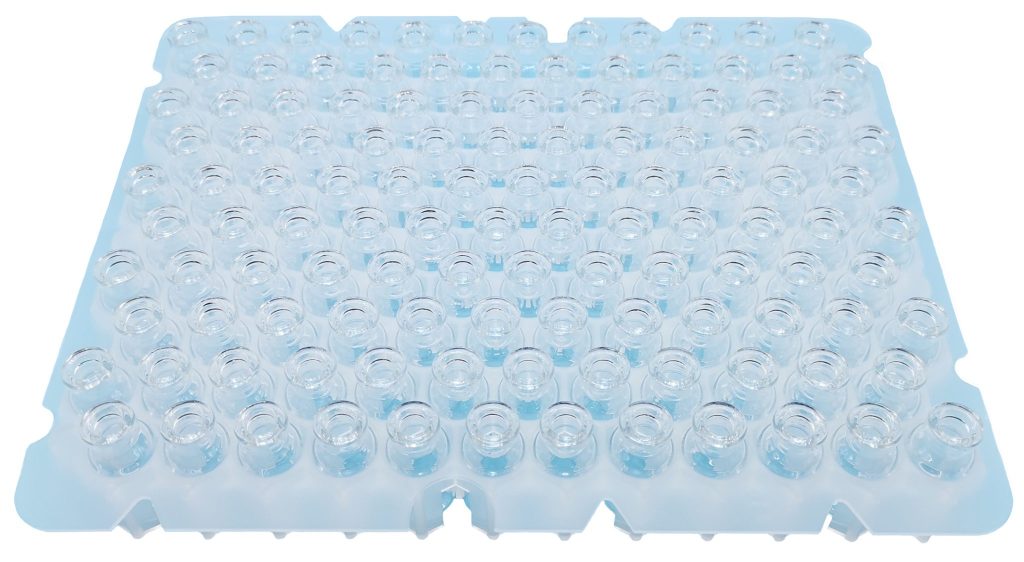
Before diving into the filling process, it is essential to understand what RTU sterile vials are and how they differ from conventional bulk containers. RTU sterile vials are pharmaceutical-grade containers that have been pre-washed, sterilized, depyrogenated, and packaged in a sealed nest-and-tub configuration by the supplier. This eliminates the need for in-house washing, sterilization, and depyrogenation—processes that traditionally require substantial capital investment in equipment and cleanroom infrastructure. RTU vials arrive ready for direct entry into aseptic filling operations, with the nest-and-tub design preventing glass-to-glass contact, minimizing breakage and particulate generation.
2. Pre-Filling Preparation: Inspection and Setup
The first step in any aseptic filling operation is thorough preparation. This foundational stage ensures that both the primary packaging and the filling equipment are ready for sterile processing.
2.1 Visual Inspection of RTU Vials
Before introducing RTU vials into the aseptic zone, operators or automated inspection systems must verify the integrity of each container. Key inspection points include:
- Container integrity: Check for cracks, chips, or other cosmetic defects in the glass. Advanced sensor systems can identify defective primary packaging components, which can then be automatically rejected before they reach the filling line.
- Seal integrity: Ensure that the sterile barrier packaging (typically Tyvek® liners) remains intact and has not been compromised during transport or storage.
- Expiration date validation: Confirm that the RTU vials are within their validated shelf-life period. RTU vials are packaged to maintain sterility up to the filling line, and the supplier is responsible for validating the sterilization cycles used.
2.2 Equipment Preparation and Parameter Setup
The filling equipment must be prepared and validated before production begins:
- Equipment sterilization: All filling system components that will contact the drug product—including filling needles, product pathways, and containers—must be sterilized. Modern aseptic filling lines incorporate isolators or Restricted Access Barrier Systems (RABS) to maintain Grade A environmental conditions throughout the filling process.
- Parameter calibration: For automated filling systems, key parameters must be set and verified, including fill volume (typically calibrated using time-pressure pumps, rotary piston pumps, or peristaltic pumps), filling speed (measured in units per hour—high-speed lines can produce 24,000–36,000 units per hour), and stopper placement parameters.
- Environmental monitoring: The cleanroom environment must be monitored for viable and non-viable particulate counts, temperature, and humidity to ensure compliance with GMP standards.
3. The Aseptic Filling Process
Once preparation is complete, the aseptic filling operation can proceed. This is the core of the RTU vial filling workflow, where sterility assurance is paramount.
3.1 Transferring RTU Vials into the Aseptic Zone
The introduction of RTU packaging into an isolator or RABS must be performed without compromising the sterile barrier. The typical transfer workflow includes:
- Outer bag removal: The outer shipping packaging is removed in a controlled, non-aseptic area.
- De-bagging: The sealed nest-and-tub assembly is transferred into the Grade A environment, where the secondary sterile barrier is opened. There are two primary methods for introducing RTU packaging into an isolator while ensuring sterility.
- De-lidding: A robotic arm or automated system gently removes the pre-heated lid from the tub. The lid exits through a “mousehole” into a waste container, ensuring that the containers in the nest are exposed to the Grade A environment only at this stage.
- De-nesting: Individual vials may be removed from the nest for filling, or they can be filled while remaining in the nest configuration, depending on the filling line design.
3.2 Filling Operation
The filling step requires precision and careful control to avoid contamination:
- Manual (syringe-based) filling: For small-batch or laboratory-scale operations, operators working within a biosafety cabinet or isolator may use sterilized syringes. The pre-sterilized RTU vial is positioned, the syringe needle is inserted through the vial opening (or through a pre-inserted stopper in closed-vial designs), and the liquid is slowly injected to avoid splashing and bubble formation.
- Automated filling: In commercial production, automated filling machines are used. The filling heads remain in a fixed position, while a robotic arm moves the nest containing the vials beneath the filling nozzles. Liquid is dispensed in precise, pre-calibrated volumes. In-process check-weighing systems detect the net weight of each filled vial to ensure dose accuracy, with defective units automatically rejected.
3.3 Environmental Controls During Filling
Throughout the filling process, strict environmental controls are maintained. Critical operations, including filling and sealing, require a Grade A environment, which ensures product integrity until the container is securely sealed. The growing adoption of RTU containers is reshaping aseptic pharmaceutical manufacturing by eliminating in-house sterilization and simplifying material flow.
4. Post-Filling Operations
After the vials are filled, the finishing operations ensure that the sterility and integrity of the finished drug product are maintained.
4.1 Stopper Insertion and Sealing
Immediately after filling, the vial must be sealed:
- Stopper insertion: A sterile rubber stopper is placed into the vial opening using automated equipment. For RTU systems, stoppers are often supplied pre-sterilized and nested, matching the vial format.
- Capping: An aluminum or aluminum-plastic cap is crimped over the stopper to secure the closure. The container closure integrity (CCI) of the sealed vial must be validated to ensure that the sterility barrier is maintained throughout the product’s shelf life.
- Laser resealing (closed-vial systems): In advanced closed-vial filling systems, the vial is supplied with the stopper already secured in place, and the vial is filled by inserting a needle through the stopper, which is then resealed by laser.
4.2 Labeling and Traceability
- Label application: Labels containing essential information—product name, strength, batch number, expiration date, and storage conditions—are applied to each vial. Automated labeling systems integrated with the filling line ensure consistent placement and alignment.
- Traceability systems: Modern filling lines implement 100% serialization and traceability, often using QR codes, data matrix codes, or RFID tags. This enables full product tracking from fill-finish to patient administration and supports regulatory requirements for drug supply chain security.
4.3 Post-Filling Inspection
Before packaging, filled and sealed vials undergo 100% inspection:
- Visual inspection: Automated vision systems using high-speed cameras check for particulate contamination, fill level accuracy, stopper placement, and cosmetic defects.
- Container closure integrity testing: Non-destructive CCI testing (e.g., vacuum decay, high-voltage leak detection) verifies that each vial maintains an effective sterile barrier.
- Rejection of defective units: Vials that fail any inspection are automatically rejected and removed from the production stream.
4.4 Storage and Handling
Filled RTU vials must be stored in appropriate conditions according to the drug product’s stability profile—typically temperature-controlled environments (e.g., 2°C–8°C for biologics, -20°C or -80°C for vaccines and gene therapies). The sealed RTU vials retain their sterility until opened for patient administration, provided the container closure remains intact. For sensitive products, secondary packaging may include additional protective measures such as desiccants or oxygen absorbers.
5. Regulatory Compliance and Quality Assurance
The updated EU GMP Annex 1, effective August 25, 2023, introduces significant changes to sterile manufacturing, emphasizing contamination control strategies (CCS), quality risk management (QRM), and enhanced environmental monitoring. RTU packaging is recognized as a time-efficient and cost-effective solution for compliance with these stricter regulations. Pharmaceutical manufacturers must establish a comprehensive CCS and work closely with RTU suppliers to ensure that the sterility of the primary packaging is maintained from supplier delivery to final filling.
Conclusión
The filling and use of RTU sterile vials represents a well-orchestrated workflow that demands meticulous attention to sterility, precision, and regulatory compliance. From pre-filling inspection and equipment setup to aseptic transfer, precise filling, and post-filling sealing and labeling, each step is critical to ensuring patient safety and drug product quality. As the pharmaceutical industry continues its shift toward biologics, personalized medicine, and higher sterility standards, mastering the RTU vial filling process will become an essential competency for manufacturers seeking to remain competitive in the global marketplace.
Zhengzhou PharGlass is a professional supplier of pharmaceutical packaging materials in China, offering high-quality sterile glass bottles (ready-to-use format), pharmaceutical rubber stoppers, and aluminum plastic caps for the medical and pharmaceutical industries. With OEM/ODM support and global shipping, PharGlass is dedicated to supporting pharmaceutical manufacturers with reliable, safe, and efficient primary packaging solutions.
 ES
ES  EN
EN  FR
FR  AR
AR  DE
DE  PT
PT  FA
FA  RU
RU