A Complete Technical Comparison for Pharmaceutical Packaging Professionals
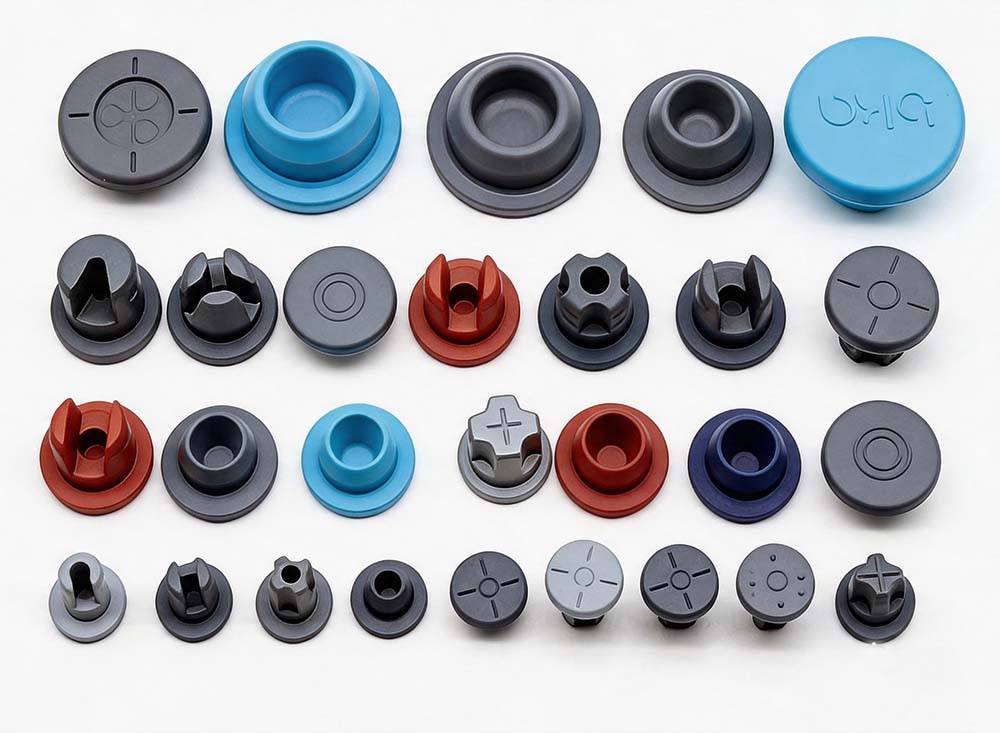
In the pharmaceutical industry, the integrity and safety of drug products depend not only on the active pharmaceutical ingredient itself but also on the quality of the primary packaging components that protect it. Among these critical components, halogenated butyl rubber stoppers serve as the primary sealing interface between the drug product and the external environment, maintaining sterility, preventing contamination, and ensuring compatibility throughout the product‘s shelf life. This article provides a comprehensive, authoritative comparison of bromobutyl rubber (BIIR) and chlorobutyl rubber (CIIR) for pharmaceutical closures, supporting pharmaceutical manufacturers, packaging engineers, and regulatory affairs professionals in making evidence‑based material selection decisions.
As a specialized supplier of pharmaceutical packaging components, PharGlass offers both bromobutyl and chlorobutyl rubber stoppers manufactured in ISO 15378 certified facilities, with full traceability and comprehensive regulatory documentation. We understand that selecting the right elastomer formulation is a strategic decision that directly impacts patient safety, drug stability, and manufacturing efficiency.
1. Halogenated Butyl Rubber: The Foundation of Modern Pharmaceutical Closures
Butyl rubber is a synthetic copolymer of isobutylene and a small amount of isoprene, first developed in the 1940s. In its natural state, butyl rubber offers exceptional impermeability to gases and moisture but exhibits slow vulcanization rates and limited reactivity with other materials. The introduction of halogen atoms—bromine (Br) for bromobutyl rubber or chlorine (Cl) for chlorobutyl rubber—through a controlled halogenation process transforms the base polymer into a high‑performance elastomer with enhanced cross‑linking capabilities.
Halobutyl rubbers combine low gas permeability, good durability on exposure to moisture and heat, and good chemical stability, making them the industry standard for pharmaceutical closures such as stoppers and plungers. They typically have lower levels of extractables compared to other rubbers and excellent resistance to permeation by water and oxygen.
Both bromobutyl and chlorobutyl rubbers are widely used in the pharmaceutical industry as sealing components for injection vials, infusion bottles, prefillable syringes, and dental cartridges. However, the specific halogen incorporated during manufacturing confers distinct characteristics that determine suitability for different drug formulations and processing conditions.
PharGlass manufactures both bromobutyl and chlorobutyl rubber stoppers using premium‑grade base polymers, with customizable formulations tailored to specific drug compatibility requirements and sterilization protocols.
2. Manufacturing and Processing: How Halogen Choice Affects Production
2.1 Halogen Concentration and Reactivity
The fundamental difference between bromobutyl and chlorobutyl rubber lies in the concentration and chemical activity of the halogen atoms incorporated into the polymer matrix. When bromine is used as the halogen for producing bromobutyl rubber, it is routinely added at a concentration of approximately 2%. For chlorobutyl rubber, chlorine is added at a concentration of 1.1–1.5%.
Bromine atoms are significantly more reactive than chlorine atoms due to their larger atomic radius and lower electronegativity. This higher reactivity enables bromobutyl rubber to achieve faster cross‑linking during the vulcanization process, which in turn translates into more efficient production cycles and shorter curing times.
2.2 Stabilizer Requirements
Because bromine is more reactive, bromobutyl rubber requires the addition of stabilizers such as soybean oil—typically at a concentration of approximately 1.3%—during the vulcanization process to prevent premature cross‑linking and ensure consistent product quality. Chlorine, being more inert, does not require the use of any stabilizers during manufacturing, which can be advantageous from a purity standpoint as it reduces the number of additives that could potentially migrate into the drug product.
2.3 Antioxidants and Additives
The use of antioxidants, such as butylated hydroxytoluene (BHT), is routinely employed in the manufacturing of both bromobutyl and chlorobutyl rubber stoppers in approximately equal amounts. Beyond stabilizers and antioxidants, a complete rubber formulation includes fillers (such as silica or clay to adjust hardness and mechanical strength), vulcanizing agents (such as sulfur or phenolic resins for cross‑linking), accelerators to control cure speed, activators to facilitate cross‑linking reactions, and pigments for color coding.
The selection and proportion of these additives play a crucial role in determining the final performance characteristics of the rubber closure. PharGlass maintains strictly controlled compounding processes to ensure batch‑to‑batch consistency and minimal extractable profiles.
3. Comparative Performance: Physical and Chemical Properties
3.1 Gas and Moisture Barrier Properties
Both bromobutyl and chlorobutyl rubbers exhibit excellent barrier properties against oxygen and moisture, which is essential for protecting oxygen‑sensitive drugs from degradation. According to industry data, the two halogenated butyl rubbers are generally considered comparable in terms of permeability for oxygen and water. Bromobutyl rubber exhibits lower gas permeability compared to chlorobutyl rubber, a property particularly advantageous for medications prone to degradation or potency loss due to exposure to oxygen. The bromination process enhances the barrier properties of the rubber, making it highly impermeable to gases such as oxygen and moisture. Similarly, chlorination enhances the barrier properties of chlorobutyl rubber, providing resistance to gases and moisture.
For lyophilized (freeze‑dried) products, however, moisture absorption becomes a more nuanced concern. The rubber stopper itself can absorb ambient moisture and subsequently release it into the dried drug cake, causing product degradation. Published scientific studies have examined the moisture absorption characteristics of different rubber lyophilisation closures, confirming that the formulation significantly influences moisture uptake rates. Rubber closures form a critical barrier in the protection of freeze‑dried products against the uptake of moisture.
3.2 Hygroscopicity (Moisture Absorption)
Bromobutyl rubber exhibits lower hygroscopicity compared to chlorobutyl rubber. This lower moisture absorption makes bromobutyl the preferred choice for applications involving freeze‑dried or lyophilized products, where excess moisture could compromise the stability and shelf life of the dried drug cake. For products that undergo lyophilization, maintaining extremely low moisture levels is critical for long‑term stability. Bromobutyl‘s lower affinity for water vapor helps preserve the integrity of the dried formulation, contributing to an extended shelf life.
Chlorobutyl rubber shows higher moisture absorption, with studies indicating moisture levels in the range of 1.71–1.99% under accelerated conditions, compared to 0.85–1.49% for bromobutyl formulations depending on the specific stopper formulation. PharGlass bromobutyl stoppers are specifically formulated for lyophilization applications, providing superior moisture protection for freeze‑dried biologic and small‑molecule drugs.
3.3 Chemical Stability and Extractables/Leachables
The chemical stability of a rubber closure is largely determined by its extractables and leachables (E&L) profile—the substances that can migrate from the elastomer into the drug product over time. For sensitive biologics such as monoclonal antibodies, peptides, and vaccines, even trace levels of leachables can cause protein aggregation, particle formation, or loss of potency.
The primary differences between bromobutyl and chlorobutyl rubber are found in their extractables profiles, as different compounds are employed for curing, stabilization, and other processing steps. The complete rubber formulation—including the base polymer, fillers, vulcanizing agents, antioxidants, pigments, and any stabilizers—collectively determines the final E&L profile. Having the right base rubber without the right additives for the full formulation will result in poor performance. With the vast variety of drug products and possible chemical interactions with extractables, the optimal selection requires product‑specific knowledge and experimental studies, particularly extractables and leachables analysis.
Pharmaceutical companies must conduct compatibility studies, including E&L testing, to ensure that the chosen rubber formulation does not interact adversely with the drug product. PharGlass supports customers with comprehensive E&L data packages and can perform custom compatibility studies to validate stopper selection for specific formulations.
3.4 Vulcanization and Cure Characteristics
Bromobutyl rubber has a faster cure rate and a shorter scorch or cure induction period compared to chlorobutyl rubber, leading to more efficient production cycles. This faster curing capability requires lower levels of curatives and enables the use of a wider range of accelerators, offering greater flexibility in formulation design. For pharmaceutical manufacturers, the faster cure rate of bromobutyl can contribute to shorter lead times and more responsive supply chains.
Chlorobutyl rubber, while requiring longer curing times, can be produced effectively without stabilizers. The longer curing times may result in higher production costs and extended manufacturing cycles, but the absence of stabilizers can be advantageous for applications where minimizing additive content is a priority.
3.5 Heat Sensitivity and Sterilization Compatibility
One of the most significant differentiating factors between bromobutyl and chlorobutyl rubber is their behavior under high‑temperature conditions—particularly relevant for terminal sterilization processes such as autoclaving.
Chlorobutyl rubber offers superior resistance to heat and is the preferred stopper formulation for high‑heat sterilization techniques. It maintains its physical integrity and sealing properties after repeated autoclave cycles, making it suitable for applications requiring rigorous sterilization protocols. Bromobutyl rubber has greater heat sensitivity and requires careful consideration when used in applications involving prolonged high‑temperature exposure.
For drug products that are aseptically filled (i.e., not terminally sterilized), the heat sensitivity of bromobutyl is generally less of a concern. However, for products that undergo high‑temperature sterilization, chlorobutyl’s superior thermal stability makes it the more reliable choice.
All elastomeric closures from PharGlass are validated to withstand terminal sterilization methods including autoclave (steam), gamma irradiation, ethylene oxide (EtO), and vaporized hydrogen peroxide (VHP), with comprehensive validation documentation provided for regulatory submissions.
3.6 Chemical Compatibility with Drug Formulations
Both bromobutyl and chlorobutyl rubbers offer excellent compatibility with a wide range of pharmaceutical formulations, but their respective chemical profiles may favor one over the other for specific drug types.
Bromobutyl rubber offers superior chemical resistance to a broader range of solvents and active ingredients, making it more suitable for challenging formulations such as those containing organic solvents or aggressive excipients. Bromobutyl stoppers provide enhanced barrier properties and chemical resistance, making them ideal for storing sensitive biologics and vaccines where contamination must be minimized.
Chlorobutyl rubber offers excellent compatibility with a wide range of pharmaceutical formulations and is known for its low levels of extractables and leachables, making it suitable for sensitive drug formulations. For many conventional injectable drugs, chlorobutyl provides an appropriate balance of performance and purity.
PharGlass works closely with customers to analyze the chemical compatibility of our rubber closures with their specific drug formulations, conducting tailored extractables and leachables studies when required. We offer both bromobutyl and chlorobutyl formulations to ensure optimal compatibility for diverse applications.
4. Advantages and Limitations
4.1 Bromobutyl Rubber (BIIR): Advantages
- Lower hygroscopicity (reduced moisture absorption), making it the preferred choice for freeze‑dried and lyophilized products
- Higher stability with generally longer shelf life for sensitive formulations
- Faster vulcanization with shorter cure induction period, enabling more efficient production requiring lower levels of curatives
- Superior chemical resistance and lower gas permeability compared to chlorobutyl, making it more suitable for sensitive formulations
- Use of a wider range of accelerators in formulation, offering greater formulation flexibility
4.2 Bromobutyl Rubber (BIIR): Limitations
- Stabilizers (such as soybean oil) are required in production, adding to the formulation‘s additive content
- Greater heat sensitivity, requiring careful consideration in high‑temperature applications
- May not be optimal for applications requiring repeated autoclave cycles
4.3 Chlorobutyl Rubber (CIIR): Advantages
- Superior resistance to heat—the preferred stopper formulation for high‑heat sterilization techniques such as autoclaving
- Can be efficiently produced without the use of stabilizers, reducing additive content in the final product
- Excellent compatibility with a wide range of pharmaceutical formulations
- Known for low levels of extractables and leachables
4.4 Chlorobutyl Rubber (CIIR): Limitations
- Higher moisture absorption compared to bromobutyl, making it less suitable for lyophilization applications
- Longer curing times during manufacturing, resulting in higher production costs
- Higher moisture levels under accelerated storage conditions compared to bromobutyl formulations
5. Selection Strategy: When to Use Each Type
The selection of bromobutyl versus chlorobutyl rubber closures cannot be reduced to a simple rule. According to pharmaceutical packaging experts, the answer is: it depends. The best approach to select the right component is through consultation with technical experts and, when necessary, tailored experimental studies.
Below is a practical decision matrix for selecting between bromobutyl and chlorobutyl rubber stoppers based on key application criteria.
| Consideration | Bromobutyl (BIIR) | Chlorobutyl (CIIR) |
|---|---|---|
| Lyophilized / freeze‑dried products | ✔ Preferred due to lower moisture absorption | ✘ Higher moisture uptake may compromise stability |
| Terminal sterilization (autoclaving) | ✘ Greater heat sensitivity | ✔ Preferred for high‑heat sterilization |
| Oxygen‑sensitive formulations | ✔ Excellent oxygen barrier | ✔ Good oxygen barrier (comparable) |
| Organic solvent‑based formulations | ✔ Superior chemical resistance | Adequate for most aqueous formulations |
| Minimizing additive load in closure | ✘ Requires stabilizers | ✔ No stabilizers required |
| High‑volume production efficiency | ✔ Faster cure rate | ✘ Longer curing times |
| Small‑molecule injectable drugs | Aceptable | ✔ Excellent choice (low E&L) |
| Biologics / monoclonal antibodies | ✔ Preferred for sensitive biologics | Aceptable |
Ultimately, the best way to select the right rubber formulation for a closure is to combine product knowledge with experimental studies, particularly extractables and leachables analysis. This approach—one that prioritizes patient safety above all—is the key to achieving high performance and regulatory compliance.
PharGlass provides technical consultation to help pharmaceutical manufacturers select the optimal rubber closure for each drug application, supported by comprehensive testing and regulatory documentation.
6. Regulatory Framework: Compliance with Global Standards
Elastomeric closures for injectable drug products are subject to rigorous regulatory oversight worldwide. The United States Pharmacopeia (USP) General Chapter <381> Elastomeric Closures for Injections provides baseline requirements for the selection of elastomeric components to be further qualified for use in a given system. This chapter comprises characterization of the elastomer‘s biological reactivity, physicochemical properties, and extractable profiles.
Key regulatory standards applicable to both bromobutyl and chlorobutyl rubber stoppers include:
- USP <381> Elastomeric Closures for Injections – Biological tests (systemic toxicity, intracutaneous reactivity), physicochemical tests, and functional tests
- ISO 15378 – Quality management system for primary packaging materials for medicinal products, incorporating GMP principles specific to pharmaceutical packaging
- European Pharmacopoeia 3.2.9 – Elastomeric closures for containers for aqueous parenteral preparations, for powders and for freeze‑dried powders
- Chinese Pharmacopoeia (ChP) YBB standards – Rubber stoppers for pharmaceutical packaging
- REACH and EU Directives 94/62/EC and 1935/2004/EC – Compliance for materials intended to come into contact with medicinal products
Every elastomeric component used in a pharmaceutical packaging/delivery system should be proven safe and compatible for its intended use. PharGlass maintains ISO 15378 certification and provides comprehensive regulatory documentation, including Certificates of Analysis, validation reports, and extractables/leachables data for all rubber closures.
Given the wide range of drug products and possible interactions with extractables, PharGlass recommends a science‑based approach to rubber closure selection, including compatibility testing and regulatory consultation. PharGlass offers technical consultation services to assist with regulatory submissions and closure validation.
7. Emerging Technologies and Industry Trends
7.1 Coated Stoppers for Enhanced Performance
For highly sensitive drug formulations, advanced coating technologies can further enhance the performance of both bromobutyl and chlorobutyl rubber stoppers. Fluoropolymer coatings, for example, create a full protective barrier that minimizes drug‑component interactions and delivers the lowest extractables and leachables on the market. Such coatings prevent rubber shedding, eliminate the need for silicone oil, and significantly reduce particulate contamination risk.
Coated bromobutyl stoppers are increasingly used for sensitive biologics and lyophilized formulations, as the coating mitigates bromobutyl‘s natural heat sensitivity while preserving its moisture‑control advantages.
7.2 The RTU Trend and Its Impact on Rubber Closures
The pharmaceutical industry’s ongoing shift toward Ready‑to‑Use (RTU) packaging systems is influencing rubber closure specifications. RTU configurations require closures that are pre‑washed, pre‑sterilized, and delivered in nest‑and‑tub packaging, ready for direct entry into aseptic filling lines. PharGlass supplies both bromobutyl and chlorobutyl rubber stoppers in RTU formats, fully validated for sterility and endotoxin levels, with complete documentation to support regulatory compliance.
7.3 Sustainability in Rubber Closure Manufacturing
Sustainability considerations are increasingly influencing material selection decisions in pharmaceutical packaging. Both halogenated butyl rubbers are synthetic materials derived from petrochemical feedstocks; however, manufacturers are exploring ways to reduce environmental impact through improved process efficiency, waste reduction, and recyclable packaging systems. PharGlass is committed to continuous improvement in environmental performance across its manufacturing operations.
8. Comparative Summary
To facilitate informed decision‑making, the following table summarizes the key technical characteristics of bromobutyl and chlorobutyl rubber closures across the most critical performance parameters.
| Characteristic | Bromobutyl (BIIR) | Chlorobutyl (CIIR) |
|---|---|---|
| Base polymer | Isobutylene‑isoprene copolymer with bromine | Isobutylene‑isoprene copolymer with chlorine |
| Halogen concentration | ~2% | 1.1–1.5% |
| Reactivity | Alto | Low |
| Stabilizer required? | Yes (soybean oil, ~1.3%) | No |
| Cure rate | Faster; shorter induction period | Slower; longer curing times |
| Curatives required | Lower levels | Higher levels |
| Oxygen permeability | Lower; excellent barrier | Good barrier (comparable) |
| Moisture absorption | Lower (0.85–1.49% under test conditions) | Higher (1.71–1.99% under test conditions) |
| Heat resistance | Lower; greater heat sensitivity | Higher; preferred for autoclaving |
| Chemical resistance | Superior for aggressive formulations | Excellent for most aqueous formulations |
| Lyophilization suitability | Preferred | Less suitable |
| Stabilizer‑free formulation | No | Sí |
| Production efficiency | Higher (faster cure) | Lower (longer cure times) |
| Production cost | Generally lower | Higher due to longer curing |
This comparison demonstrates that both materials have distinct advantages. The final selection should be guided by the specific drug formulation, sterilization protocol, container closure system requirements, and regulatory considerations.
Conclusión
The choice between bromobutyl and chlorobutyl rubber for pharmaceutical closures is a nuanced technical decision that requires careful consideration of multiple factors, including drug formulation chemistry, sterilization method, moisture sensitivity, manufacturing efficiency, and regulatory requirements. Both halogenated butyl rubbers offer excellent barrier properties, low extractables, and proven pharmaceutical compatibility when properly formulated.
Bromobutyl rubber stands out for its lower moisture absorption, faster cure rate, and superior chemical resistance, making it the preferred choice for lyophilized products, sensitive biologics, and formulations requiring the highest level of chemical inertness. Its faster vulcanization also offers production efficiency advantages. However, its greater heat sensitivity and requirement for stabilizers must be carefully evaluated for high‑temperature applications.
Chlorobutyl rubber offers superior heat resistance, making it the ideal choice for products requiring terminal sterilization by autoclaving. Its ability to be produced without stabilizers reduces additive content, and its proven compatibility with a wide range of injectable formulations makes it a reliable workhorse for many conventional drug products.
PharGlass manufactures both bromobutyl and chlorobutyl rubber closures in ISO 15378 certified facilities, with customizable formulations, comprehensive regulatory documentation, and global supply chain capabilities. Our technical team provides expert consultation to help pharmaceutical manufacturers select the optimal rubber closure for each specific application, supported by compatibility testing and extractables/leachables analysis.
For pharmaceutical manufacturers developing injectable drug products, partnering with a knowledgeable supplier like PharGlass ensures that the rubber closure is not just a passive component but an active contributor to product safety, stability, and patient outcomes. Whether your priority is moisture control for a lyophilized biologic or heat resistance for a terminally sterilized formulation, PharGlass has the expertise and product portfolio to meet your needs.
Referencias
- West Pharmaceutical Services. “Bromobutyl versus Chlorobutyl Rubber Formulations – General Aspects.” 2019.
- West Pharmaceutical Services. “Elastomer Fundamentals: What Makes a Rubber Formulation?” 2018.
- Xiangyi International. “The Importance of Gas and Moisture Barrier Properties in Bromobutyl Stoppers.” 2025.
- Xiangyi International. “Differences between bromobutyl and chlorobutyl rubber vial stoppers.” 2025.
- QC Vialz. “What are the differences between Bromobutyl vs Chlorobutyl Vial Stoppers.”
- EMA Pharma. “Pharmaceutical vial closures: types, standards, and technical considerations.” 2026.
- United States Pharmacopeia. “USP <381> Elastomeric Closures for Injections.”
- Datwyler Healthcare. “OmniFlex®: Spray Coating Solution for Highly Sensitive Drugs.”
- International Journal of Pharmaceutics. “Moisture absorption and desorption of different rubber lyophilisation closures.” Vol. 159, pp. 57-65.
PharGlass – Precision in Pharmaceutical Packaging.
For technical specifications, sample requests, or to discuss your rubber closure requirements with our pharmaceutical packaging experts, please contact our Technical Customer Service team.
 ES
ES  EN
EN  FR
FR  AR
AR  DE
DE  PT
PT  FA
FA  RU
RU