Introducción
In the modern pharmaceutical, food, and cosmetic industries, the sterile bottle has become an indispensable primary packaging solution for products requiring the highest levels of hygiene and contamination control. Unlike conventional containers, a sterile bottle undergoes validated sterilization processes to eliminate all viable microorganisms—including bacteria, viruses, and bacterial spores—thereby extending the shelf life of the contents while drastically reducing the risk of product contamination. Sterile bottles are widely used for liquid pharmaceuticals, biopharmaceuticals, ophthalmic preparations, high-end skin care products, and even certain food and laboratory reagents.
The global sterile packaging market continues to expand rapidly, driven by increasing demand for ready-to-use formats, biologics, and stringent regulatory requirements. While glass sterile vials remain the gold standard for many injectable drugs, sterile plastic bottles—particularly those made from PET (polyethylene terephthalate)—are gaining significant traction due to their lightweight nature, break resistance, design flexibility, and compatibility with high-energy sterilization methods such as gamma irradiation.
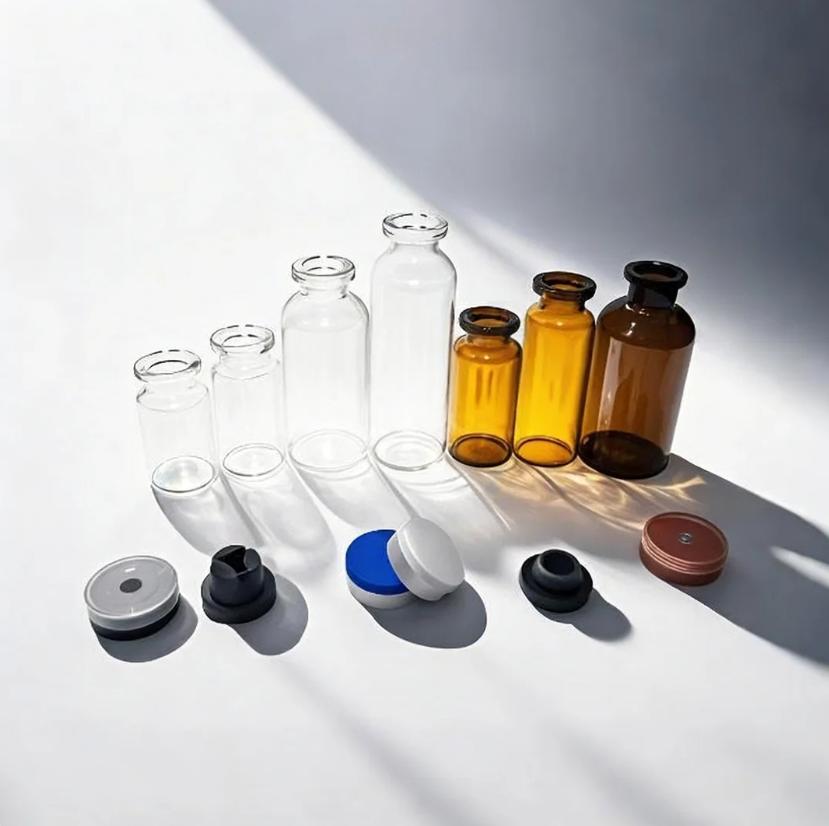
En PharGlass, we are a professional supplier of high-quality pharmaceutical packaging materials. Our portfolio traditionally includes glass bottles, rubber stoppers, and aluminum plastic caps. Recognizing the evolving needs of the pharmaceutical and biotech industries, we have extended our capabilities to include advanced sterile PET bottles that meet the most rigorous sterility assurance levels (SALs). With OEM/ODM support, strict quality control, and reliable global delivery, PharGlass delivers packaging solutions that protect drug product integrity from filling to patient administration.
This technical article provides an in-depth examination of sterile bottles manufactured from PET, focusing on cobalt-60 gamma irradiation sterilization, material properties, production workflows, design features that enhance functionality, and best practices for maintaining sterility after opening.
Sterilization Technologies for Sterile Bottles: The Advantage of Cobalt-60 Gamma Irradiation
Achieving and verifying sterility in a plastic bottle is not trivial. Several sterilization methods are available commercially, including moist heat (autoclaving), ethylene oxide (EtO) gas fumigation, and ionizing radiation (gamma or electron beam). Each method has distinct advantages and limitations depending on the material and the intended application.
Moist heat sterilization (saturated steam at 121–134°C) is highly effective and residue-free, but the high temperature can deform thermoplastic materials like PET, and the condensation moisture may affect some dry-filled products. Esterilización por óxido de etileno is compatible with many heat-sensitive polymers, but residual EtO and its byproducts (ethylene chlorohydrin, ethylene glycol) require extensive aeration, and the gas does not penetrate dense loads as uniformly as radiation.
Gamma irradiation using cobalt-60 (⁶⁰Co) has emerged as the preferred sterilization method for high-specification sterile bottles, especially when the bottle material cannot withstand autoclaving or EtO residue is unacceptable for sensitive drug formulations. Cobalt-60 emits high-energy gamma photons that penetrate deeply through bottle walls, closures, and even palletized cartons. The radiation disrupts microbial DNA by inducing single- and double-strand breaks, effectively inactivating bacteria, viruses, fungi, and bacterial endospores without leaving any chemical residues. Key advantages for sterile PET bottles include:
- No thermal stress: Sterilization occurs at ambient temperature, eliminating the risk of bottle deformation, dimensional changes, or degradation of heat-sensitive drug products (e.g., biologics, peptides, probiotics).
- Uniform penetration: Gamma rays pass through the entire bottle geometry, including screw threads, inner surfaces, and sealed headspace, achieving a Sterility Assurance Level (SAL) of 10⁻⁶ with validated dose (typically 25–40 kGy).
- No chemical residuals: Unlike EtO, gamma irradiation decomposes no toxic compounds, making it ideal for parenteral and ophthalmic preparations.
- Material compatibility: PET, PP, and certain copolymers exhibit excellent radiation stability when formulated with appropriate additives, although yellowing or mechanical property changes may occur at very high doses (>50 kGy).
For pharmaceutical applications, regulatory bodies including the FDA, EMA, and WHO accept gamma sterilization as a Category 1 terminal sterilization method, provided that dose validation (ISO 11137) and routine process controls are implemented. The global contract sterilization market for gamma irradiation was valued at approximately USD 3.5 billion in 2025, with a significant portion dedicated to sterile plastic packaging for healthcare products.
PET as a Material for Pharmaceutical Sterile Bottles
Polyethylene terephthalate (PET) is one of the most widely used polymers in rigid packaging. Its adoption for sterile bottles in pharmaceutical and high-purity applications is driven by a combination of optical, mechanical, chemical, and environmental properties:
- High transparency and gloss: PET bottles provide excellent clarity comparable to glass, allowing visual inspection of contents for particulate matter, color changes, or fill level—a critical requirement in pharmaceutical quality control.
- Chemical stability: PET is resistant to dilute acids, oils, alcohols, and many pharmaceutical excipients. It exhibits low leachables and extractables profiles when properly manufactured, especially compared to other plastics like polyvinyl chloride (PVC) or polycarbonate (PC).
- Lightweight and shatterproof: For large-volume sterile liquids (e.g., irrigation solutions, oral liquid antibiotics, antiseptic washes), PET bottles eliminate the risk of breakage during transport and handling, improving safety for healthcare workers and patients.
- Reciclabilidad: PET is the most recycled plastic globally, aligning with pharmaceutical industry sustainability goals. Many regulatory authorities now encourage or mandate recyclable packaging where product safety is not compromised.
- Barrier properties: While not as impermeable as glass or multi-layer structures, PET provides moderate oxygen and moisture barrier sufficient for many liquid oral and topical products. For oxygen-sensitive drugs, PET can be coated with SiOx (silicon oxide) or combined with barrier layers.
For sterile bottle applications, pharmaceutical-grade PET must meet pharmacopoeial requirements, such as USP <661> (Plastic Packaging Systems) and EP 3.1.15 (Polyethylene terephthalate for containers for parenteral preparations). Testing includes non-volatile residue, heavy metals, extractables, and biological reactivity. At PharGlass, our PET sterile bottles comply with these standards, ensuring patient safety and regulatory acceptance globally.
Manufacturing Process for Sterile PET Bottles
The production of sterile PET bottles from raw resin to sterile, ready-to-fill containers involves several tightly controlled steps. Unlike glass vials where high-temperature forming is inherent, PET bottle manufacturing requires careful integration of preform injection molding, stretch-blow molding, and terminal gamma sterilization.
Step 1: Preform Injection Molding
PET resin is dried to remove moisture (critical to prevent hydrolysis during melting), then injection-molded into preforms (test-tube-shaped precursors) with defined neck finish dimensions. The neck finish includes the thread design, sealing surface, and tamper-evident features. At this stage, preforms are not yet sterile and are handled in clean but non-sterile conditions.
Step 2: Stretch-Blow Molding
The preform is heated above its glass transition temperature (~80–110°C) and stretched axially while expanded radially with compressed air inside a blow mold. This biaxial orientation imparts high mechanical strength, clarity, and barrier properties. Bottle design features—such as the scale markings, square narrow-mouth configuration, and grip contours—are formed during this step.
Step 3: Washing and Drying (if required)
For non-sterile applications, blow-molded bottles would be washed. For sterile bottles, the entire clean‑room molded bottle is typically taken through a terminal sterilization process without liquid washing to avoid recontamination. However, some manufacturers use an intermediate washing with WFI (Water for Injection) followed by drying in an oven, then gamma irradiation.
Step 4: Assembly and Primary Packaging
Bottles are assembled with sterile closures—often a polypropylene (PP) screw cap with an integrated sealing liner or a separate elastomeric seal (e.g., silicone or TPE) that ensures an airtight and microbe-proof closure. The closure design must withstand gamma irradiation without deterioration. Assembly occurs in a Class 100 (ISO 5) or better environment.
Step 5: Cobalt-60 Gamma Sterilization
Bottles (with caps loosely applied or fully sealed depending on the process) are packaged into cartons or clean polybags, placed on irradiation pallets, and passed through a cobalt-60 gamma irradiator. A typical validated dose of 25–40 kGy is delivered. Dosimeters placed throughout the load confirm dose uniformity. After irradiation, the bottles are deemed sterile and ready for aseptic filling or for immediate shipment as sterile empty containers, depending on the business model.
At PharGlass, we perform sterilization validation according to ISO 11137-2 and maintain bioburden monitoring to minimize the required irradiation dose, preserving polymer properties and reducing the risk of radiolytic byproducts.
Design Features and Functional Considerations for Sterile Bottles
The practical utility of a sterile bottle extends beyond sterility alone. Well-engineered design features directly influence user experience, dosage accuracy, and maintenance of sterility after the primary seal is broken.
Graduated Volume Markings
Many sterile bottles incorporate molded or printed graduation marks (e.g., 50 mL, 100 mL, 125 mL, 250 mL) along the sidewall. These allow healthcare professionals or patients to measure and dispense precise volumes without transferring the liquid to a separate measuring device, reducing the risk of exposure to airborne contaminants. For oral liquid pharmaceuticals or laboratory reagents, graduated markings also minimize overdosing or underdosing errors.
Transparent Sidewalls
High clarity of PET enables visual inspection of the contents for any signs of contamination (e.g., turbidity, precipitation, foreign particles) or volume change due to evaporation/leakage. Transparency is particularly important for quality assurance in hospital pharmacies and for home‑use products where the end‑user must verify product integrity before administration.
Square Narrow-Mouth Design
Rather than a traditional round shape, many sterile bottles for pharmaceuticals and cosmetics utilize a square or rectangular cross-section with a narrow mouth. This geometry offers two key functional benefits:
- Storage stability: The square shape prevents rolling on flat surfaces, reducing the risk of accidental tipping and spillage in sterile or cleanroom environments. It also improves packing density in storage trays and shipping cartons by eliminating wasted interstitial space.
- Controlled pouring: A narrow mouth, combined with a well‑designed neck, allows smooth, drip‑less pouring of liquid contents while minimizing the exposed surface area when opened. This reduces the chance of airborne microorganisms entering the bottle during momentary use.
Screw Cap with Sealing Liner
The closure system is as critical as the bottle itself. PP screw caps are preferred for PET bottles due to their similar thermal expansion properties and excellent gamma resistance. An inner sealing liner—often made of low-density polyethylene (LDPE) or an aluminum foil induction seal—provides the primary microbial barrier. Induction sealing (where an aluminum liner is bonded to the bottle rim via electromagnetic heating) creates a hermetic seal before gamma sterilization. Alternatively, a precision‑molded elastomeric seal that compresses against the bottle neck finish can be used for applications requiring resealability.
Size Range Optimization (125 mL to 1000 mL)
To serve diverse applications, sterile bottles are commonly offered in a gradient of capacities:
- 125–250 mL: Ideal for laboratory samples, ophthalmic drops, single‑dose liquid oral suspensions, and high‑value cosmetic serums.
- 500 mL: The most popular size for antiseptic solutions, oral antibiotics for pediatrics, and topical lotions.
- 1000 mL: Suitable for hospital irrigation solutions, sterile water for injection (WFI) in bulk for compounding, and ready‑to‑use buffer solutions.
PharGlass provides sterile PET bottles across this entire range, with custom OEM options for unique volume requirements.
Maintaining Sterility After Opening: Practical Guidelines
A critical nuance of sterile bottles is that the “sterile” state is time‑ and event‑limited. Gamma sterilization eliminates all viable microorganisms inside the sealed container at the time of release. However, the moment the cap is removed, the bottle contents are exposed to non‑sterile air and potential contact with hands, utensils, or environmental surfaces. Therefore:
- Immediate use is recommended after opening, especially for parenteral or ophthalmic products where high sterility must be preserved.
- Avoid direct contact between the inner neck surface and fingers, pipettes, or droppers. If repeated dosing is required, use a sterile dispensing pump or a flip‑top cap that allows one‑handed operation without touching the closure interior.
- Do not “top off” partially used sterile bottles with new product, as this introduces contaminants.
- Label with an “open‑by” date (typically 24–48 hours for sterile liquids without preservatives, longer for certain preserved formulations based on stability data).
At PharGlass, we provide explicit handling guidelines and primary packaging that facilitates aseptic withdrawal, such as bottles with septum‑cap combinations designed for needle penetration without cap removal.
PharGlass: Your Partner in Sterile Packaging Solutions
En PharGlass, we combine deep technical knowledge with a customer‑centric approach to deliver sterile bottles and other pharmaceutical packaging components. Our commitment to quality is reflected in:
- Estrictos sistemas de control de calidad including ISO 9001, ISO 15378 (primary packaging materials for medicinal products), and adherence to relevant pharmacopoeias (USP, EP, JP).
- OEM/ODM capabilities to customize bottle volume, neck finish, closure type, graduation intervals, and even custom printing of lot numbers and expiration dates.
- Supply chain reliability with warehousing in key regions and validated shipping protocols to maintain sterility and integrity during transit.
- Sustainability initiatives using recycled‑content PET (rPET) where permitted for non‑parenteral applications, and recyclable mono‑material designs.
The shift toward ready‑to‑sterilize and ready‑to‑fill packaging accelerates. According to industry forecasts, the global sterile PET bottle market for pharmaceutical applications will grow at a CAGR of 8.2% through 2033, driven by increased biologic drug volumes and preference for shatterproof containers. PharGlass is poised to meet this demand with innovative designs, rigorous sterility assurance, and responsive technical support.
Conclusión
The sterile bottle—especially when manufactured from PET and terminally sterilized by cobalt-60 gamma irradiation—represents a modern, versatile, and reliable solution for pharmaceutical, biotech, cosmetic, and laboratory applications. Its ability to combine high transparency, mechanical robustness, design flexibility, and residue‑free sterilization makes it an increasingly attractive alternative or complement to glass vials. Key design features such as graduated markings, square narrow‑mouth geometry, and secure sealing systems enhance both functionality and user safety, while careful handling after opening preserves the sterility benefits for as long as necessary.
As a professional supplier, PharGlass stands ready to support global pharmaceutical manufacturers with high‑quality sterile bottles, rubber stoppers, aluminum plastic caps, and glass bottles. Whether you require standard catalog items or fully customized OEM solutions, our team ensures strict quality control, regulatory compliance, and reliable delivery. Contact PharGlass today to discuss how our sterile bottle solutions can elevate your product’s safety, stability, and market appeal.
 ES
ES  EN
EN  FR
FR  AR
AR  DE
DE  PT
PT  FA
FA  RU
RU