
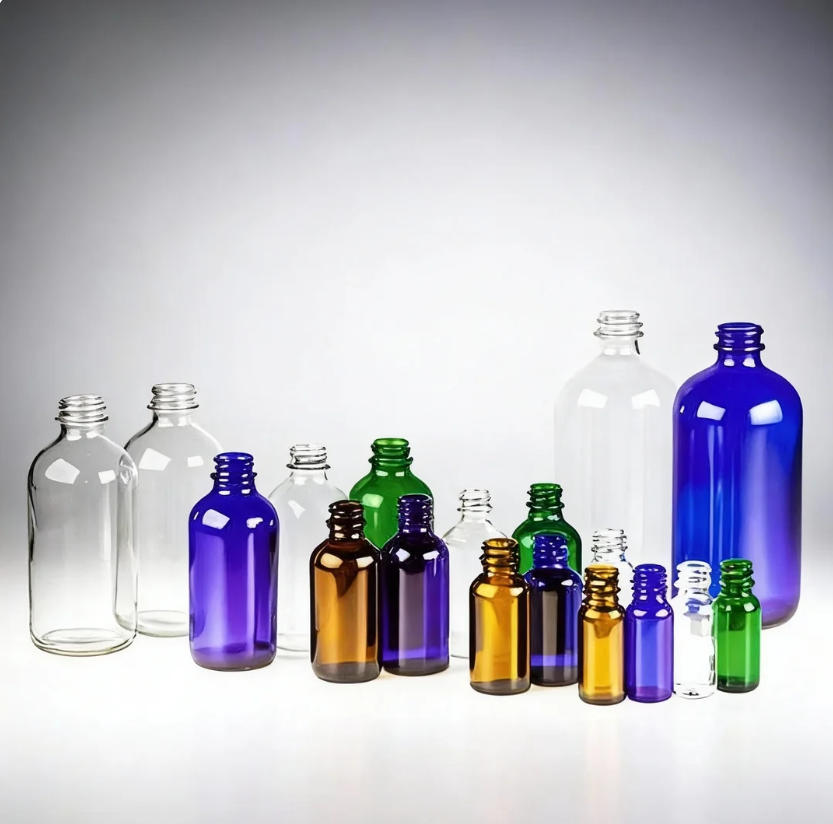
Dans l'industrie pharmaceutique moderne, la transition vers des lignes de remplissage automatisées à grande vitesse a considérablement augmenté l'efficacité de la production. Toutefois, cette transition impose également des exigences rigoureuses en matière de cohérence physique de l'emballage primaire. Même un écart mineur dans les dimensions des flacons en verre peut entraîner des temps d'arrêt fréquents, des bris de verre ou une intégrité du scellage compromise.
Pour les fabricants de produits pharmaceutiques, il est essentiel de comprendre la corrélation entre la géométrie des flacons et la compatibilité avec les machines. Zhengzhou PharGlass relève ces défis en mettant en œuvre des contrôles de précision rigoureux conformes aux normes internationales telles que ISO 8362-1 et ISO 9187-1.
L'impact critique de la précision dimensionnelle sur la productivité
Les machines de remplissage automatisées fonctionnent avec un jeu minimal et une pression mécanique élevée. Si un flacon ou une ampoule s'écarte de ses dimensions nominales, la synchronisation entre les pinces mécaniques, les aiguilles de remplissage et les têtes de bouchage est perturbée. Cette perturbation entraîne souvent un contact “verre-métal”, qui est la principale cause des fractures capillaires et des ruptures catastrophiques sur la ligne.
PharGlass se concentre sur trois mesures dimensionnelles clés pour assurer une intégration transparente avec les machines à grande vitesse.
1. Tolérance de hauteur totale et cohérence du recouvrement
L'un des problèmes les plus fréquents dans les lignes automatisées est l'incohérence de la pression de bouchage. Si la hauteur du flacon varie de manière significative, la tête de bouchage peut appliquer une force insuffisante (entraînant des fuites) ou excessive (provoquant la rupture du col).
Selon le PharGlass les spécifications techniques, les la tolérance de hauteur totale est strictement maintenue à ±0,4 mm. Cette précision permet une compression uniforme du bouchon en caoutchouc et du joint en aluminium, ce qui garantit une fermeture hermétique pour chaque lot sans qu'il soit nécessaire d'ajuster constamment l'équipement.
2. Déviation de l'axe vertical et alignement de l'aiguille
Au fur et à mesure que les vitesses de remplissage augmentent, la fenêtre permettant à l'aiguille de remplissage de pénétrer dans le col du flacon devient plus étroite. PharGlass garantit que le la déviation de l'axe vertical est inférieure à 1,2 mm.
En minimisant cette inclinaison, le risque que l'aiguille heurte le bord du verre est pratiquement éliminé. Cela permet non seulement d'éviter que des éclats de verre ne contaminent le médicament, mais aussi de protéger les coûteuses aiguilles de remplissage en platine ou en acier inoxydable.
3. Contrainte interne et résistance mécanique
Les dimensions ne sont qu'une partie de l'équation ; l'intégrité structurelle du verre est tout aussi essentielle. Au cours du processus de formage, des contraintes résiduelles peuvent affaiblir le verre. PharGlass utilise des procédés de recuit avancés afin de garantir la contrainte interne est neutralisée en dessous de 400nm/mm.
Ce profil à faible contrainte garantit que lorsque les flacons sont soumis aux contraintes mécaniques du tri et du transport à grande vitesse, ils conservent leur intégrité structurelle, ce qui réduit considérablement les ruptures “spontanées”.
Guide de sélection : Optimiser l'emballage pour l'automatisation
Lors de la sélection de récipients en verre pour une installation automatisée, les responsables des achats doivent regarder au-delà du type de matériau (USP Type I ou III) et examiner minutieusement les tolérances physiques.
- Pour les lignes d'ampoules : S'assurer que le système de rupture (OPC ou anneau de rupture de couleur) est cohérent. PharGlass sont conçues pour des ruptures nettes, empêchant les éclats de verre de pénétrer dans les systèmes d'aspiration automatisés.
- Pour injection en flacons : L'accent est mis sur le diamètre de l'embouchure et l'épaisseur de la bride. PharGlass Les flacons sont testés à l'aide de jauges pour s'assurer que le diamètre intérieur correspond parfaitement aux spécifications du bouchon.
- Pour les flacons de liquide oral : Même pour les lignes de produits non injectables, la verticalité reste la clé pour éviter les “bouteilles tombées” sur les bandes transporteuses, une cause majeure de blocage des lignes.
L'assurance de la qualité par des tests de laboratoire avancés
Pour maintenir ces paramètres précis, Zhengzhou PharGlass a mis en place des laboratoires de haut niveau équipés de spectromètres d'absorption atomique et d'instruments de mesure de précision. Chaque lot de production fait l'objet d'un échantillonnage rigoureux afin de vérifier que la qualité de l'eau est conforme à la norme. ±0,4 mm de hauteur et 1,2mm déviation de l'axe ne sont jamais dépassées.
Conclusion : L'ingénierie de la stabilité dans chaque flacon
Dans la chaîne d'approvisionnement pharmaceutique B2B, la fiabilité d'un récipient en verre est mesurée par sa performance sous pression. En donnant la priorité aux Contrôle dimensionnel de précision, PharGlass permet aux fabricants de maximiser leur production tout en minimisant les déchets et les temps d'arrêt.
Que vous remplissiez des vaccins vitaux ou des produits biologiques de grande valeur, la constance géométrique des PharGlass Le système de production de flacons et d'ampoules en verre tubulaire fournit la base technique nécessaire à la fabrication de produits pharmaceutiques modernes et à grande vitesse.

 FR
FR  EN
EN  AR
AR  DE
DE  ES
ES  PT
PT  FA
FA  RU
RU