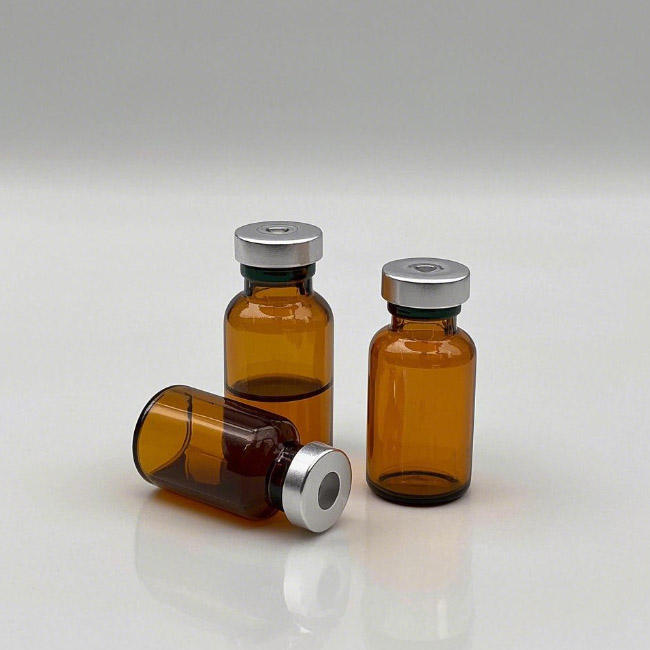
No mundo farmacêutico, a inércia química da embalagem primária não é apenas uma preferência - é uma exigência regulamentar. Para medicamentos líquidos sensíveis, principalmente aqueles com requisitos de alta pureza ou equilíbrios de pH específicos, o fenômeno do “ataque hidrolítico” representa uma ameaça significativa. Zhengzhou PharGlass fornece soluções avançadas de vidro USP Tipo I, projetadas para oferecer máxima resistência hidrolítica, garantindo a potência do medicamento e a segurança do paciente durante uma vida útil prolongada.
Este guia técnico se aprofunda na ciência da resistência hidrolítica e em como PharGlass define o padrão do setor para embalagens de vidro de proteção.
O que é resistência hidrolítica e por que ela é importante?
A resistência hidrolítica refere-se à capacidade do vidro de resistir à liberação de álcalis minerais solúveis em água ou soluções aquosas. Quando um medicamento líquido entra em contato com a superfície interna de um frasco de vidro, inicia-se um complexo processo de troca de íons. Se o vidro tiver baixa resistência hidrolítica, os íons alcalinos (como o sódio) migram para o medicamento, causando:
- Turnos de pH: Alterar a acidez ou a alcalinidade da formulação, o que pode desnaturar as proteínas.
- Precipitação: Fazendo com que os ingredientes farmacêuticos ativos (APIs) saiam da solução.
- Delaminação do vidro: A eventual quebra estrutural da camada superficial.
Para evitar esses riscos, PharGlass utilizações Vidro de borosilicato neutro, que oferece o mais alto nível de durabilidade química disponível no mercado.
A vantagem técnica do PharGlass: padrões USP Tipo I
Zhengzhou PharGlass produz contêineres que cumprem rigorosamente as USP Tipo I e ISO 720 padrões. A superioridade técnica de nosso vidro é definida por vários parâmetros-chave:
1. Alto teor de boro para estabilidade química
Diferente do vidro de cal sodada padrão, PharGlass O vidro de borosilicato neutro contém uma alta concentração de trióxido de boro ($B_2O_3$). Isso cria uma rede de sílica tridimensional estável que é altamente resistente ao ataque de água e ácido. Nosso vidro alcança Classe HGB1 resistência hidrolítica, tornando-o adequado até mesmo para as preparações parenterais mais agressivas.
2. Coeficiente de expansão extremamente baixo
Nossa tubulação de vidro apresenta um coeficiente de expansão linear de $\leq 5 \times 10^{-6} K^{-1}$. Essa baixa taxa de expansão não é apenas crucial para a estabilidade térmica durante a esterilização, mas também indica uma estrutura molecular firmemente ligada que minimiza a lixiviação de extraíveis e lixiviáveis no medicamento líquido.
3. Gerenciamento preciso do estresse interno
Por meio de tecnologia avançada de recozimento, PharGlass garante que a tensão interna é controlada abaixo de 400nm/mm. Esse processo elimina as tensões superficiais microscópicas que, de outra forma, poderiam ser exploradas por ataques hidrolíticos, aumentando ainda mais a barreira química do recipiente.
Guia de seleção: Combinando os graus de vidro com as formulações
Ao selecionar o recipiente adequado, os cientistas farmacêuticos devem avaliar a sensibilidade de suas moléculas. PharGlass oferece uma gama de soluções adaptadas a diferentes necessidades de estabilidade:
- Para vacinas e produtos biológicos: Eles exigem a mais alta resistência hidrolítica absoluta. PharGlass Os frascos tubulares USP Tipo I (2R-10R) são a escolha recomendada para evitar a agregação de proteínas.
- Para injetáveis ácidos ou neutros: Nosso vidro neutro proporciona um ambiente estável que resiste à lixiviação de íons alcalinos, mantendo o pH pretendido da formulação.
- Para líquidos sensíveis à luz: Vidro âmbar PharGlass combina alta resistência hidrolítica com proteção UV, atendendo aos padrões da USP para transmissão de luz e mantendo a inércia química.
Garantia de qualidade e consistência dimensional
Além das propriedades químicas, Zhengzhou PharGlass mantém padrões físicos rigorosos para apoiar a integridade do medicamento. Com um tolerância de altura total de ±0,4 mm e desvio do eixo vertical abaixo de 1,2 mm, Em nossos frascos, garantimos que o processo de vedação seja perfeitamente hermético. Uma vedação perfeita é a segunda linha de defesa; ela impede a entrada de umidade ou oxigênio que, de outra forma, poderia catalisar reações hidrolíticas.
Conclusão: Uma barreira confiável para a medicina moderna
À medida que as formulações farmacêuticas se tornam mais complexas e sensíveis, o papel do recipiente de vidro se torna mais crítico. Zhengzhou PharGlass dedica-se a fornecer ao setor as embalagens quimicamente mais duráveis e fisicamente mais consistentes disponíveis. Ao escolher PharGlass Com as soluções USP Tipo I, os fabricantes não estão apenas comprando um frasco; eles estão investindo em uma barreira química sofisticada que garante a estabilidade de seus medicamentos que salvam vidas.
 PT
PT  EN
EN  FR
FR  AR
AR  DE
DE  ES
ES  FA
FA  RU
RU