
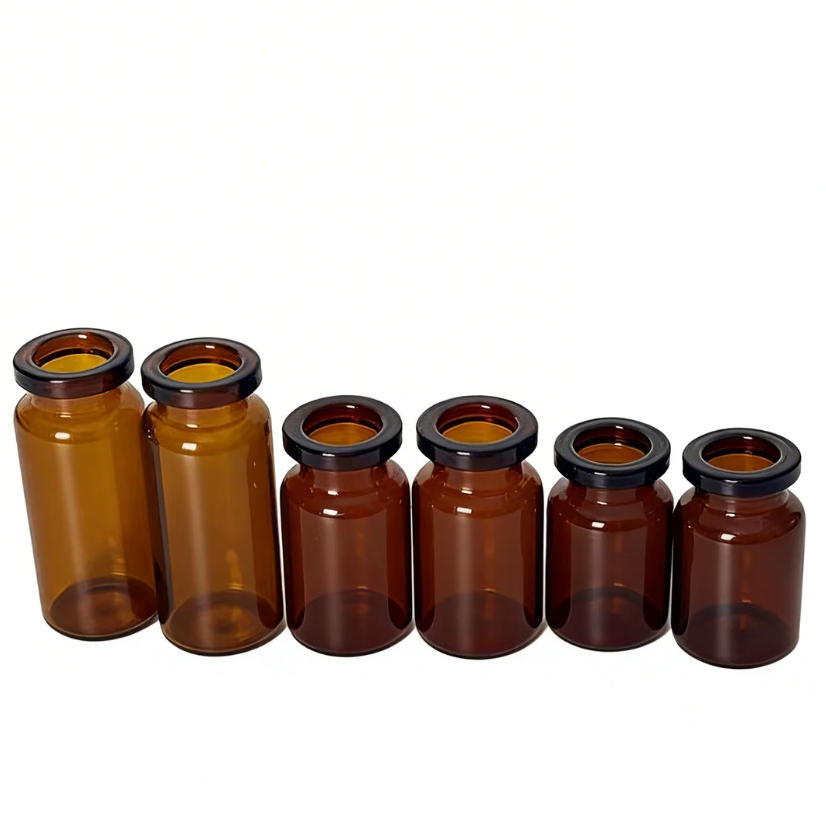
In the pharmaceutical industry, maintaining the molecular integrity of active pharmaceutical ingredients (APIs) is a constant challenge. Many modern medications, including specific vitamins, hormones, and complex biologics, are highly photosensitive. Exposure to ultraviolet (UV) or even intense visible light can trigger photochemical reactions, leading to drug degradation, loss of potency, or the formation of toxic by-products.
Zhengzhou PharGlass provides industry-leading amber glass solutions that serve as a robust optical barrier, ensuring the long-term stability of light-sensitive injectables from production to patient administration.
The Science of Photo-Degradation in Pharmaceuticals
Photo-degradation occurs when photons are absorbed by a drug molecule, providing the energy required to break chemical bonds. This is particularly prevalent in the 290nm to 450nm wavelength range. Without adequate protection, clear glass containers allow these harmful wavelengths to pass through, potentially altering the formulation’s pH or causing protein aggregation.
PharGlass Amber Vials are engineered using a specific iron oxide and titanium doping process that modifies the glass’s spectral transmission properties, effectively filtering out over 99% of harmful UV radiation.
Technical Standards: Beyond Just Color
Choosing an amber vial is not merely about aesthetics; it is about meeting rigorous international standards for light transmission. Zhengzhou PharGlass ensures that every amber container complies with USP <660> e EP 3.2.1 requirements.
1. Superior Light Transmission Control
Based on our laboratory testing, PharGlass Amber Vials maintain light transmission levels well below the 10% limit mandated for containers intended for parenteral products. This ensures that even the most sensitive molecules, such as Adrenaline or Vitamin B12, remain protected throughout their entire shelf life.
2. Chemical Inertness (USP Type I/II)
While the amber color provides optical protection, the glass itself must remain chemically inert. PharGlass produces amber vials in both Neutral Borosilicate (Type I) e Low Borosilicate (Type II) glass. These materials offer high hydrolytic resistance, ensuring that the additive used for coloration does not leach into the formulation.
3. Thermal Stability for Sterilization
Photostatic drugs often require terminal sterilization or aseptic processing. With a low linear coefficient of expansion ($\leq 5 \times 10^{-6} K^{-1}$ for neutral glass), PharGlass amber containers can withstand high-temperature autoclaving and rapid cooling without losing their optical or structural properties.
Precision Manufacturing for Automated Reliability
A protective container must also be a functional one. PharGlass integrates optical protection with mechanical precision to support modern manufacturing lines.
Verticality and Sealing Integrity
To prevent oxidation—which often exacerbates photo-degradation—a perfect hermetic seal is required. PharGlass mantém um desvio do eixo vertical inferior a 1,2 mm e um full height tolerance of ±0.4mm. This ensures that the aluminum seals are applied with uniform pressure, keeping oxygen out and the sterile, light-protected environment intact.
Internal Stress Management
The dark nature of amber glass can sometimes mask manufacturing defects. PharGlass employs automatic inspection systems and polariscopes to ensure that internal stress is controlled below 400nm/mm. This ensures the glass is robust enough to handle the mechanical stresses of high-speed labeling and packaging.
Selection Guide: Identifying the Right Amber Container
When selecting light-protective packaging, technical teams should consider the following:
- For Highly Sensitive Biologics: Opt for PharGlass Neutral Borosilicate Amber Vials. These provide the dual benefit of maximum chemical resistance and maximum UV shielding.
- For Cost-Effective Oral Solutions: Nosso A and B-type Amber Oral Bottles provide reliable protection for light-sensitive syrups and liquid supplements.
- For Emergency Injectables: PharGlass Amber Ampoules offer a “glass-contact-only” environment with a 100% tamper-proof, light-shielded seal.
Conclusion: A Foundation of Pharmaceutical Safety
In the complex landscape of drug stability, light protection is a critical pillar. By choosing Zhengzhou PharGlass, pharmaceutical manufacturers gain a partner dedicated to technical excellence. Our amber glass solutions don’t just “look” the part; they are precision instruments engineered with ±0.4mm tolerances e HGB1 class resistance to safeguard the world’s most sensitive medications.
With PharGlass, you are not just buying a vial—you are securing the therapeutic efficacy of your product against the invisible threat of light.
 PT
PT  EN
EN  FR
FR  AR
AR  DE
DE  ES
ES  FA
FA  RU
RU