Введение
In the rapidly evolving global pharmaceutical landscape, primary packaging plays a decisive role in ensuring drug safety, stability, and efficacy. Among all packaging materials available today, medium borosilicate glass tubular injection vials have emerged as the gold standard for parenteral drug containment. According to the classification systems of USP, EP, JP, and ChP, Type I borosilicate glass represents the highest level of hydrolytic resistance and chemical inertness, making it the material of choice for vaccines, biologics, blood products, lyophilized formulations, and sensitive injectable drugs. This article provides a comprehensive, evidence-based analysis of the key advantages of medium borosilicate glass tubular injection vials, drawing on international standards, market data, and technical insights.
На сайте Чжэнчжоу ФарГласс, we are committed to providing premium pharmaceutical packaging solutions that meet the most stringent global regulatory requirements. Our medium borosilicate glass tubular injection vials are manufactured in strict compliance with ISO, YBB, USP, EP, and ChP standards, offering pharmaceutical manufacturers a reliable, inert, and cost-effective primary packaging solution.
1. Exceptional Transparency: Visual Quality Assurance for Sensitive Drug Products
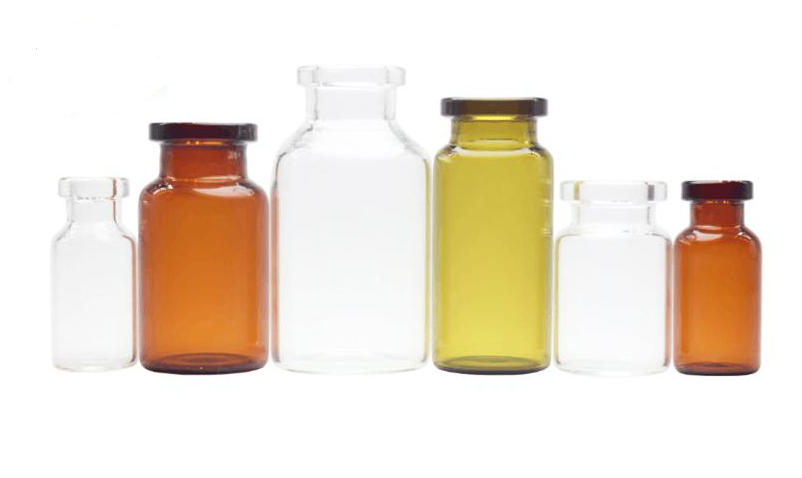
One of the most immediately apparent advantages of medium borosilicate glass injection vials is their outstanding optical clarity. Glass is inherently transparent, but medium borosilicate glass offers superior light transmission properties compared to soda-lime or low-borosilicate alternatives. This high transparency is not merely an aesthetic feature—it is a critical quality control parameter in pharmaceutical manufacturing.
Healthcare professionals, pharmacists, and patients rely on visual inspection to assess the integrity of injectable drugs before administration. Changes in color, turbidity, particulate formation, or precipitation can indicate drug degradation, contamination, or improper storage. With medium borosilicate glass vials, such abnormalities are immediately visible through the transparent container wall, enabling rapid decision-making and enhancing patient safety.
From a manufacturing perspective, transparency also facilitates automated visual inspection systems used in fill-finish lines. High-speed camera-based inspection systems depend on consistent optical clarity to detect foreign particles, cracks, or defects. Medium borosilicate glass provides the optimal optical medium for such inspections, reducing false reject rates and improving overall production efficiency.
Moreover, amber glass variants of medium borosilicate tubular vials offer selective UV protection (blocking wavelengths below approximately 450 nm) while maintaining sufficient transparency for visual inspection, making them ideal for light-sensitive pharmaceuticals such as certain vitamins, antibiotics, and oncology drugs.
2. Superior Chemical and Hydrolytic Stability: Safeguarding Drug Integrity
The most significant advantage of medium borosilicate glass pharmaceutical vials lies in their exceptional chemical durability. According to ISO 719 and ISO 720 standards, which classify glass materials based on their hydrolytic resistance at 98°C and 121°C respectively, medium borosilicate glass consistently achieves the highest performance grades. For more resistant glasses such as borosilicate, ISO 720 (testing at 121°C) is considered more suitable than ISO 719, as it better reflects the stringent demands of pharmaceutical sterilization processes.
Medium borosilicate glass typically contains 8–12% boron trioxide (B₂O₃), which significantly lowers the coefficient of thermal expansion and enhances chemical resistance. In contrast, low-borosilicate glass (5–8% B₂O₃) exhibits a higher alkali extraction rate—under equivalent conditions, the amount of alkali leached from low-borosilicate glass is more than twice that from medium borosilicate glass. Soda-lime glass, which lacks sufficient boron content, suffers from poor alkali resistance and is unsuitable for most injectable drug applications.
The chemical stability of medium borosilicate glass manifests in multiple dimensions:
- Water resistance (hydrolytic stability): The low alkali content of medium borosilicate glass minimizes ion exchange between the glass surface and aqueous drug formulations, preventing pH shifts and maintaining drug stability over extended shelf life.
- Acid resistance: Borosilicate glass demonstrates excellent resistance to acidic attack. ISO 1776 testing for acid resistance confirms that Type I borosilicate glass can withstand acidic environments without significant surface degradation.
- Alkali resistance: While all silicate glasses are susceptible to strong alkali attack, medium borosilicate glass exhibits superior resistance compared to soda-lime compositions due to its higher silica network connectivity.
Low-borosilicate and soda-lime glass are known to exhibit stability issues, including delamination, formation of white particles, and visible foreign matter, which can lead to drug degradation and reduced efficacy. Medium borosilicate glass, by contrast, releases no precipitates, glass flakes, or extractable substances, even after prolonged contact with challenging formulations. It is widely recognized as the safest pharmaceutical packaging material globally, and developed countries have long adopted medium borosilicate glass for all injectable drug manufacturing.
3. High Temperature and Pressure Resistance: Enabling Terminal Sterilization
Medium borosilicate glass vials are engineered to withstand extreme thermal and mechanical stresses. Their low coefficient of linear thermal expansion (approximately 3.2–5.0 × 10⁻⁶/K) provides exceptional resistance to thermal shock, meaning the glass can tolerate rapid temperature changes without cracking or breaking.
This property is indispensable in pharmaceutical manufacturing for several reasons:
- Terminal sterilization: Many injectable products require terminal sterilization in autoclaves at temperatures of 121°C or higher. Medium borosilicate glass maintains its structural integrity under these conditions, withstanding steam sterilization cycles without deformation or breakage.
- Lyophilization (freeze-drying): During lyophilization, vials are subjected to freezing followed by vacuum drying. The low coefficient of thermal expansion ensures dimensional stability throughout this demanding process. Thin and consistent wall thickness in tubular vials further enhances lyophilization efficiency by promoting uniform heat transfer.
- Depyrogenation tunnels: In aseptic filling lines, vials pass through high-temperature depyrogenation tunnels (typically 250–350°C) to eliminate endotoxins. Medium borosilicate glass vials maintain their integrity and surface quality through this critical processing step.
- Cold chain distribution: Medium borosilicate glass also performs reliably in ultra-low temperature storage applications (e.g., -80°C for mRNA vaccines and biological samples), resisting fracture from thermal contraction.
By comparison, low-borosilicate glass has a larger thermal expansion coefficient and is more prone to breakage under thermal stress, while soda-lime glass exhibits poor resistance to extreme temperature changes and is unsuitable for high-temperature sterilization applications.
4. Non-Reactive Surface and Minimal Extractables: Ensuring Patient Safety
A fundamental requirement for any primary pharmaceutical packaging material is that it must not interact with the drug product in ways that compromise safety or efficacy. Medium borosilicate glass injection vials are universally recognized for their non-reactive, inert surface characteristics.
The term “neutral glass” (Type I) precisely captures this attribute. Medium borosilicate glass has low alkali metal oxide content and a stable silica-boron network that minimizes the migration of ions from the container into the drug solution. This results in an extractables and leachables (E&L) profile that meets the most stringent regulatory requirements.
Why does this matter? When pharmaceutical formulations come into contact with packaging materials, chemical interactions can occur. Ions (primarily sodium and potassium) can leach from the glass surface, potentially altering the pH of the drug solution, catalyzing degradation reactions, or directly interacting with active pharmaceutical ingredients (APIs). In extreme cases, glass delamination—the exfoliation of thin glass flakes from the inner surface—can occur, leading to visible particles in injectable solutions.
Medium borosilicate glass is specifically formulated to prevent such issues. Its high chemical durability ensures that no visible foreign matter is generated, no glass flakes are shed, and no precipitates are formed—even after long-term storage of challenging formulations such as:
- pH-sensitive drugs (both acidic and alkaline formulations)
- Biologics and monoclonal antibodies
- Peptides and proteins prone to aggregation
- Complex small-molecule injectables
The pharmaceutical industry has long recognized that container-related quality issues—including delamination, white particles, and visible foreign matter—can lead to product recalls, regulatory action, and patient harm. Medium borosilicate glass virtually eliminates these risks, providing the safest possible packaging environment for injectable drugs.
Applications Across the Pharmaceutical Spectrum
Zhengzhou PharGlass medium borosilicate glass tubular injection vials are widely used across multiple pharmaceutical applications, including:
- Вакцины: All major vaccine formulations (viral, bacterial, mRNA) require Type I borosilicate glass to maintain potency and sterility.
- Biologics and biosimilars: These high-value, temperature-sensitive therapeutics demand inert primary packaging to prevent aggregation and maintain efficacy.
- Lyophilized (freeze-dried) powders: The excellent thermal stability and dimensional precision of tubular vials make them the preferred choice for lyophilized drug products.
- Blood products and plasma derivatives: Chemical neutrality is essential for maintaining the biological activity of blood components.
- Insulin and other peptide drugs: Long-term storage stability depends on the inert nature of Type I glass.
- Chemotherapy drugs and oncology injectables: Many oncology formulations are highly reactive and require the highest level of chemical resistance.
- Antibiotics (both powder and solution forms) : Many antibiotics are pH-sensitive and require stable primary packaging to maintain efficacy.
Our product portfolio is available in multiple sizes ranging from 2mL to 30mL, with customizable options including vial printing, anti-jump stopper designs, and dimension customization according to customer specifications.
Market Trends and Future Outlook
The global pharmaceutical packaging market is undergoing a significant transformation, with medium borosilicate glass at the center of this evolution. According to market research, the global market for Pharma Neutral Borosilicate Glass Tubing was estimated at US$ 591.1 million in 2023 and is projected to reach US$ 842.1 million by 2030, representing a compound annual growth rate of 5.3%. The broader pharmaceutical glass packaging market, estimated at US$ 12.0 billion in 2023, is expected to reach US$ 17.9 billion by 2030, growing at 5.8% CAGR.
In China specifically, the pharmaceutical glass packaging market was valued at US$ 514.14 million in 2025 and is projected to reach US$ 937.63 million by 2033, at an even higher CAGR of 7.8%. This accelerated growth reflects the country’s ongoing shift from soda-lime and low-borosilicate glass to medium borosilicate Type I glass, driven by regulatory reforms, drug safety initiatives, and the expansion of the domestic biologics and vaccine manufacturing sector.
Regulatory factors are accelerating this transition. Policies such as China’s drug consistency evaluation program (一致性评价), the drug-materials association review system (关联审评审批), and volume-based procurement (带量采购) have collectively incentivized pharmaceutical manufacturers to adopt higher-quality packaging materials that ensure drug stability throughout shelf life. According to industry data, medium borosilicate glass currently accounts for less than 15% of China’s annual pharmaceutical glass consumption of approximately 350,000 tons, indicating substantial room for future growth. As domestic production capabilities expand and regulatory standards tighten, the adoption of medium borosilicate glass is poised to accelerate significantly.
The technical sophistication of medium borosilicate glass manufacturing should not be underestimated. The production of tubular injection vials involves a two-stage process: first, the conversion of raw materials into precision glass tubing via the Vello or Danner processes; second, the conversion of this tubing into finished vials using automatic forming machines. The front-end tubing “drawing” process has historically been dominated by a handful of international suppliers, but domestic manufacturers are making steady progress in mastering this critical technology.
Regulatory Compliance and Quality Standards
Zhengzhou PharGlass medium borosilicate glass tubular injection vials are manufactured in full compliance with all major international and regional pharmacopoeia standards:
| Стандарт | Требование |
|---|---|
| ISO 719:2020 | Hydrolytic resistance testing at 98°C |
| ISO 720 | Hydrolytic resistance testing at 121°C |
| USP | Container glass testing – Type I classification |
| EP 3.2.1 | Glass containers for pharmaceutical use |
| ChP | Chinese Pharmacopoeia |
| YBB | Pharmaceutical packaging material standards |
| FDA DMF | Drug Master File ready |
We offer 100% online smart inspection for product dimensions and appearance, ensuring that every vial meets exacting quality standards. Our quality management systems are ISO 9001 and ISO 15378 (GMP for primary pharmaceutical packaging materials) certified, with complete batch traceability.
Заключение
Medium borosilicate glass tubular injection vials represent the optimal choice for pharmaceutical primary packaging. Their four core advantages—exceptional transparency, superior chemical and hydrolytic stability, high temperature and pressure resistance, and non-reactive surface characteristics—collectively ensure that drug products remain safe, stable, and effective throughout their shelf life.
As the pharmaceutical industry continues to develop increasingly complex and sensitive drug products—including biologics, mRNA therapeutics, and personalized medicines—the demand for high-quality Type I borosilicate glass packaging will only intensify. The shift from soda-lime and low-borosilicate glass to medium borosilicate glass is not merely an incremental improvement; it is a necessary evolution driven by the fundamental requirements of drug safety and patient protection.
Чжэнчжоу ФарГласс is proud to serve as a trusted partner to pharmaceutical manufacturers worldwide, providing medium borosilicate glass tubular injection vials that meet the most rigorous quality standards. With OEM and ODM support, flexible customization options, and global shipping capabilities, we are fully equipped to meet the primary packaging needs of the modern pharmaceutical industry.
For more information about our medium borosilicate glass injection vials, pharmaceutical rubber stoppers, and aluminum plastic caps, please visit our website or contact our sales team. Your drug safety is our priority.
Ссылки
- ISO 719:2020 – Glass — Hydrolytic resistance of glass grains at 98°C — Method of test and classification
- ISO 720 – Glass — Hydrolytic resistance of glass grains at 121°C — Method of test and classification
- USP — Тара — стекло
- EP 3.2.1 – Glass containers for pharmaceutical use
- QY Research, Pharma Neutral Borosilicate Glass Tubing – Global Market Share and Ranking, Overall Sales and Demand Forecast 2024-2030, 2024
- Research and Markets, Pharmaceutical Glass Tubing – Global Strategic Business Report
- The Advantages of Medium Borosilicate Glass Tubular Injection Vials, China Powder Network, 2022
- Why Neutral Borosilicate Glass is the Internationally Recognized Safe Pharmaceutical Packaging Material, China Glass Industry Network, 2021
- SCHOTT, Technical Properties of Pharmaceutical Glass Tubing, 2024
 RU
RU  EN
EN  FR
FR  AR
AR  DE
DE  ES
ES  PT
PT  FA
FA