
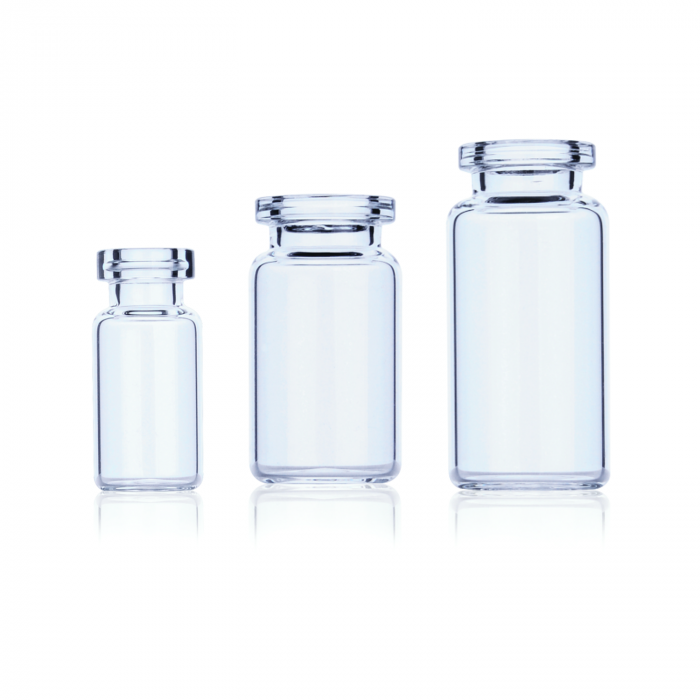
In the pharmaceutical primary packaging industry, the term “reliability” is often synonymous with structural integrity. While chemical inertness is vital for drug stability, the physical durability of a glass vial is what determines whether a batch survives the rigors of high-speed manufacturing, autoclaving, and global logistics. Among the various failure modes in glass packaging, internal stress cracks are perhaps the most insidious, often remaining invisible until a catastrophic failure occurs.
Чжэнчжоу ФарГласс (hereafter referred to as PharGlass) has dedicated decades of research to mastering the science of annealing. By implementing advanced thermal processing and precision monitoring, PharGlass ensures that every container delivered to the global market is virtually free from the internal tensions that compromise safety.
What is Internal Stress in Pharmaceutical Glass?
Internal stress, or residual stress, is an inevitable byproduct of the glass-forming process. When tubular glass is heated to a molten state and shaped into a vial or ampoule, different sections of the container—such as the thick base and the thin neck—cool at uneven rates. This temperature gradient causes the outer layers to solidify faster than the inner core, locking in mechanical tension.
If left unaddressed, these “frozen-in” stresses act as pre-existing fault lines. When the vial later encounters the thermal shock of a sterilization cycle or the mechanical impact of a capping machine, the stress exceeds the glass’s fracture toughness, leading to spontaneous breakage.
The PharGlass Annealing Process: Science Over Chance
To eliminate these risks, PharGlass utilizes a sophisticated annealing process within a “Lehr”—a long, temperature-controlled tunnel kiln. The goal is to reheat the glass to its “annealing point” where the structure can relax, followed by a meticulously controlled cooling phase.
1. Precision Temperature Mapping
Every glass composition, whether it is USP Type I Neutral Borosilicate или Low Borosilicate, has a specific annealing range. PharGlass employs computer-controlled sensors to map the temperature profile across the entire length of the Lehr. This ensures that every vial reaches the exact temperature required for molecular relaxation without deforming its precision-engineered shape.
2. Strategic Cooling Rates
The most critical phase is the slow cooling through the “transformation range.” If the temperature drops too quickly, new stresses are introduced. PharGlass engineering protocols dictate a linear cooling rate that accounts for the specific wall thickness of the product, ensuring a uniform molecular arrangement from the base to the rim.
Data-Driven Reliability: The 400nm/mm Benchmark
In the world of B2B pharmaceutical procurement, “quality” must be quantifiable. PharGlass translates process excellence into measurable data points that serve as a guarantee for our partners.
Контроль внутренних напряжений (≤ 400 нм/мм)
According to the technical data from our manufacturing facility, PharGlass ensures that the residual internal stress in our vials and ampoules is consistently controlled below 400nm/mm. This value is significantly lower than the thresholds often seen in standard-grade glass packaging. By maintaining stress levels at this minimum, our containers provide a much higher “safety ceiling” for our clients’ production processes.
Supporting Parameters: Verticality and Height Consistency
Physical stability is a holistic property. In addition to low internal stress, PharGlass поддерживает отклонение от вертикальной оси менее 1,2 мм and a допуск по высоте в пределах ±0,4 мм. This geometric precision ensures that when the vials are subjected to the mechanical downward force of a capping head, the force is distributed evenly across the glass walls, preventing localized stress concentrations that could trigger a fracture.
Critical Industry Applications: Why Low Stress Matters
For certain pharmaceutical applications, the “Low-Stress” profile of PharGlass containers is not just an advantage—it is a necessity.
Lyophilization (Freeze-Drying)
In the lyophilization process, vials are subjected to extreme temperature swings, from ambient to -50°C and back again. Vials with high residual stress are prone to “bottom-outs” or shattering during the freezing phase. The 400nm/mm stress limit of PharGlass vials ensures they can withstand these thermal gradients, protecting high-value freeze-dried cakes.
High-Speed Automated Filling
Modern filling lines can process over 400 vials per minute. At these speeds, vial-to-vial collisions are inevitable. Low-stress glass possesses superior mechanical “toughness,” allowing it to absorb these minor impacts without cracking, thereby maintaining the OEE (Overall Equipment Effectiveness) of the production line.
Terminal Sterilization (Autoclaving)
Injectables often undergo autoclaving at $121^\circ C$ under high pressure. This environment exacerbates any existing physical weaknesses. PharGlass‘s commitment to stress neutralization means our containers enter the autoclave with the structural resilience required to emerge intact and sterile.
Quality Assurance: The Role of the PharGlass Laboratory
Validation is the bridge between manufacturing and trust. PharGlass has established a high-standard laboratory equipped with polariscopes и strain viewers to monitor every production batch. We utilize the optical principle of birefringence to visualize and quantify residual stress. Any batch that fails to meet the ≤ 400nm/mm standard is automatically rejected, ensuring that our customers only receive “stress-free” packaging.
Selection Guide: Procurement Checklist for Glass Integrity
When evaluating a glass packaging partner, technical teams should request the following “Stress & Stability” data:
- Annealing Certificates: Does the supplier monitor stress levels for every batch?
- Thermal Shock Resistance Data: Can the vials survive a $42^\circ C$ or higher temperature differential?
- Dimensional Reports: Are the height tolerances within ±0.4mm to ensure even mechanical loading?
Conclusion: Securing the Future of Injectables
Internal stress might be invisible to the naked eye, but its impact on pharmaceutical safety is profound. By prioritizing advanced annealing technology and adhering to a strict 400nm/mm stress threshold, Чжэнчжоу ФарГласс provides a foundation of structural certainty.
Our commitment to precision engineering allows pharmaceutical manufacturers to push the boundaries of production speed and logistics, knowing that their primary packaging is built to endure. In an industry where there is no room for error, PharGlass delivers the stability required to protect both the medicine and the patient.
 RU
RU  EN
EN  FR
FR  AR
AR  DE
DE  ES
ES  PT
PT  FA
FA