Category: Application Guides
مقدمة
For small and medium-sized pharmaceutical companies, selecting a glass ampoule supplier is rarely about finding the cheapest option. It is about finding a partner whose product specifications align with your filling line, your drug formulation, and your regulatory pathway—without requiring you to commit to volumes you cannot yet justify.
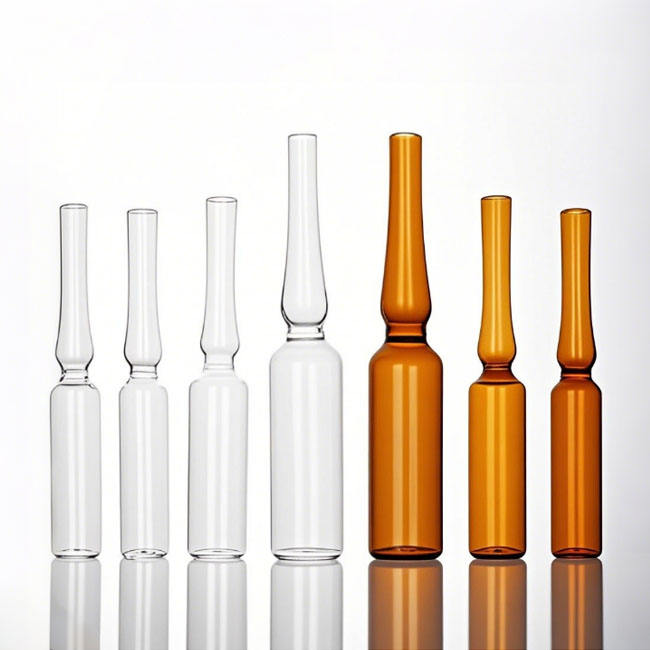
Ampoules remain the container of choice for single-dose injectables, vaccines, and sensitive biologicals because they offer a hermetically sealed, all-glass system that eliminates the risk of elastomer interaction. But not all ampoules are created equal, and the differences that matter most to small pharma often lie in details that larger procurement teams take for granted: break system consistency, glass type availability, and the willingness of a manufacturer to accommodate clinical-scale batches.
This guide walks through the practical selection criteria that small pharma companies should evaluate when sourcing glass ampoules.
Why Small Pharma Faces Unique Ampoule Challenges
Large pharmaceutical manufacturers can specify custom ampoule designs, negotiate multi-year supply agreements, and absorb the cost of validating multiple container sources. Small pharma companies operate under different constraints. They often need:
- Smaller batch sizes for clinical trials or niche commercial products
- Faster turnaround from order to delivery
- Technical guidance on matching ampoule specifications to filling equipment
- Documentation support for regulatory submissions without dedicated packaging engineering staff
These constraints mean that a supplier’s flexibility and technical responsiveness matter as much as the ampoule’s dimensional tolerances. A manufacturer that only offers standard catalog products in high volumes may not be the right fit, regardless of product quality.
Break Systems: The Clinical Safety Variable
The break system is one of the most overlooked specifications when small pharma evaluates ampoules—and one of the most consequential. An ampoule that is difficult to open creates risks for healthcare workers and can generate glass particles that contaminate the drug solution.
Three primary break systems are available in pharmaceutical-grade ampoules:
- One Point Cut (OPC): A micro-score on the ampoule stem, paired with a color dot. The user applies pressure opposite the dot to achieve a controlled break. OPC ampoules require precise scoring to ensure consistent opening force.
- حلقة فصل الألوان (CBR): A continuous colored ring applied around the neck, engineered to create controlled tensile stress for 360-degree breakability.
- Score Ring (SCR): A geometric score line without color identification, relying entirely on the scored geometry to guide the fracture.
For small pharma companies, the selection should be driven by the end-user environment. If the drug will be administered in settings where clear visual guidance is important, CBR or OPC systems with color identification are preferable. If the filling line has established procedures for a specific break type, consistency across batches becomes the critical variable. A supplier that cannot maintain consistent scoring depth or ring placement across batches will introduce variability into the clinical experience.
PharGlass produces ampoules with all three break systems, with color rings free of heavy metals and customizable opening forces to match the intended use case.
Glass Type: Type I vs. Low Borosilicate
The choice between Type I neutral borosilicate glass and low borosilicate glass is a formulation compatibility decision, not a cost decision.
Type I borosilicate glass, with its higher boron oxide content, offers superior hydrolytic resistance and is the standard choice for sensitive injectables, biologics, and vaccines. It resists pH shifts and minimizes the risk of delamination when exposed to aggressive formulations. Under USP <660>, Type I glass is classified by both its chemical composition and its demonstrated surface hydrolytic resistance.
Low borosilicate glass, while still suitable for many aqueous injectables, has lower boron content and correspondingly lower chemical durability. It may be appropriate for less demanding formulations or for markets where cost sensitivity is a primary driver. For small pharma companies developing products for regulated markets (US, EU, Japan), Type I glass is generally the safer choice unless formulation testing demonstrates that low borosilicate is compatible.
PharGlass manufactures ampoules from both Type I and low borosilicate glass tubing, allowing customers to match glass type to formulation requirements rather than being locked into a single option.
Dimensional Consistency: Why Batch-to-Batch Matters More Than Catalog Specs
Ampoule dimensions—stem diameter, neck diameter, body diameter, total height—are specified in standards such as ISO 9187 and YBB 00322005-2-2015. But the specification sheet tells only half the story. What matters for production is whether those dimensions remain within tolerance across batches.
For small pharma companies running clinical or small commercial batches, inconsistent ampoule dimensions create tangible problems:
- Filling needle alignment issues if neck and stem diameters vary
- Sealing failures if total height and stem geometry fluctuate
- Line stoppages if ampoules jam in unscramblers or transfer mechanisms
The critical dimensional constraint for ampoules is d₁ > d₃ > d₂ > d₄ (body OD > bulb OD > neck OD > stem OD). This geometric relationship ensures proper seating in filling equipment and consistent flame sealing. A supplier that cannot maintain this relationship across production batches is a risk to your line efficiency.
PharGlass manufactures ampoules with automated forming equipment and in-process dimensional monitoring, and provides batch-specific inspection data covering key dimensions, ensuring that clinical-scale orders receive the same dimensional consistency as commercial-scale orders.
Batch Flexibility: The Small Pharma Advantage
Perhaps the most practical differentiator for small pharma is a supplier’s willingness to accommodate non-standard batch sizes.
Ampoule manufacturing is typically optimized for high-volume production. Converting a line to run a small batch incurs setup costs that many large manufacturers are unwilling to absorb for orders below a certain threshold. For small pharma companies in clinical development or early commercial launch, this creates a barrier: they need pharmaceutical-grade ampoules but cannot justify massive order volumes.
PharGlass, with its extensive production capacity (8 all-oxygen furnace glass pull pipelines, over 40 ampoule machines, and annual output of 3 billion ampoules), maintains the flexibility to serve both large commercial orders and smaller clinical or pilot-scale batches. This capability is particularly valuable for small pharma companies that need to validate a container specification before committing to commercial volumes.
Documentation: What Small Pharma Should Request
Regulatory submissions require evidence that the container closure system is suitable for its intended use. For ampoules, the documentation package should include:
- Glass type confirmation (Type I or low borosilicate, with material composition data)
- Hydrolytic resistance data at the batch level (not just a generic certificate)
- Dimensional inspection reports covering critical parameters
- Break force test data if applicable to the break system selected
- Compliance statements referencing USP <660>, EP 3.2.1, ISO 9187, and applicable YBB standards
For small pharma companies without in-house packaging expertise, a supplier’s ability to provide these documents promptly and completely can significantly reduce the regulatory burden. PharGlass maintains a high-standard laboratory equipped with analytical instruments including atomic absorption spectrophotometers, and provides comprehensive documentation packages to support customer submissions.
الخاتمة
Selecting glass ampoules for a small pharmaceutical company requires balancing clinical performance, regulatory compliance, and supply chain practicality. The break system affects clinical safety. The glass type affects drug stability. Dimensional consistency affects line efficiency. And batch flexibility determines whether a supplier can support your development timeline rather than forcing you to overcommit.
PharGlass has supplied pharmaceutical glass packaging for nearly 30 years, serving both large pharmaceutical enterprises and smaller customers who require the same quality standards in more flexible quantities. For small pharma companies seeking a partner who understands the constraints and priorities of emerging drug developers, we welcome the opportunity to discuss your ampoule requirements.
Contact: sales@pharglass.com | الموقع الإلكتروني: www.pharglass.com
Category: Application Guides

 AR
 EN
 FR
 DE
 ES
 PT
 FA
 RU