
Sous-titre :
Exploration de la science derrière la conception des bouchons composites - des propriétés de barrière aux mécanismes d'ouverture ergonomiques - et des raisons pour lesquelles les marques pharmaceutiques mondiales s'appuient sur ces bouchons pour le confinement critique des médicaments.
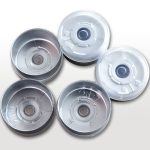
Dans le paysage pharmaceutique hautement réglementé d'aujourd'hui, l'emballage n'est plus un simple contenant - il fait partie intégrante de la sécurité et de l'efficacité des médicaments, ainsi que de la conformité des patients. Parmi les systèmes de fermeture les plus largement adoptés pour les produits injectables, les liquides oraux et les produits biologiques, bouchons combinés aluminium-plastique se sont imposés comme la référence en matière de protection, de convivialité et de conformité réglementaire.
Au PharGlass, Nous avons conçu nos bouchons en aluminium-plastique en nous appuyant sur des décennies de recherche et développement et sur les retours d'expérience de nos clients internationaux. Dans cette étude technique approfondie, nous décomposons les éléments suivants pourquoi ces bouchons composites sont préférés aux bouchons en caoutchouc traditionnels ou aux bouchons en plastique pur, grâce à la science des matériaux, à la précision des dimensions et à une conception centrée sur l'utilisateur.
🔬 1. La science derrière la performance supérieure de l'étanchéité
L'intégrité de l'étanchéité d'un bouchon en aluminium-plastique provient de son architecture à deux couches :
- Couche d'aluminium (fonction de barrière) :
D'une épaisseur de 0,5 à 0,6 mm, la coque en aluminium offre une résistance exceptionnelle à l'oxygène, à l'humidité et à la lumière, trois facteurs majeurs de dégradation des médicaments sensibles tels que les vaccins, les antibiotiques et les produits biologiques. Avec une densité d'environ 31,568 kg/m³, l'aluminium offre un rapport résistance/poids élevé, garantissant la durabilité sans ajouter d'encombrement. - Doublure en plastique (étanchéité et flexibilité) :
Fabriqué en PP ou PE de qualité médicale, le revêtement intérieur est formé par des processus d'estampage et de collage pour assurer une conformité parfaite avec les goulots des flacons (par exemple, les bouchons de 20 mm conviennent aux flacons de 69,30 mm de hauteur × 56,38 mm de diamètre). Cela permet d'éliminer les micro-fuites et de garantir l'inviolabilité après la première utilisation.
✅ Référence dans l'industrie : Selon USP et EP 3.2.2, l'emballage primaire doit maintenir l'intégrité du sceau dans des conditions de stress, y compris les cycles de température, les vibrations et les tests de chute. Nos bouchons dépassent ces exigences grâce à une épaisseur de paroi optimisée (~36μm) et des tolérances de moulage de précision.
🛠️ 2. Conception ergonomique : Équilibrer la sécurité et la facilité d'utilisation
L'un des principaux avantages des bouchons en aluminium-plastique est qu'ils sont mécanisme d'ouverture convivial - un facteur critique dans les environnements cliniques où la rapidité et la stérilité sont importantes.
- Designs Flip-Off / Tear-Tab :
La plupart des bouchons modernes sont dotés d'anneaux ou de tirettes pré-perforés qui permettent de les ouvrir d'une seule main et sans outil, ce qui réduit le risque de contamination par rapport aux bouchons à vis qui nécessitent des clés ou des pinces. - Sécurité anti-sabotage intégrée :
Une fois ouvert, le bouchon ne peut être refermé sans dommage visible - une exigence obligatoire pour les emballages conformes aux BPF selon la FDA 21 CFR Part 211 et l'annexe 1 de l'UE. - Code couleur personnalisable :
Alors que l'or et l'argent restent les standards de l'industrie en termes d'esthétique, les doublures à code couleur (bleu, vert, rouge) permettent une identification visuelle rapide des catégories de médicaments lors de la préparation des commandes dans les entrepôts ou de la distribution dans les hôpitaux - améliorant ainsi l'efficacité opérationnelle jusqu'à 40% (sur la base d'études de cas de clients internes).
📏 3. Ingénierie de précision pour une compatibilité globale
Nos bouchons sont conçus pour correspondre aux dimensions internationales des flacons de plusieurs pharmacopées :
| Taille du bouchon | Diamètre du col du flacon compatible | Application typique |
|---|---|---|
| 13# | 13 mm | Produits injectables de faible volume, stylos à insuline |
| 15# | 15 mm | Liquides oraux, formulations pédiatriques |
| 20# | 20 mm | Produits parentéraux de grand volume, vaccins |
Par exemple, notre système de bouchons de 20 mm s'adapte à des flacons d'une hauteur comprise entre 56,38 mm et 69,30 mm, ce qui permet de s'adapter à différents volumes de remplissage tout en conservant un contrôle cohérent de l'espace de tête. Cette adaptabilité réduit la complexité des SKU pour les fabricants qui gèrent des lignes de produits multiples.
💡 Conseil de pro : Pour les applications spécialisées (poudres lyophilisées, par exemple), nous proposons des ajustements d'épaisseur sur mesure (tolérance de +/- 0,05 mm) et des géométries de gaine modifiées afin d'optimiser la rétention du vide et la refermabilité après la perforation.
🌍 4. Durabilité et avantages de la chaîne d'approvisionnement
Au-delà des performances, les bouchons en aluminium-plastique présentent également des avantages environnementaux et logistiques :
- Construction légère : Avec un poids d'environ 5,36 g par unité, ils réduisent le poids du transport et l'empreinte carbone par rapport aux solutions plus lourdes en verre ou en métal.
- Recyclabilité : L'aluminium est recyclable à l'infini ; de nombreuses régions acceptent désormais les bouchons composites dans les flux de recyclage de matériaux mixtes lorsqu'ils sont correctement séparés.
- Efficacité de la production en vrac : Des lignes d'assemblage automatisées à grande vitesse (jusqu'à 12 000 bouchons/heure) garantissent une mise à l'échelle rentable pour les commandes de gros volumes, ce qui est crucial pour la réponse aux pandémies ou la production de médicaments génériques.
🧪 5. Validation et soutien réglementaire
Chaque lot de bouchons en aluminium-plastique PharGlass fait l'objet d'une validation rigoureuse :
- Test d'intégrité des joints : Méthode de décroissance du vide + détection des fuites d'hélium (sensibilité ≤ 1×10-⁶ mbar-L/s)
- Études sur les matières extractibles et lessivables (E&L) : Conforme à la norme ISO 10993-18 et aux directives BPOG
- Compatibilité avec la stérilisation : Validé pour la chaleur humide (121°C/30min), la chaleur sèche (180°C/1h) et le rayonnement gamma (25kGy).
Nous fournissons une documentation complète, y compris les références DMF, le CoA et les certificats de stérilisation sur demande, afin d'accélérer les délais d'enregistrement de vos produits aux États-Unis, dans l'Union européenne, au Japon et sur les marchés émergents.
Conclusion : Pourquoi les leaders de l'industrie pharmaceutique font-ils confiance aux capsules en aluminium-plastique ?
De la protection de la barrière à la fonctionnalité ergonomique, de l'alignement réglementaire à la résilience de la chaîne d'approvisionnement, les bouchons combinés aluminium-plastique représentent la convergence optimale de l'ingénierie, de la sécurité et de la praticité dans l'emballage pharmaceutique moderne.
Au PharGlass, En tant que fabricant de bouchons, nous ne nous contentons pas de fabriquer des bouchons - nous concevons des solutions qui protègent des vies. Qu'il s'agisse de développer des produits biologiques de nouvelle génération, d'augmenter la production de vaccins ou d'optimiser les formats injectables existants, notre équipe est prête à personnaliser chaque paramètre - de la composition de l'alliage au codage des couleurs - pour répondre à vos besoins uniques.
📩 Contactez-nous dès aujourd'hui pour demander des échantillons, des fiches techniques ou programmer une visite virtuelle de l'usine.
 FR
FR  EN
EN  AR
AR  DE
DE  ES
ES  PT
PT  FA
FA  RU
RU