
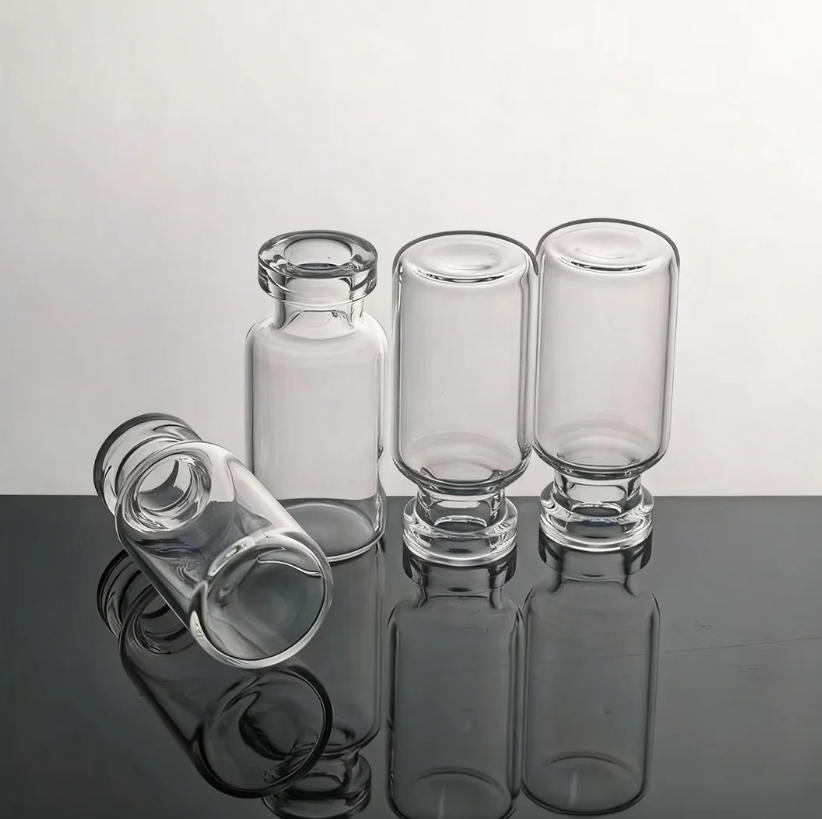
Dans le secteur de l'emballage pharmaceutique, le ampoule Il s'agit d'un récipient essentiel pour le stockage des médicaments injectables, des vaccins et des sérums. Si la stérilité est primordiale, les performances physiques de l'ampoule — notamment son mode d'ouverture — sont tout aussi cruciales pour la sécurité des patients et l'efficacité opérationnelle.
Au PharGlass, nous savons qu’un col mal conçu peut entraîner des cassures irrégulières, une contamination par des particules de verre ou des difficultés d’ouverture pour le personnel médical. Ce guide technique détaille les normes Méthode d'essai de la résistance à la rupture des ampoules, en se référant à des normes nationales clés telles que GB2637-1995 et YBB00332002-2015.
L'importance cruciale de la fragilité
La “ fragilité ” d'une ampoule désigne la force nécessaire pour casser le col au niveau de la rainure prévue à cet effet. Cet indicateur est à double tranchant :
- Trop élevé : Les professionnels de santé ont du mal à l'ouvrir, ce qui augmente le risque de blessure ou de retard en cas d'urgence.
- Trop bas : L'ampoule risque de se briser prématurément pendant le transport ou la manipulation.
Par conséquent, la réalisation d'analyses précises ne constitue pas seulement une étape du contrôle qualité ; c'est un impératif pour la sécurité des patients.
Méthodologie des essais normalisés
Conformément aux normes de la Pharmacopée de 2015 et aux pratiques actuelles du secteur, le processus d'essai fait appel à des dispositifs mécaniques spécifiques et à des paramètres stricts.
1. Le dispositif de test Ce test utilise un dispositif spécialisé Appareil d'essai de fragilité des ampoules (il s'agit souvent d'un type de machine de traction électronique intelligente). Le dispositif comprend deux supports métalliques positionnés de manière à maintenir l'ampoule à l'horizontale.
- Positionnement : L'ampoule est placée entre deux supports métalliques.
- Angle : Une force est appliquée en un angle de 90° par rapport à l'axe central de l'ampoule.
- Le score : Il est essentiel, lors du test des ampoules dotées d'un repère d'ouverture facile (un anneau ou un point de couleur), d'exercer la force directement sur ce repère. Le schéma indique que le repère doit être positionné à la baisse dans le dispositif d'essai afin de s'assurer que la force s'exerce bien sur le point faible de la structure destiné à être ouvert.
2. Caractéristiques techniques de l'instrument Afin de garantir l'exactitude des données et le respect des BPF (bonnes pratiques de fabrication), l'instrument d'analyse doit répondre à des critères techniques spécifiques :
| Paramètres | Exigence |
|---|---|
| Précision | 0,1 N (Newtons) |
| Vitesse d'essai (v) | 10 mm/min |
| Plage de mesure | 0 – 200 N |
3. La procédure
- Fixez l'ampoule dans le support.
- Actionnez le bras mécanique pour appliquer une pression à la vitesse spécifiée ($v = 10\text{ mm/min}$).
- Enregistrez la valeur maximale de la force au moment de la rupture.
Évaluation de la fracture : critères d'acceptation en matière de qualité
Mesurer la force, ce n'est que la moitié du chemin. Le résultat La qualité de la rupture est tout aussi importante. Selon les normes du secteur, une rupture « 合格 » (conforme) doit répondre aux critères visuels suivants :
- Section transversale plate : La surface de rupture doit être relativement plane.
- Pas de saillies pointues : Il ne doit pas y avoir de pointes de verre acérées (bavures) susceptibles de blesser l'utilisateur ou de tomber dans la solution.
- Pas de fissures au niveau des épaules : La ligne de rupture ne doit pas s'étendre jusqu'à l'intérieur de l'ampoule (au niveau de l'épaulement).
Note de l'expert : Si la force de rupture est trop élevée ou si le verre se brise de manière irrégulière, cela indique souvent des problèmes liés au processus de scellage à la flamme ou à la qualité des tubes de verre (répartition des contraintes).
Pourquoi est-ce important pour le secteur pharmaceutique et les fabricants ?
Pour les laboratoires pharmaceutiques et les fabricants d'emballages tels que PharGlass, le suivi des données relatives à la fragilité poursuit deux objectifs principaux :
- Optimisation des processus : En suivant l'évolution de la force de rupture, les fabricants peuvent ajuster l'intensité de la flamme et la profondeur de rainurage pendant la production afin de garantir une qualité constante.
- Sécurité des utilisateurs : Le fait de s'assurer que la force exercée se situe dans la “ plage optimale ” (généralement définie par des plages spécifiques en newtons pour différentes tailles de col) garantit que les médecins et les infirmiers puissent ouvrir l'ampoule sans difficulté d'une seule main.
En respectant ces normes de contrôle rigoureuses, nous garantissons que chaque ampoule qui quitte notre site présente un équilibre durabilité pour le transport avec facilité d'utilisation pour l'application finale.


 FR
FR  EN
EN  AR
AR  DE
DE  ES
ES  PT
PT  FA
FA  RU
RU