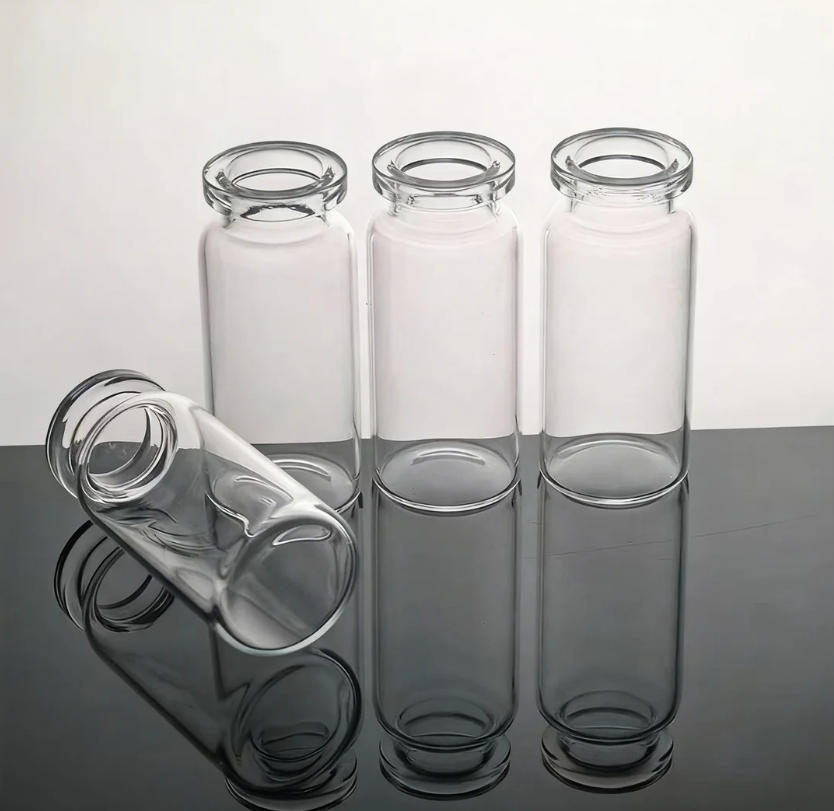
In the pharmaceutical industry, oral liquid vials serve as critical packaging for direct-contact drug storage, where safety and sterility are non-negotiable. As a professional supplier of high-quality pharmaceutical packaging materials, PharGlass specializes in producing premium oral liquid vials (along with rubber stoppers and aluminum-plastic caps) for global manufacturers. With OEM/ODM support, rigorous quality control, and reliable delivery, PharGlass ensures every vial meets the stringent demands of pharmaceutical applications.
1. The Strategic Importance of Aseptic Oral Liquid Vials
Oral liquid vials are indispensable in pharmaceutical packaging due to their role in preserving drug efficacy, preventing microbial contamination, and ensuring patient safety. Unlike non-sterile containers, aseptic vials eliminate risks of bacterial, viral, or spore contamination during production, storage, and use. For example, biologics, pediatric medications, and nutraceuticals rely on vials that maintain sterility over extended shelf lives. PharGlass’ oral liquid vials are designed to meet these challenges, leveraging advanced materials and precision engineering to deliver reliability across diverse pharmaceutical applications.
2. Raw Material Preprocessing: The Foundation of Aseptic Packaging
The journey to a safe oral liquid vial begins with raw material selection and preprocessing. PharGlass sources pharmaceutical-grade glass tubes (or PET/PP alternatives for specialized needs) that comply with national standards (e.g., low-boron or mid-boron silicon). These materials undergo strict incoming inspection to verify:
- Thermal expansion coefficients (to ensure dimensional stability during heating).
- Water and acid resistance (to prevent leaching of harmful substances during drug contact).
For instance, our borosilicate glass tubes are tested for chemical stability, ensuring they withstand long-term drug exposure without compromising purity. This step eliminates defects at the source, laying the groundwork for subsequent sterilization.
3. Forming and Primary Cleaning: Precision in Every Stage
After raw material approval, the glass tube undergoes forming and primary cleaning:
- Forming: The tube is heated in a high-temperature furnace until pliable, then shaped into a vial via blow molding or drawing. Critical controls here include mold cleanliness (to avoid particle contamination) and precise temperature profiling (to prevent thermal stress or deformation). Molds are regularly cleaned via plasma treatment to remove organic residues.
- Primary Cleaning: Freshly formed vials undergo surface dust removal using clean, compressed air to eliminate particles generated during forming.
This stage balances efficiency with precision, ensuring the vial’s physical structure is flawless before sterilization.
4. Multi-Stage Cleaning and Sterilization: Eliminating Contaminants
The core of aseptic production lies in multi-stage cleaning and sterilization:
- Cleaning Stages:
- Alkaline cleaning: Removes grease and organic residues.
- Acidic cleaning: Neutralizes alkaline residues and dissolves metal ions.
- Ultrasonic cleaning: Uses cavitation to dislodge microscopic particles from vial crevices. Each step’s parameters (concentration, temperature, time) are validated to ensure repeatable, effective cleaning.
- Sterilization: Tunnel-type dry heat sterilization (e.g., at 300°C+) is employed to kill microbes (including heat-resistant spores) and degrade pyrogens (microbial toxins that cause fever). This process also ensures the vial’s interior remains free of contaminants, meeting pharmacopeial standards.
5. Seal Integrity: The Final Barrier Against Recontamination
A vial’s seal integrity is its last defense against recontamination. PharGlass’ oral liquid vials feature:
- Aluminum-plastic combination caps or rubber stoppers, engineered for tight fit.
- Rigorous testing: Negative pressure leakage tests and dye-penetration tests verify seal performance.
Poor seals allow air, moisture, or microbes to enter during storage/transport, risking drug degradation or contamination. Our testing protocols ensure every batch meets regulatory requirements.
6. Environmental Control: A Hygienic Production Ecosystem
Throughout manufacturing, environmental control is paramount:
- Cleanroom facilities: Classified to ISO standards, with positive air pressure and HEPA-filtered air to block external contaminants.
- Personnel protocols: Operators wear cleanroom suits, follow gowning/sterilization procedures, and adhere to strict hygiene practices.
This ecosystem complements process controls, creating a “contamination-proof” chain from raw material to finished vial.
7. Process Validation: Ensuring Consistency and Compliance
PharGlass’ manufacturing excellence relies on continuous process validation:
- Regular testing: Microbial limits of cleaning water, temperature distribution in sterilizers, and final product sampling.
- Data-driven monitoring: Tracking parameters (e.g., cleaning time, sterilization temperature) to ensure consistency.
This systematic approach verifies that every vial meets the “sterile” claim, reducing variability and ensuring compliance with global pharmacopeias (e.g., USP, EP).
8. Why Post-Manufacture Sterilization Still Matters
Even after rigorous in-house cleaning/sterilization, pharmaceutical companies often re-sterilize vials before filling. This reflects the distinction between:
- Manufacturer’s role: Providing vials with “extremely low initial bioburden” (no specific pathogens).
- Pharma’s role: Achieving “probabilistic sterility assurance” (≤1 viable contaminant per million units).
PharGlass’ process provides a robust foundation, but terminal sterilization by pharma partners ensures the final product meets the highest sterility standards.
9. PharGlass: A Partner in Aseptic Innovation
At PharGlass, we don’t just manufacture vials—we engineer solutions. Our expertise spans material science, microbiology, and engineering control, enabling us to deliver:
- Custom OEM/ODM designs (e.g., amber glass for light-sensitive drugs, PET for lightweight applications).
- Scalable production with consistent quality.
- Compliance with global regulations (FDA, EMA, NMPA).
By focusing on every link in the manufacturing chain, we ensure our oral liquid vials are a trusted choice for pharmaceutical manufacturers worldwide.
Conclusion: A System of Excellence for Aseptic Packaging
Producing safe, aseptic oral liquid vials is a systematic endeavor—not a single-step solution. It requires expertise in materials, precision in process control, and rigor in quality assurance. PharGlass’ commitment to excellence, validated processes, and customer-centric approach make us a leader in pharmaceutical packaging. For manufacturers seeking reliable, compliant, and innovative aseptic vials, PharGlass is the partner that turns sterility from a requirement into a guarantee.
 EN
EN  FR
FR  AR
AR  DE
DE  ES
ES  PT
PT  FA
FA  RU
RU