Introdução
No cenário da medicina moderna, que avança rapidamente, a segurança, a eficácia e a estabilidade dos medicamentos dependem não apenas dos ingredientes farmacêuticos ativos, mas também da qualidade de suas embalagens primárias. Entre todos os materiais de embalagem, os frascos de vidro continuam sendo o padrão-ouro para recipientes farmacêuticos. Sua combinação única de inércia química, robustez física, transparência e compatibilidade ambiental os torna insubstituíveis para uma ampla gama de formulações de medicamentos — desde injeções líquidas e xaropes orais até pós liofilizados e produtos biológicos especializados.
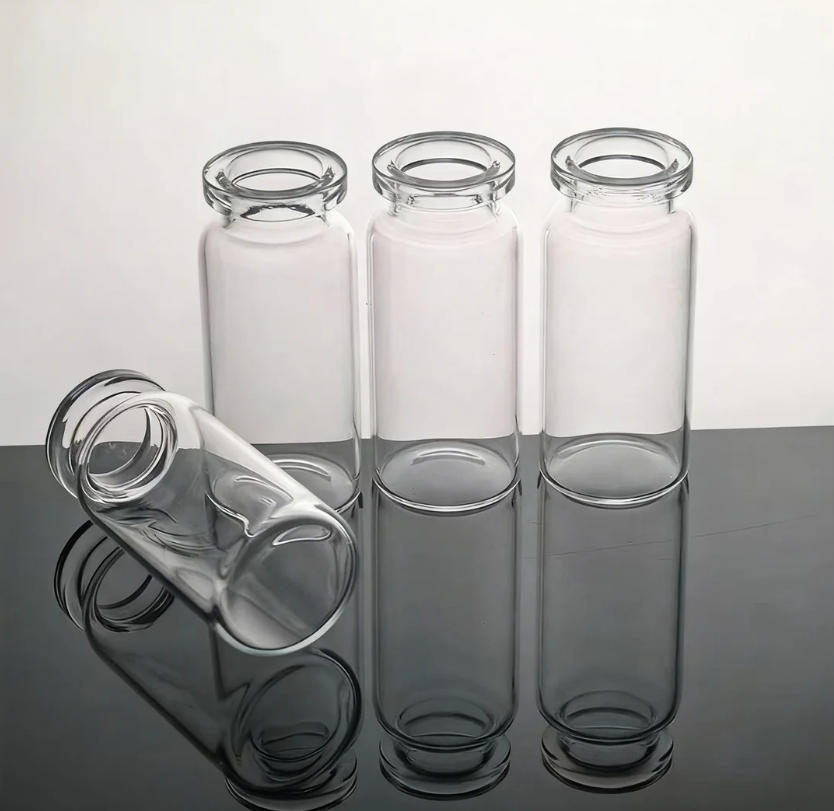
Zhengzhou PharGlass é um fornecedor profissional de materiais de embalagem farmacêutica, oferecendo frascos de vidro farmacêuticos de alta qualidade, rolhas de borracha farmacêuticas e tampas de alumínio e plástico. Nossos frascos de vidro são fabricados com vidro de alta qualidade dos tipos I e III, atendendo às normas USP, EP e JP. Quando combinados com nossas tampas elastoméricas e selos flip-off, formam um sistema completo de embalagem e vedação que garante esterilidade, estabilidade e segurança do paciente.
Este artigo explora três funções fundamentais das garrafas de vidro nas embalagens farmacêuticas – garantir a qualidade dos medicamentos, facilitando o armazenamento e o uso, e cumprir os requisitos ambientais – com base em especificações técnicas, referências regulatórias e aplicações na prática.
Parte I: Garantindo a qualidade dos medicamentos – A barreira protetora
Inércia química e estabilidade
O vidro é inerentemente resistente à maioria dos produtos químicos. Ao contrário dos plásticos, o vidro não interage com as formulações de medicamentos por meio da lixiviação de aditivos ou da adsorção de ingredientes ativos. Essa estabilidade química é fundamental para produtos sensíveis, como vacinas, insulina, antibióticos e produtos biológicos.
A Zhengzhou PharGlass produz frascos de vidro para produtos farmacêuticos utilizando vidro borossilicato (Tipo I) e vidro de cal e soda (Tipo III) , dependendo do pH do medicamento e dos requisitos de armazenamento. O vidro borossilicato tipo I oferece a maior resistência hidrolítica, tornando-o adequado para preparações parenterais, inclusive aquelas com valores extremos de pH. O vidro tipo III é normalmente utilizado para produtos não injetáveis, orais ou tópicos.
Propriedades de barreira: proteção contra oxigênio, umidade e luz
Três fatores principais causam a degradação dos medicamentos: oxigênio, umidade e luz. Os frascos de vidro oferecem uma excelente barreira contra a transmissão de oxigênio e vapor de água — muito superior à de muitos plásticos. Para medicamentos sensíveis à luz (por exemplo, nitroglicerina, vitaminas, certos antibióticos), os frascos de vidro âmbar (colorido) absorvem a luz ultravioleta e a luz visível, impedindo a fotodegradação.
| Propriedade de barreira | Desempenho das garrafas de vidro | Garrafa de plástico (comparação) |
|---|---|---|
| Taxa de transmissão de oxigênio (OTR) | Quase zero | Variável, geralmente de 10 a 100 cc por embalagem por dia |
| Taxa de transmissão de vapor de água (WVTR) | Quase zero | Significativo para muitos polímeros |
| Proteção contra a luz (vidro âmbar) | >90% Absorção de UV até 450 nm | Requer aditivos; pode causar lixiviação |
| Lixiviação química | Mínimo (vidro Tipo I) | Pode ser causado por plastificantes/antioxidantes |
Superfície não contaminante
Os frascos de vidro possuem uma superfície lisa, não porosa e que não solta partículas. Eles não geram partículas em condições normais de manuseio. Além disso, o vidro é atóxico e inodoro, garantindo que não haja migração de sabores indesejados ou contaminantes químicos para o medicamento. Para medicamentos injetáveis, os frascos de vidro podem ser efetivamente despirogenizados (remoção de endotoxinas) por meio da esterilização por calor seco a 300–350 °C — um processo impossível de ser realizado com recipientes de plástico.
Garantia de Qualidade na Zhengzhou PharGlass
Todas as garrafas de vidro que fornecemos passam por um rigoroso controle de qualidade:
- Teste de resistência à hidrólise de acordo com a USP e a EP 3.2.1
- Tratamento da superfície interna para reduzir a adsorção do medicamento (opcional)
- Precisão dimensional – Inspeção óptica automatizada 100%
- Resistência ao choque térmico – testado para ciclos de congelamento e descongelamento e para autoclavagem
Quando combinado com nossas rolhas farmacêuticas de borracha (bromobutilo/clorobutilo, USP Tipo I) e tampas flip-off de alumínio e plástico (ISO 8872), o sistema de fechamento do recipiente alcança um nível de garantia de esterilidade (SAL) de 10⁻⁶ e mantém a integridade do fechamento do recipiente (CCI) durante todo o prazo de validade.
Parte II: Facilitando o armazenamento e o uso de medicamentos – Projeto prático e resistência mecânica
Robustez mecânica para armazenamento e transporte
Os frascos de vidro para produtos farmacêuticos devem suportar as exigências dos processos de enchimento, tamponamento, rotulagem, embalagem, armazenamento e distribuição global. A Zhengzhou PharGlass fabrica frascos com espessura de parede uniforme, recozimento adequado e alta resistência mecânica. Nossos frascos resistem a rachaduras sob compressão durante os processos de tamponamento e tamponamento. Eles também toleram as variações de vácuo e pressão encontradas durante a liofilização (secagem a frio) – um processo no qual muitos recipientes de vidro de qualidade inferior falham.
Aberturas amplas e design ergonômico
Uma vantagem fundamental das garrafas de vidro é a possibilidade de produzir uma ampla variedade de acabamentos de gargalo e diâmetros de boca. As aberturas maiores facilitam:
- Enchimento fácil de pós, grânulos ou líquidos viscosos em linhas automatizadas
- Fácil acesso ao conteúdo por profissionais de saúde (líquidos orais, xaropes)
- Compatibilidade com diferentes tamanhos de rolhas e tampas (13 mm, 20 mm, 28 mm, 32 mm, etc.)
A Zhengzhou PharGlass oferece acabamentos personalizados no gargalo para se adequarem a geometrias específicas de rolhas de borracha. Nossos frascos de vidro também estão disponíveis com acabamentos roscados para frascos de líquidos orais, permitindo o uso de tampas que podem ser fechadas novamente para aplicações multidoses.
Compatibilidade com os processos de esterilização e envase
As garrafas de vidro podem suportar vários métodos de esterilização sem sofrerem deformações:
- Despirogenização por calor seco (para frascos injetáveis)
- Autoclavagem a vapor (esterilização terminal de produtos envasados)
- Irradiação gama (para determinadas configurações de embalagem de RTU)
Sua transparência permite a inspeção visual dos produtos envasados — tanto manual quanto automatizada — para verificar a presença de partículas, o nível de enchimento e defeitos no recipiente. Essa é uma exigência regulatória para a maioria dos produtos parenterais (USP ).
Projetos específicos para cada aplicação
A Zhengzhou PharGlass oferece diversos tipos de frascos de vidro adaptados às diferentes categorias de medicamentos:
| Tipo de garrafa | Aplicação típica | Característica principal |
|---|---|---|
| Frascos para injeção | Soluções parenterais, pós, medicamentos liofilizados | Borossilicato tipo I, gargalo de 13/20/32 mm |
| Frascos para infusão | Soluções parenterais de grande volume (fluidos intravenosos) | Boca larga, alta resistência mecânica |
| Frascos de líquido para uso oral | Xaropes, suspensões, elixires | Gargalo de rosca, vidro âmbar ou flint |
| Frascos conta-gotas | Colírios/colírios auriculares, tinturas | Conjunto de conta-gotas integrado compatível |
| Frascos para produtos cosméticos/médicos | Antissépticos, desinfetantes | Formatos personalizados, impressão colorida |
Parte III: Cumprimento dos requisitos ambientais – Sustentabilidade e economia circular
O vidro como material ecologicamente correto
Numa época de crescente conscientização ambiental, as empresas farmacêuticas buscam soluções de embalagem que minimizem o impacto ecológico. O vidro é inerentemente sustentável: é fabricado a partir de matérias-primas naturais abundantes (areia, carbonato de sódio, calcário) e não contém aditivos nocivos que possam se infiltrar no meio ambiente.
Ao contrário dos laminados plásticos multicamadas, as garrafas de vidro são totalmente recicláveis sem perda de qualidade. O vidro reciclado (caco) derrete a uma temperatura mais baixa do que as matérias-primas virgens, reduzindo o consumo de energia e as emissões de CO₂ em aproximadamente 20–30% para cada 10% de caco utilizado.
Reutilização e esterilizabilidade
As garrafas de vidro, após limpeza e esterilização adequadas, podem ser reutilizadas várias vezes em ambientes controlados da área da saúde (por exemplo, farmácias hospitalares, preparação de meios de cultura em laboratórios). A Zhengzhou PharGlass oferece frascos estéreis prontos para uso (RTU) que são pré-lavados, despirogenados e esterilizados — mas mesmo os frascos convencionais podem ser reprocessados quando as normas o permitirem. A capacidade de suportar repetidas autoclavações sem degradação distingue o vidro dos plásticos descartáveis.
Reciclagem e redução de resíduos
Os resíduos de vidro farmacêutico não são perigosos (a menos que estejam contaminados com medicamentos potentes). Muitos países já estabeleceram uma infraestrutura de reciclagem de vidro. O uso de frascos de vidro contribui para as metas de sustentabilidade dos fabricantes farmacêuticos e está alinhado com o Plano de Ação para a Economia Circular da União Europeia e com iniciativas globais semelhantes.
A Zhengzhou PharGlass promove ativamente:
- Designs de garrafas de vidro leves – reduzir o uso de material, mantendo a resistência
- Embalagem a granel – minimizar os resíduos de embalagens secundárias
- Colaboração com programas de reciclagem – sistemas de ciclo fechado para a recuperação de caco de vidro
Impacto Ambiental Comparativo
| Parâmetro | Garrafa de vidro | Garrafa de plástico (PET/PP) | Alumínio/Blister |
|---|---|---|---|
| Reciclabilidade | Ciclos infinitos | Reciclagem com redução de valor (1 a 2 ciclos) | Limitado pelos revestimentos |
| Reutilização | Sim (autoclavável) | Raramente | Não |
| Degradação ambiental | Estável (inerte) | Microplásticos | Lixiviação |
| Pegada de carbono por uso (cenário de reutilização) | Baixo | Médio-alto (se for de uso único) | Médio |
Soluções integradas da Zhengzhou PharGlass: vidro + borracha + alumínio
Uma garrafa de vidro, por si só, não constitui uma embalagem farmacêutica completa. A Zhengzhou PharGlass oferece um sistema de embalagem e fechamento totalmente integrado:
- Frascos de vidro para produtos farmacêuticos – Tipo I/Tipo III, em diversos tamanhos e acabamentos
- Rolhas de borracha para uso farmacêutico – Bromobutilo/clorobutilo, USP Tipo I, com ou sem revestimento (filme de fluoropolímero)
- Tampas flip-off de alumínio e plástico – Com indicação de violação, fácil de abrir, cores e impressão personalizáveis
Todos os componentes são compatíveis, validados e estão disponíveis em formatos estéreis (RTU) ou não estéreis. A personalização OEM/ODM inclui:
- Dimensões personalizadas do braço
- Serigrafia ou rotulagem
- Tratamentos especiais de superfícies internas (siliconização, desalcalinização)
Tabela de especificações técnicas: Frascos de vidro farmacêuticos da Zhengzhou PharGlass
| Parâmetro | Opções padrão | Faixa personalizável |
|---|---|---|
| Tipo de vidro | Borossilicato Tipo I, cal-soda Tipo III | Tipo II (com tratamento de superfície) mediante solicitação |
| Cor | Flint (transparente), âmbar (proteção leve contra a luz, conforme USP), azul cobalto | Cores especiais para diferenciação da marca |
| Volume nominal | 2 mL a 1.000 mL | 1 mL a 2.000 mL |
| Acabamento do pescoço | 13 mm, 20 mm, 28 mm, 32 mm (DIN/ISO) | 15 mm, 25 mm, rosca personalizada |
| Uniformidade da espessura da parede | ≤ ±0,15 mm (valor típico) | Tolerância mais restrita para linhas de alta velocidade |
| Resistência à hidrólise | Tipo I: ≤0,1 mL (titulação), Tipo III: ≤0,5 mL | Aprovado na norma USP Classe I/III |
| Tratamento da superfície interna | Nenhum (padrão), siliconizado ou desalcalinizado | Revestimento personalizado para redução da adsorção de proteínas |
| Compatibilidade com a esterilização | Calor seco (300 °C), vapor (121 °C), raios gama | Óxido de etileno (apenas para uso externo) |
| Normas regulatórias | USP , EP 3.2.1, JP 7.01 | DMF Tipo III disponível |
| Formato da embalagem | A granel (caixas de papelão ondulado com divisórias), RTU (recipientes estéreis encaixáveis) | Paletização personalizada para cada cliente |
Conclusão: O vidro – um pilar indispensável das embalagens farmacêuticas
O papel das garrafas de vidro nas embalagens farmacêuticas vai muito além da simples contenção. Elas são guardiãs ativas da qualidade dos medicamentos, proporcionando uma barreira inerte contra o oxigênio, a umidade e a luz. Sua resistência mecânica e seus designs versáteis facilitam o armazenamento seguro, o transporte eficiente e o uso prático por profissionais de saúde e pacientes. Além disso, o vidro é uma escolha ambientalmente responsável – infinitamente reciclável, reutilizável e livre de aditivos nocivos.
A Zhengzhou PharGlass aproveita décadas de experiência na fabricação de vidro farmacêutico para fornecer frascos que atendem aos mais altos padrões internacionais. Quando combinados com nossas rolhas de borracha farmacêuticas e tampas de alumínio e plástico, nossos frascos de vidro formam um sistema completo, confiável e sustentável de fechamento de embalagens para a indústria farmacêutica global.
À medida que a tecnologia farmacêutica continua a evoluir — com novos produtos biológicos, medicamentos personalizados e formulações complexas —, a demanda por embalagens de vidro de alta qualidade só tende a crescer. A Zhengzhou PharGlass mantém seu compromisso com a inovação, a qualidade e a gestão ambiental, garantindo que nossos frascos de vidro continuem a proteger a saúde humana para as próximas gerações.
 PT
PT  EN
EN  FR
FR  AR
AR  DE
DE  ES
ES  FA
FA  RU
RU