Introdução
Na embalagem primária de produtos farmacêuticos, a escolha do sistema de embalagem adequado é uma decisão crítica que afeta diretamente a estabilidade do medicamento, a segurança do paciente, a eficiência da fabricação e os custos gerais do ciclo de vida do produto. Entre os formatos de embalagem mais utilizados globalmente estão frascos (comumente conhecidos como frascos Xilin no mercado chinês) e cartuchos (também conhecidos como frascos-cartucho ou cartuchos de dupla câmara). Cada formato oferece vantagens distintas e apresenta limitações específicas, dependendo do medicamento, da via de administração e das exigências do mercado.
Este artigo apresenta uma comparação aprofundada e baseada em evidências entre frascos e cartuchos, analisando suas características estruturais, atributos de desempenho, considerações de fabricação e cenários de aplicação. Com base nas normas das farmacopeias internacionais, nas melhores práticas do setor e na literatura técnica, nosso objetivo é ajudar os fabricantes farmacêuticos a tomar decisões informadas sobre embalagens. Em Zhengzhou PharGlass, somos especializados em soluções de embalagem primária tanto para frascos quanto para cartuchos, oferecendo recipientes de vidro de alta qualidade, rolhas de borracha e tampas de alumínio e plástico que atendem aos requisitos regulatórios globais.
Parte 1: Frascos (Frascos Xilin) – O cavalo de batalha do setor
1.1 Definição e Interpretação
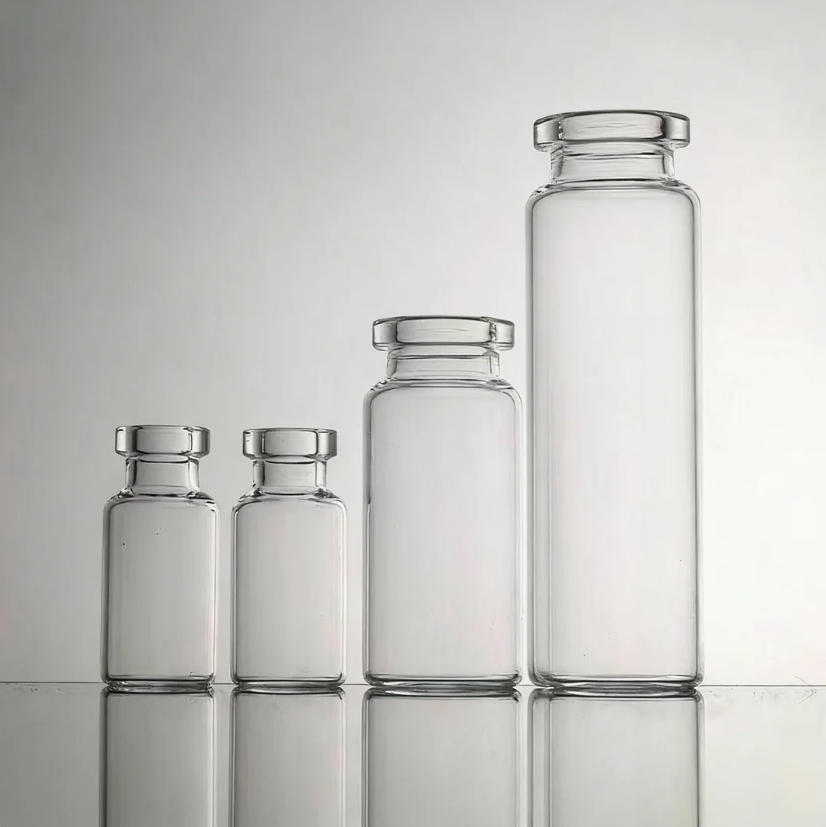
Os frascos são pequenos recipientes de vidro ou plástico com um gargalo vedado por uma rolha de borracha e um selo externo de alumínio ou plástico. No contexto farmacêutico, o termo “frasco” refere-se quase exclusivamente a frascos de vidro, normalmente fabricados de vidro borossilicato ou vidro de cal e soda. Os frascos são utilizados para medicamentos injetáveis líquidos, pós liofilizados (secos por congelamento), líquidos orais e reagentes de diagnóstico. O formato mais comum é o frasco tubular de vidro, formado a partir de tubos de vidro, embora também existam frascos moldados disponíveis para volumes maiores.
Zhengzhou PharGlass oferece uma linha abrangente de frascos farmacêuticos de vidro em tamanhos que variam de 2 mL a 100 mL, fabricados em vidro borossilicato de tipo I ou vidro de cal e soda de tipo III, com ou sem gargalo rosqueado (para líquidos orais) e com diversos acabamentos de gargalo (norma ISO 8362).
1.2 Vantagens dos frascos
(1) Tecnologia de fabricação consolidada e desempenho comprovado
Os frascos representam um dos formatos de embalagem primária mais antigos e consolidados na indústria farmacêutica. Os processos de fabricação de frascos de vidro — tanto tubulares quanto moldados — foram aperfeiçoados ao longo de décadas, resultando em dimensões altamente consistentes, propriedades mecânicas previsíveis e durabilidade química confiável. De acordo com a norma ISO 8362-1 (Recipientes para injetáveis — Frascos de vidro), as dimensões dos frascos, os acabamentos do gargalo e a compatibilidade das tampas são padronizados globalmente, permitindo uma integração perfeita em linhas de envase de alta velocidade.
A produção de frascos tubulares envolve duas etapas: primeiro, a extrusão de tubos de vidro de precisão (por meio dos processos Vello ou Danner); em seguida, a conversão dos tubos em frascos em máquinas de moldagem automáticas. Esse processo resulta em frascos com paredes finas e uniformes, excelente precisão dimensional e superfícies internas lisas que minimizam a interação entre o medicamento e o recipiente. Para produtos liofilizados, a parede fina de vidro dos frascos tubulares promove uma transferência de calor eficiente durante os ciclos de liofilização.
A robustez física dos frascos — submetidos a medidas de controle de qualidade, como recozimento (para aliviar tensões internas) e tratamento de superfície (por exemplo, tratamento com enxofre para melhorar a durabilidade da superfície) — garante que os frascos possam suportar as exigências dos processos automatizados de enchimento, tamponamento, rotulagem e transporte. Os frascos farmacêuticos são testados quanto à resistência à carga vertical, resistência à pressão interna, resistência ao choque térmico e resistência hidrolítica, de acordo com as normas USP , EP 3.2.1 e ChP.
(2) Excelente integridade da vedação
Os frascos são fechados com rolhas de elastômero (por exemplo, borracha de clorobutilo ou bromobutilo) e fixados com tampas flip-off de alumínio ou de alumínio-plástico. Esse sistema de fechamento, quando adequadamente selecionado e aplicado, oferece uma excelente barreira contra o oxigênio, a umidade e a penetração de microrganismos. A rolha forma uma vedação por compressão contra o acabamento do gargalo do frasco, e a tampa de alumínio frisada mantém a rolha no lugar.
A integridade da vedação é fundamental para produtos injetáveis estéreis, especialmente aqueles sensíveis à oxidação ou à umidade. Os sistemas de frascos podem atingir taxas de vazamento bem abaixo do limite detectável por testes de penetração de corante (normalmente <10⁻⁶ mbar·L/s). Para produtos liofilizados armazenados sob vácuo ou com camada de nitrogênio, os sistemas de tampas de frascos são projetados para manter as condições do espaço livre durante todo o prazo de validade.
Zhengzhou PharGlass oferece rolhas com diversas formulações, incluindo rolhas revestidas (por exemplo, filmes de barreira equivalentes ao FluroTec®) para reduzir os compostos lixiviáveis e a adsorção, bem como rolhas aninhadas prontas para uso (RTU) para enchimento asséptico em alta velocidade.
(3) Ampla variedade de tamanhos e alta adaptabilidade
Os frascos estão disponíveis em uma ampla variedade de capacidades, desde 2 mL (amostras pequenas) até 100 mL ou mais. Os tamanhos mais comuns incluem 2 mL, 5 mL, 7 mL, 10 mL, 15 mL, 20 mL, 30 mL, 50 mL e 100 mL. Essa ampla variedade permite que os fabricantes farmacêuticos selecionem com precisão o volume de recipiente adequado para uma determinada apresentação do medicamento, minimizando o espaço livre (que pode causar oxidação) e, ao mesmo tempo, evitando o enchimento excessivo.
Além disso, os frascos podem ser produzidos com diferentes acabamentos de gargalo (por exemplo, 13 mm, 20 mm, 28 mm, 32 mm) para acomodar diferentes tamanhos de rolhas e sistemas de fechamento. A disponibilidade de vidro transparente (flint) e âmbar (com proteção UV) amplia ainda mais a adaptabilidade. Os frascos moldados, normalmente utilizados para volumes maiores (20 mL e acima), possuem paredes mais espessas e maior resistência mecânica, sendo adequados para líquidos orais ou injetáveis de grande volume.
A padronização dimensional dos frascos significa que linhas de envase, máquinas de tamponamento, equipamentos de rotulagem e sistemas de inspeção visual estão amplamente disponíveis em diversos fornecedores, reduzindo os gastos de capital e simplificando a transferência de tecnologia.
1.3 Desvantagens dos frascos
(1) Fragilidade e peso
Os frascos de vidro são inerentemente frágeis. Embora os vidros de borossilicato e de cal-soda de média densidade possuam resistência mecânica considerável quando devidamente recozidos, eles são suscetíveis a quebras sob impacto, carga vertical excessiva ou choque térmico. A quebra pode ocorrer durante:
- Enchimento e tamponamento automatizados (devido a desalinhamento mecânico ou pressão excessiva do mandril)
- Liofilização (caso os frascos não estejam posicionados corretamente ou se os gradientes térmicos forem extremos)
- Transporte e manuseio (vibração, pressão de empilhamento ou quedas)
Frascos quebrados resultam em perda de produto, contaminação de frascos adjacentes (no caso de respingos de líquido) e possível tempo de inatividade para a limpeza das linhas de envase. O peso dos frascos de vidro também contribui para custos de transporte mais elevados em comparação com alguns materiais alternativos (por exemplo, recipientes à base de polímeros). Para remessas de grande volume de frascos cheios, o peso acumulado do vidro pode ser substancial, afetando a rentabilidade do frete.
Para mitigar a fragilidade, Zhengzhou PharGlass aplica um rigoroso controle de qualidade, incluindo inspeção automatizada para detectar rachaduras, fissuras e defeitos dimensionais. Também oferecemos frascos com revestimento externo (por exemplo, revestimentos à base de silicone ou polímeros) que proporcionam um certo grau de proteção contra arranhões e danos à superfície, embora não eliminem totalmente o risco de quebra.
(2) Forma fixa: flexibilidade de projeto limitada
Ao contrário dos recipientes plásticos, que podem ser moldados por sopro em praticamente qualquer formato, os frascos de vidro estão limitados pelo processo de fabricação. Os frascos tubulares são essencialmente um cilindro com um gargalo moldado — sua geometria é cilíndrica, com capacidade limitada para criar alças ergonômicas, contornos exclusivos ou elementos de marca diretamente na superfície do vidro. Os frascos moldados oferecem um pouco mais de variedade de formatos (por exemplo, seções transversais ovais), mas ainda assim muito menos do que as alternativas poliméricas.
Esse formato fixo pode ser uma desvantagem para produtos que buscam um posicionamento diferenciado no mercado ou designs centrados no paciente. Por exemplo, formulações líquidas para uso oral podem se beneficiar de um frasco com medidor integrado ou uma alça antiderrapante, características que não são facilmente obtidas com frascos de vidro padrão. Embora a rotulagem e as mangas retráteis possam reforçar a identidade da marca, o recipiente de vidro em si continua sendo um simples cilindro.
Além disso, o acabamento do gargalo dos frascos é padronizado, o que significa que qualquer desvio em relação às dimensões da ISO tornaria o frasco incompatível com rolhas e tampas padrão do setor. Assim, a personalização do formato dos frascos raramente é viável na embalagem farmacêutica em escala comercial.
Parte 2: Garrafas com cartucho (cartuchos) – A alternativa moderna
2.1 Definição e Interpretação
Os cartuchos (frequentemente chamados de frascos-cartucho, cartuchos de seringa ou simplesmente “cartuchos”) são recipientes cilíndricos de vidro abertos nas duas extremidades — uma extremidade é vedada por um êmbolo de borracha, e a outra por um disco de borracha e uma tampa de alumínio. Os cartuchos são utilizados principalmente em injetores tipo caneta e autoinjetores para medicamentos de autoadministração, como insulina, hormônios de crescimento, anticoagulantes (por exemplo, enoxaparina) e anticorpos monoclonais. O cartucho é inserido em uma caneta injetora reutilizável ou descartável; quando a caneta é acionada, o êmbolo se move para frente, expelindo o medicamento por meio de uma agulha fixada ao septo do cartucho.
Os cartuchos são fabricados quase exclusivamente com vidro borossilicato Tipo I, devido à alta sensibilidade química dos medicamentos biotecnológicos e à necessidade de precisão dimensional (o diâmetro interno deve ser exato para garantir o movimento suave do êmbolo). Zhengzhou PharGlass fabrica cartuchos de vidro em tamanhos padrão (1,5 mL, 3 mL, 5 mL, 10 mL, 20 mL, 50 mL) em conformidade com a norma ISO 11040-4.
2.2 Vantagens dos cartuchos
(1) Excelente transparência e apelo estético
Assim como todo vidro farmacêutico, os cartuchos fabricados em vidro borossilicato oferecem uma transparência excepcional. No entanto, como os cartuchos são normalmente menores e utilizados diretamente em canetas injetoras manuseadas pelos pacientes, a transparência ganha uma dimensão adicional: permite que os pacientes vejam o volume restante do medicamento, verifiquem se há descoloração ou partículas e confirmem se o medicamento não congelou ou se degradou.
O formato cilíndrico e elegante dos cartuchos, combinado com a transparência do vidro Tipo I, transmite uma sensação de precisão e modernidade. Muitas canetas injetoras com cartucho são projetadas com uma janela de visualização que expõe o cartucho de vidro, permitindo que o usuário observe o medicamento diretamente. Isso aumenta a confiança do paciente na qualidade do produto.
Além disso, os cartuchos podem ser fabricados em vidro flint (transparente) ou âmbar, sendo que a variante âmbar oferece proteção contra raios UV para produtos biológicos sensíveis à luz. A qualidade óptica do vidro borossilicato garante distorção mínima, ao contrário de alguns cartuchos de polímero.
(2) Desempenho superior de vedação com barreira contra oxidação e umidade
Os sistemas de fechamento de cartuchos são altamente sofisticados. O êmbolo (tampão de borracha na parte traseira) e a tampa da ponta (disco de borracha com uma borda de alumínio) criam um ambiente de vedação dupla. Quando projetados e montados corretamente, os cartuchos apresentam excelentes propriedades de barreira contra o oxigênio e a umidade.
Para medicamentos altamente sensíveis à oxidação (por exemplo, muitas moléculas biotecnológicas que contêm resíduos de metionina ou cisteína), a baixa taxa de transmissão de oxigênio (OTR) do vidro — essencialmente zero para permeação direta —, combinada com as vedações elastoméricas, proporciona uma vedação quase hermética. A taxa de transmissão de vapor de umidade (MVTR) também é insignificante, preservando o teor de água do medicamento ou impedindo a entrada de umidade para formulações liofilizadas reconstituídas diretamente no cartucho (cartuchos de câmara dupla).
Além disso, o sistema de vedação dos cartuchos foi projetado especificamente para resistir a múltiplas perfurações por canetas injetoras (no caso de cartuchos multidoses) sem comprometer a esterilidade nem permitir a entrada de microrganismos. O septo elastomérico se regenera após cada perfuração pela agulha, tornando os cartuchos ideais para regimes de tratamento com múltiplas doses.
(3) Leve, fácil de usar e resistente a quebras
Uma das vantagens mais citadas dos cartuchos é a sua leve em comparação com frascos de volume de enchimento semelhante. Um cartucho de 3 mL pesa significativamente menos do que um frasco de 3 mL somado à sua embalagem externa. Essa redução de peso se traduz em custos de frete mais baixos, menor pegada de carbono e maior facilidade de manuseio para os pacientes.
Os cartuchos também são menos propenso a quebrar do que os frascos, por várias razões. Em primeiro lugar, os cartuchos costumam ser utilizados dentro do corpo rígido de plástico de uma caneta injetora, o que oferece proteção física. Em segundo lugar, os cartuchos são normalmente mais curtos e apresentam uma relação espessura da parede/diâmetro maior em comparação com frascos de volume semelhante, o que aumenta a resistência mecânica. Em terceiro lugar, a ausência de um gargalo (os cartuchos têm diâmetro uniforme) elimina os pontos de concentração de tensão, que são locais comuns de falha nos frascos.
A facilidade de uso é fundamental para pacientes que realizam autoinjeções, especialmente aqueles com doenças crônicas, como diabetes ou artrite reumatoide. As canetas baseadas em cartuchos não exigem o manuseio manual de uma seringa de vidro — o usuário simplesmente acopla uma agulha, seleciona a dose e injeta. Isso reduz o risco de ferimentos por agulha, quebra durante a aspiração do medicamento e erros de dosagem.
2.3 Desvantagens dos cartuchos
(1) Maior custo de fabricação e maior complexidade de processamento
A produção de cartuchos é significativamente mais cara do que a de frascos. Entre os motivos estão:
- Requisitos para tubos de precisão: Os cartuchos exigem tubos de vidro com tolerâncias extremamente rigorosas no diâmetro interno (DI) e no diâmetro externo (DE), normalmente de ±0,01 mm, para garantir o movimento suave do êmbolo e a integridade da vedação. Isso exige tubos de vidro de alta qualidade, fornecidos por fornecedores especializados.
- Processamento de dupla extremidade aberta: Ao contrário dos frascos, que têm o fundo fechado e o gargalo aberto, os cartuchos são abertos nas duas extremidades. A moldagem precisa de ambas as extremidades, a aplicação de lubrificante de silicone na superfície interna (para facilitar o deslizamento do êmbolo) e a montagem de dois componentes de borracha distintos (êmbolo e tampa da ponta) acrescentam etapas ao processo de fabricação.
- Aplicação de silicone: Para garantir uma força de deslizamento consistente, a superfície interna dos cartuchos é revestida com uma quantidade controlada de óleo de silicone (seja por pulverização, esfregamento ou reticulação). Isso requer equipamentos especializados e controle de qualidade para evitar o excesso de partículas de silicone que poderiam migrar para o medicamento.
- Limpeza e esterilização: Ambas as extremidades dos cartuchos devem ser protegidas contra contaminação durante o transporte e o enchimento. Os cartuchos costumam ser fornecidos em caixas ou bandejas encaixáveis, o que aumenta os custos de embalagem e logística.
De acordo com estimativas do setor, um sistema de cartucho pode custar de 2 a 3 vezes mais do que um sistema baseado em frasco de capacidade equivalente quando totalmente montado (vidro + borracha + tampa + montagem). Para medicamentos genéricos ou produtos de baixa margem de lucro, essa diferença de custo pode ser proibitiva.
Zhengzhou PharGlass otimiza a fabricação de cartuchos por meio de sistemas de inspeção automatizados (medição de diâmetro interno/externo com câmera, uniformidade da espessura da parede, detecção de defeitos superficiais) para reduzir o desperdício e garantir uma qualidade consistente, mas o custo inerente continua sendo mais alto do que o dos frascos.
(2) Faixa de capacidade limitada e dimensionamento inflexível
Os cartuchos estão disponíveis em uma gama mais restrita de volumes em comparação com os frascos. Os tamanhos mais comuns são 1,5 mL, 3 mL, 5 mL, 10 mL, 20 mL e 50 mL. Volumes inferiores a 1 mL representam um desafio devido à necessidade de um êmbolo robusto e de precisão suficiente na administração do medicamento. Volumes acima de 50 mL tornam-se impraticáveis, pois o cartucho ficaria muito longo para o design ergonômico de uma caneta injetora.
Além disso, os cartuchos não permitem um ajuste fácil do volume de enchimento sem a necessidade de reajustes. Um frasco de um determinado tamanho pode acomodar uma variedade de volumes de enchimento (por exemplo, um frasco de 10 mL pode ser enchido com 5 mL, 7 mL ou 10 mL sem a necessidade de trocar o recipiente). Em contrapartida, o projeto de um cartucho está intimamente ligado ao volume de dose pretendido — a distância percorrida pelo êmbolo deve corresponder precisamente ao volume administrado. Alterar o volume de enchimento normalmente requer um novo comprimento de cartucho e modificações associadas na caneta injetora.
Essa rigidez representa uma desvantagem significativa para os desenvolvedores de medicamentos que prevêem diversas formas de apresentação ou que se encontram em estágios clínicos iniciais, nos quais os volumes de enchimento podem sofrer alterações. Os frascos oferecem uma flexibilidade muito maior para ensaios clínicos em fase inicial e para medicamentos cuja dosagem é variável (por exemplo, dosagem baseada no peso, que exige frascos de tamanhos diferentes).
Parte 3: Considerações sobre a seleção para fabricantes de produtos farmacêuticos
Ao decidir entre frascos e cartuchos, Zhengzhou PharGlass recomenda que se avaliem os seguintes fatores:
| Fator | Frascos | Cartuchos |
|---|---|---|
| Indicação principal | Medicamentos injetáveis administrados em hospitais, medicamentos liofilizados, grandes volumes | Tratamento crônico autoadministrado, canetas/autoinjetores, pequenos volumes (≤5 mL) |
| Frequência de administração | Monodose ou multidoses (com conservantes) | Sistemas de caneta multidoses (até 30 dias) |
| Custo de fabricação | Baixo a moderado | Alto |
| Flexibilidade no volume de enchimento | Alto (2 mL–100 mL) | Baixo (principalmente 1,5 mL a 5 mL) |
| Risco de quebra | Moderado a alto | Baixo (quando usado em canetas) |
| Conveniência do paciente | Requer o preenchimento manual da seringa | Caneta pré-carregada, não é necessário aspirar o medicamento |
| Precedente regulatório | Amplas homologações globais | Tecnologia consolidada para produtos biológicos e insulina |
| Velocidade da linha de embalagem | Até 600 frascos/min | Geralmente mais lento (o manuseio do cartucho é mais delicado) |
Para terapias emergentes, como as vacinas de mRNA (que geralmente são liofilizadas e exigem frascos multidoses), os frascos continuam sendo a opção predominante. Já para anticorpos monoclonais administrados por via subcutânea no tratamento de doenças autoimunes crônicas, os cartuchos com canetas injetoras tornaram-se o formato preferido pelos pacientes.
Parte 4: Capacidades da Zhengzhou PharGlass
Em Zhengzhou PharGlass, fornecemos frascos farmacêuticos e cartuchos de vidro de alta qualidade, fabricados de acordo com as normas ISO 9001 e ISO 15378 (BPF para materiais de embalagem primária). Nossa linha de produtos inclui:
- Frascos: Borossilicato tipo I e cal-soda tipo III, de 2 mL a 100 mL, transparentes ou âmbar, com diâmetros de gargalo de 13 mm a 32 mm. Fornecemos rolhas de borracha compatíveis (clorobutílicas, bromobutílicas, revestidas) e tampas de alumínio/plástico (de abrir com um clique, de encaixe, estéreis ou não estéreis).
- Cartuchos: Borossilicato tipo I, 1,5 mL–50 mL, com sistemas de anel e cubeta prontos para uso. Níveis de lubrificação com silicone personalizáveis (padrão ou com baixo teor de silicone para produtos biológicos sensíveis ao silicone). Conjuntos completos de fechamento, incluindo êmbolos e tampas de ponta com crimpagem de alumínio.
Oferecemos suporte à personalização OEM/ODM, incluindo impressão em frascos (tinta cerâmica), dimensões personalizadas dos frascos e modificações no comprimento dos cartuchos. Oferecemos remessa internacional com embalagem protetora adequada.
Para obter orientação técnica sobre a seleção da embalagem primária ideal para o seu medicamento, entre em contato com nossa equipe. Fornecemos dados sobre substâncias extraíveis e lixiviáveis, desenhos dimensionais e estudos de compatibilidade, mediante solicitação.
Conclusão
Tanto os frascos quanto os cartuchos têm funções bem definidas na embalagem de produtos farmacêuticos, e nenhum deles é universalmente superior. Os frascos oferecem versatilidade incomparável, baixo custo e uma cadeia de suprimentos global bem estabelecida, o que os torna a escolha padrão para injetáveis de uso hospitalar, produtos liofilizados e parenterais de grande volume. Suas limitações — fragilidade, peso e formato fixo — podem ser contornadas por meio de manuseio cuidadoso e embalagem secundária adequada.
Os cartuchos, por outro lado, se destacam em aplicações centradas no paciente, nas quais a autoadministração, a conveniência e a precisão na dosagem são fundamentais. Seu custo mais elevado e sua variedade limitada de tamanhos são justificados pelos benefícios clínicos dos sistemas de injeção com caneta, especialmente para produtos biológicos e tratamentos de doenças crônicas.
Em última análise, a escolha entre um frasco e um cartucho deve ser determinada pelas propriedades físico-químicas do medicamento, pela população-alvo de pacientes, pelo regime posológico e pela estratégia comercial. Zhengzhou PharGlass está pronta para apoiar os fabricantes farmacêuticos com ambos os formatos de embalagem, contando com conhecimento técnico, conformidade regulatória e um compromisso com a qualidade.
Referências
- ISO 8362-1:2018 – Recipientes para injetáveis – Frascos de vidro
- ISO 11040-4:2015 – Seringas pré-cheias – Parte 4: Cilindros de vidro para seringas pré-cheias (cartuchos)
- USP – Recipientes — Vidro
- USP – Tampões elastoméricos para injeções
- Relatório Técnico da PDA n.º 77 – Teste de integridade da vedação de recipientes
- Seleção de embalagens primárias para produtos parenterais, Pharmaceutical Technology, 2021
- Dados comparativos do setor sobre taxas de quebra em linhas de envase de frascos (pesquisa da PDA, 2022)
Para obter mais informações sobre Zhengzhou PharGlass frascos e cartuchos, consulte nosso catálogo de produtos ou entre em contato com nossa equipe de suporte técnico.
 PT
PT  EN
EN  FR
FR  AR
AR  DE
DE  ES
ES  FA
FA  RU
RU