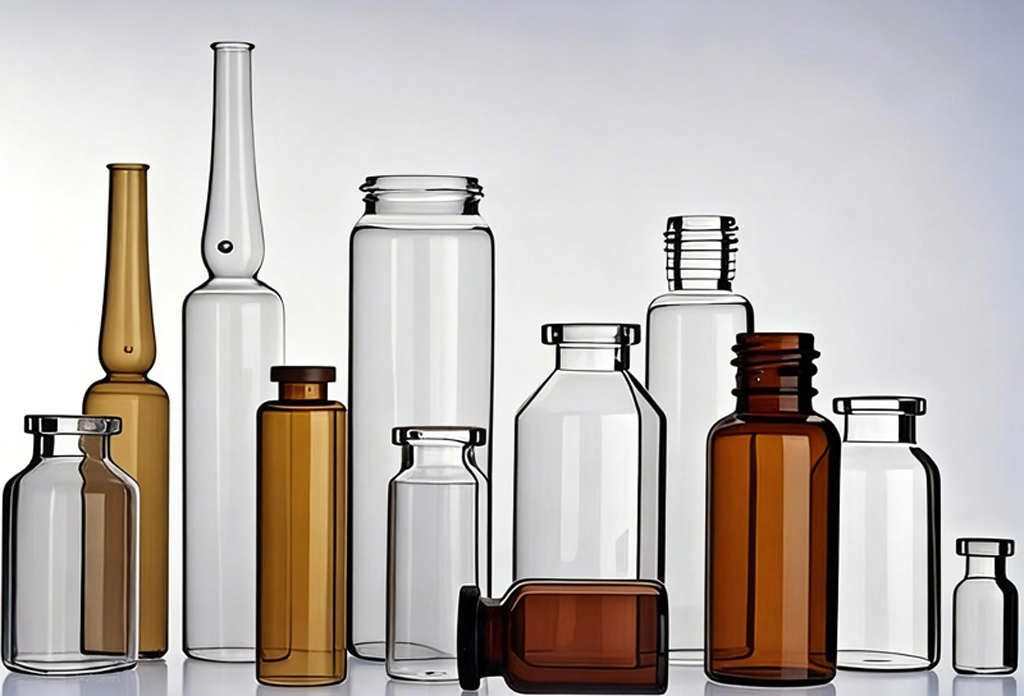
In the high-stakes world of parenteral drug manufacturing, the ampoule remains the gold standard for preserving the sterility of injectables, vaccines, and serums. However, a critical challenge persists: balancing the hermetic seal required for stability with the breakability needed for safe, efficient access.
At PharGlass, we leverage advanced OPC (One Point Cut) technology and fully automated production lines to solve this paradox. This technical guide details the engineering behind our easy-break ampoules, referencing critical dimensions and the precision required to meet ISO 8362 et YBB normes.
The Engineering Behind OPC: One Point Cut Technology
Traditional manual scoring often results in inconsistent fractures, leading to “heel breaks” (where the base breaks off) or excessive glass particulates. PharGlass utilizes OPC Easy-Break Technology, a sophisticated electronic control system that optimizes the interaction between the cutting wheel and the glass surface.
Unlike standard methods, our OPC system precisely controls three critical variables during high-speed production:
- Contact Time: The exact duration the cutting wheel touches the glass.
- Applied Pressure: The force exerted to create the micro-fracture.
- Dwell Time: The instantaneous pause to ensure depth consistency.
This electronic precision, combined with the experience of our technicians, ensures the score mark is moderate, clear, and perfectly aligned above the colored ring (if applicable). The result is a stress point that guarantees a clean break with a force typically between 30N and 60N, minimizing the risk of injury to medical personnel and preventing glass shards from contaminating the drug product.
Automated Vision Inspection: Zero-Defect Quality Control
PharGlass operates fully automated production lines equipped with advanced Vision Detection Systems. In the manufacturing of pharmaceutical glass, human error is unacceptable. Our optical sorting technology performs 100% inline inspection to verify:
- Dimensional Accuracy: Ensuring every D and H parameter matches the technical table.
- Détection des défauts : Identifying and ejecting ampoules with stones, air bubbles, or cracks.
- Score Mark Verification: Confirming the OPC point is present and correctly positioned relative to the break point.
This adherence to automation ensures that our borosilicate glass ampoules maintain the high hydrolytic resistance (ISO 12775 Type 1) required by global pharmacopeias, while offering the mechanical reliability pharma companies demand.
Detailed Dimensional Specifications
Precision in ampoule manufacturing is defined by micrometers. The following table outlines the critical dimensions for PharGlass standard ampoules, ranging from 1mL to 30mL. These specifications are critical for compatibility with automated filling lines and nesting systems.
| Volume | D1 (Body Ø) | D2 (Shoulder Ø) | D3 (Neck Ø) | D4 (Stem Ø) | H1 (Total Height) | H2 (Fill Height) | H5 (Constriction Height) | S1 (Wall Thickness) | S2 (Bottom Thickness) |
|---|---|---|---|---|---|---|---|---|---|
| 1mL | 10.75 ±0.15 | 6.5 ±0.50 | 8.5 ±0.50 | 6.0 ±0.50 | 60.0 ±0.50 | 25.5 ±0.50 | 47.0 ±2.0 | 0.5 ±0.03 | 0.37 ±0.05 |
| 2mL | 10.75 ±0.15 | 6.5 ±0.50 | 8.5 ±0.50 | 6.0 ±0.50 | 72.0 ±0.50 | 37.5 ±0.50 | 57.0 ±2.0 | 0.5 ±0.03 | 0.37 ±0.05 |
| 3mL | 12.75 ±0.15 | 6.5 ±0.50 | 8.5 ±0.50 | 6.0 ±0.50 | 75.0 ±0.50 | 39.5 ±0.50 | 62.0 ±2.0 | 0.5 ±0.03 | 0.37 ±0.05 |
| 5mL | 14.75 ±0.15 | 7.0 ±0.50 | 9.0 ±0.50 | 7.0 ±0.50 | 83.0 ±0.5 | 46.5 ±0.50 | 68.0 ±2.0 | 0.55 ±0.03 | 0.42 ±0.05 |
| 10mL | 17.75 ±0.20 | 7.5 ±0.50 | 9.5 ±0.50 | 7.1 ±0.60 | 102.0 ±0.5 | 62.0 ±1.0 | 87.0 ±2.0 | 0.6 ±0.04 | 0.47 ±0.05 |
| 20mL | 22.5 ±0.25 | 8.5 ±0.50 | 12.0 ±1.0 | 7.8 ±0.80 | 113.0 ±1.0 | 76.0 ±1.2 | 100.0 ±2.0 | 0.7 ±0.04 | 0.55 ±0.05 |
| 25mL | 22.5 ±0.25 | 8.5 ±0.50 | 12.0 ±1.0 | 7.8 ±0.80 | 128.0 ±1.0 | 91.0 ±1.3 | 115.0 ±2.0 | 0.7 ±0.04 | 0.55 ±0.05 |
| 30mL | 22.5 ±0.25 | 8.5 ±0.50 | 12.0 ±1.0 | 7.8 ±0.80 | 143.0 ±1.0 | 106.0 ±1.3 | 130.0 ±2.0 | 0.7 ±0.04 | 0.55 ±0.05 |
Key Dimensional Definitions:
- D1 (Body Diameter): Critical for labeling and stability in racks.
- D3 (Neck Diameter): Must be consistent to ensure the breaking force is applied correctly.
- H1 (Total Height): Vital for automated filling line adjustments.
- S1/S2 (Wall/Bottom Thickness): Directly correlates to mechanical strength and thermal shock resistance.
Material & Compliance: Meeting Global Standards
Our ampoules are manufactured from high-quality borosilicate glass tubing, processed through forming, sealing, and annealing. This material choice is not arbitrary; it is a compliance necessity.
- Résistance chimique : Meets USP Type I et ISO 12775 standards for hydrolytic resistance, ensuring no interaction with acidic or alkaline drug formulations.
- Thermal Stability: Capable of withstanding the thermal shock of sterilization processes (autoclaving) without fracturing.
- Break Force Consistency: Our OPC technology ensures the break force falls within the optimal window defined by ISO 8362-1, preventing “pop-tops” or difficult snaps.
For pharmaceutical manufacturers, selecting the right ampoule is a decision rooted in chemistry, physics, and regulatory compliance. With PharGlass’s OPC technology and rigorous vision inspection, we provide a packaging solution that protects your product and the patient.
Frequently Asked Questions (FAQ)
Q1: What is the difference between standard and OPC (One Point Cut) ampoules? A : Standard ampoules may have a score line that varies in depth or position. OPC ampoules use electronic control to create a precise, single-point stress mark. This ensures a consistent break force and significantly reduces the generation of glass particles upon opening, which is critical for injectable safety.
Q2: Can PharGlass ampoules be used for freeze-drying (lyophilization)? A : Yes. Our borosilicate glass ampoules possess high thermal shock resistance, making them suitable for freeze-drying processes. However, specific validation regarding the H1 and D1 dimensions should be conducted to ensure compatibility with your specific lyophilizer trays.
Q3: What are the tolerance standards for the D1 and H1 dimensions? A : As shown in our technical table, tolerances are tight to ensure automated line compatibility. For example, for 1mL to 5mL ampoules, the D1 tolerance is typically ±0.15mm, while larger volumes (20mL-30mL) have a tolerance of ±0.25mm. H1 tolerances generally range from ±0.5mm to ±1.0mm depending on the volume.
Q4: Do you provide Extractables and Leachables (E&L) data? A : Yes, as a compliant pharmaceutical packaging manufacturer, we can provide E&L study data and drug compatibility reports to support your regulatory filings (DMF/CEP).
 FR
FR  EN
EN  AR
AR  DE
DE  ES
ES  PT
PT  FA
FA  RU
RU