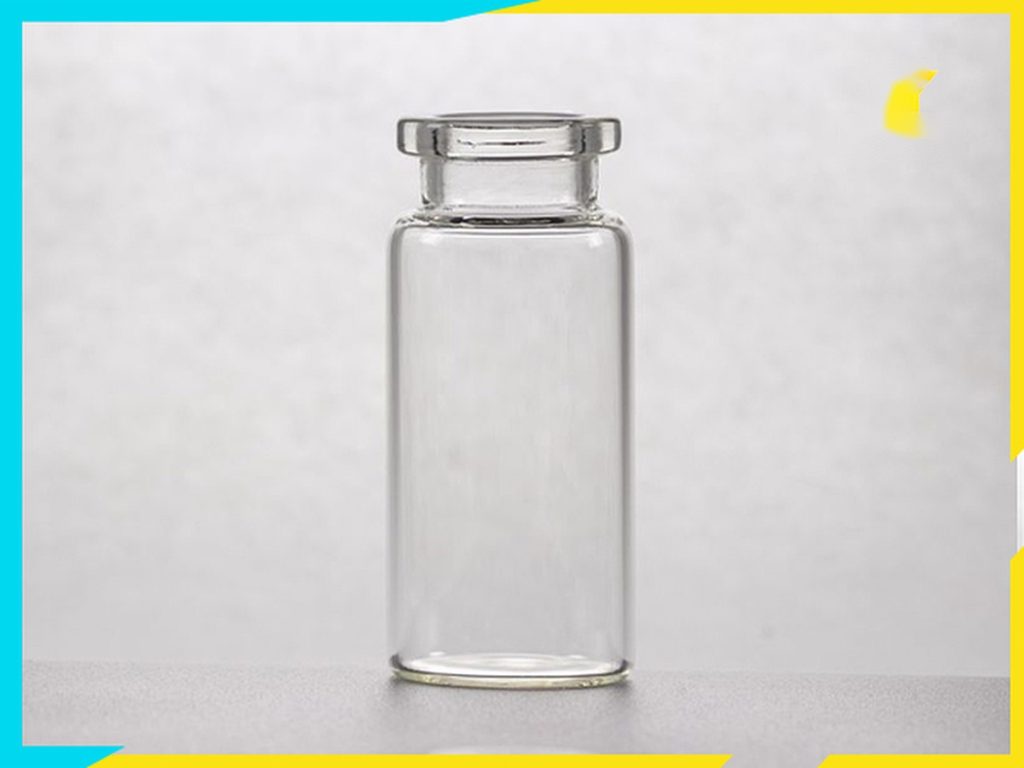
Low borosilicate vials are surface-treated to raise their hydrolytic resistance to Type II level, making them suitable for buffered aqueous injectables at a lower cost than full Type I borosilicate. They are a practical middle option for products where the formulation pH protects the glass from excessive alkali attack.
Type II in practice
Type II glass starts as soda-lime and receives a surface treatment that removes alkali from the inner surface. The result is a vial with improved hydrolytic resistance that meets Type II pharmacopoeia requirements. It is used for buffered solutions, some antibiotics and products where the drug is stable in a pH range that limits glass interaction.
Технические характеристики
| Вместимость | Тип стекла | Отделка горловины | Типичные области применения |
|---|---|---|---|
| 2 мл | Type II surface-treated | 13 мм | Buffered small-dose injectables |
| 5 мл | Type II surface-treated | 20 мм | Антибиотики, электролитные растворы |
| 10 мл | Type II surface-treated | 20 мм | Buffered injectables, diluents |
| 20 мл | Type II surface-treated | 20 мм | Multi-dose buffered products |
Type I or Type II?
Type I borosilicate is required for unbuffered solutions, biologics and lyophilized products where the lowest possible alkali release is needed. Type II is acceptable for buffered solutions within a controlled pH range. The decision should be based on your stability data, not on cost alone. We can supply both grades so that you can compare during development.
Matching closures
Type II vials use the same 13 mm and 20 mm neck finishes as Type I, so the same Резиновые пробки и flip-off caps apply. This makes it easy to switch grades without changing your closure system.
Send your formulation details to наша команда по продажам for a grade recommendation and quotation.
 RU
 EN
 FR
 AR
 DE
 ES
 PT
 FA